
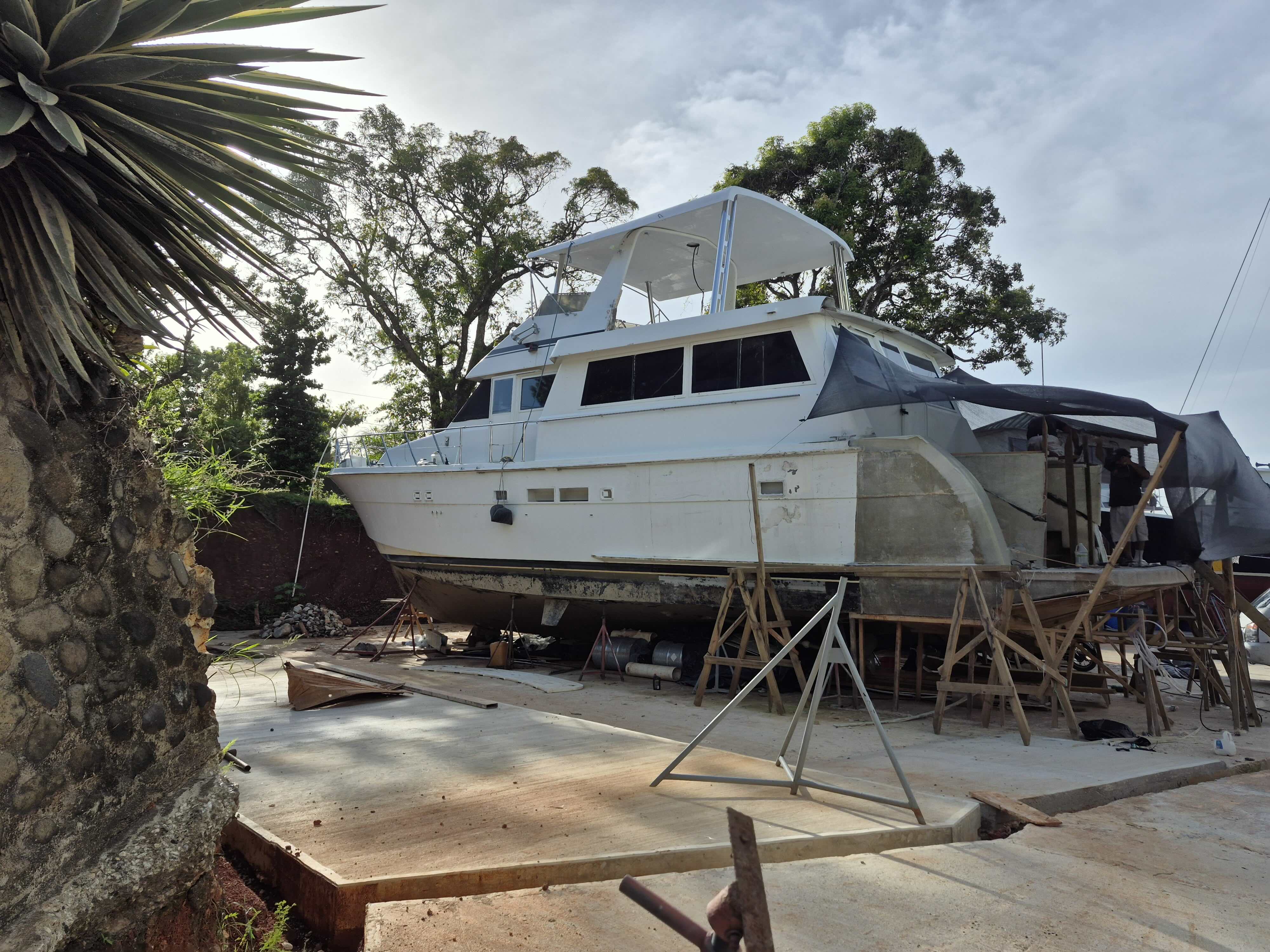
Katt in the Hatt: a family Hatteras goes hybrid
Why the owner of a 1990 Hatteras chose a hybrid conversion over a re-power— and how OSĒA is designing the system around space and use
Why not just re-power?
Katt in the Hatt came with twin DetroitDiesel 8V92s, 735 hp each — 3,750 hours, heads never off, oil analysis still good. So the decision to repower had nothing to do with the condition of the Detroits. It came down to two things.
The first is fuel. At today's prices, an 8V92 gets harder and harder to live with, and the limited range was an issue.
The second is the electronics that run them. The Detroits use 1990 DDEC controls — a good system in its day, but no longer in production. If the boat took an electrical strike, or one of the computers failed, David would be searching for someone able to rebuild them.
David explored a conventional re-power first — and couldn't make the numbers work. A re-power ran around $200,000, and the fuel savings between a modern four-stroke and the Detroits didn't come close to justifying it.
Why hybrid, and why OSĒA
David isn't new to hybrid propulsion.On the commercial side he's operated hybrid vessels for years — he was a pilot on the American Queen, a diesel-electric steam hybrid, and has run several diesel-electric and diesel-hybrid-electric boats over the years. Always at commercial scale.
Seeing Tangaroa — OSĒA's diesel-hybrid-electric conversion — was the moment it clicked as something scalable to his own boat. He contacted OSĒA, spoke with Silvie, and had Brent on the phone the next day. He knew after that first conversation that if the math worked, this was the way forward.
The math worked. Conservatively, the OSĒA solution triples the range for Katt in the Hatt - same fuel capacity - so not just a lower cost of operation, but a large increase in range. That alone, David says, is worth the conversion. And the OSĒA conversion comes in at roughly two-thirds the cost of the diesel re power he had looked at: a lower price in, a much lower operating cost, and a return on investment he never had by simply replacing the engines.
It brings a new kind of redundancy, too. Where a single diesel is a single point of failure, a series-parallel hybrid gives David multiple sources of power - from the generators to the batteries - unlike an engine failure that will leave you stranded, the multiple sources of power onboard give the family the redundancy they’re looking for.
What the numbers say
Every OSĒA project starts with a power demand curve. From there we size the system, and with the boat's current data alongside how the owner actually uses her — days on the hook, days in transit, days in a marina — we can show an owner exactly what changes: how much more range they'll have, and what they'll spend on fuel, before and after.
Some owners don't run their boats hard. What they want is quiet — time aboard without the constant hum and vibration. For an owner like David, who intends to use the boat a lot, fuel becomes a serious part of the calculation. We ran Katt in the Hatt against a full year on the water, as David and his family intend to use her, and compared her as she runs today against the OSĒA hybrid.
Fuel cost falls by roughly two-thirds. Under way, transit fuel drops by about 70%. At anchor, charging fuel drops by around 60%. Across the year, she burns about a third of the diesel she burns today.
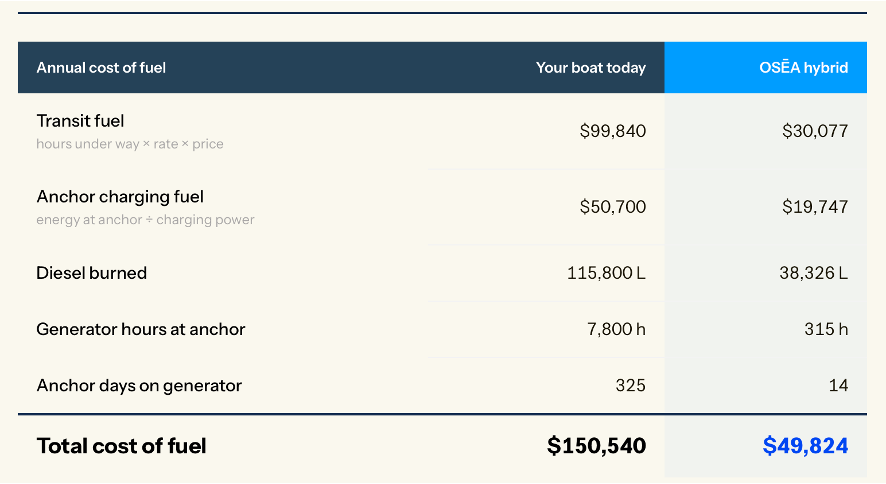
That second figure is the one worth pausing on, because at anchor is where a boat like this spends most of her time. Today, running the house from a small generator means it runs on essentially every day at anchor. With the new battery bank absorbing the load, it runs on around 4% of those days — a 96% reduction in generator hours. The rest of the time the boat is silent.
Silence becomes a real number, too. Under electric alone — no engine, no generator, nothing running — she'll cover 54 nautical miles, or sit at anchor for close to 22 hours with every house load met.
While fuel savings scale with use: the more the boat runs, the faster that savings number will compound. Generator hours are different — for a family that means to spend its time at anchor rather than at a dock, that's the number that changes what it feels like to be aboard.
Why keep this boat at all
David went down the road of alternatives before committing. They looked at new boats in their price range and kept finding the same inherent problems their 1990 boat had: very few markedly more efficient, and build quality that didn't compare.
His conclusion: the beautiful new boats he looked at just didn't compare — not in hull thickness, not in the way they're put together, not in longevity. The Hatteras needed a complete refit, but the energy and effort would be worth the outcome.
Sizing the system
Sizing a system for a refit is as much about how the owner uses the boat as what the boat can physically hold. Remove the engines from some vessels and the machinery space is swimming with room; on others it's a tight fit. On Katt in the Hatt, 350 kW would have suited her well —but there simply wasn't room for it. What fit was a 217 kWh battery bank, and by managing onboard energy well it still gives the family ample time off generator enjoying their boat without the hum of an motor.
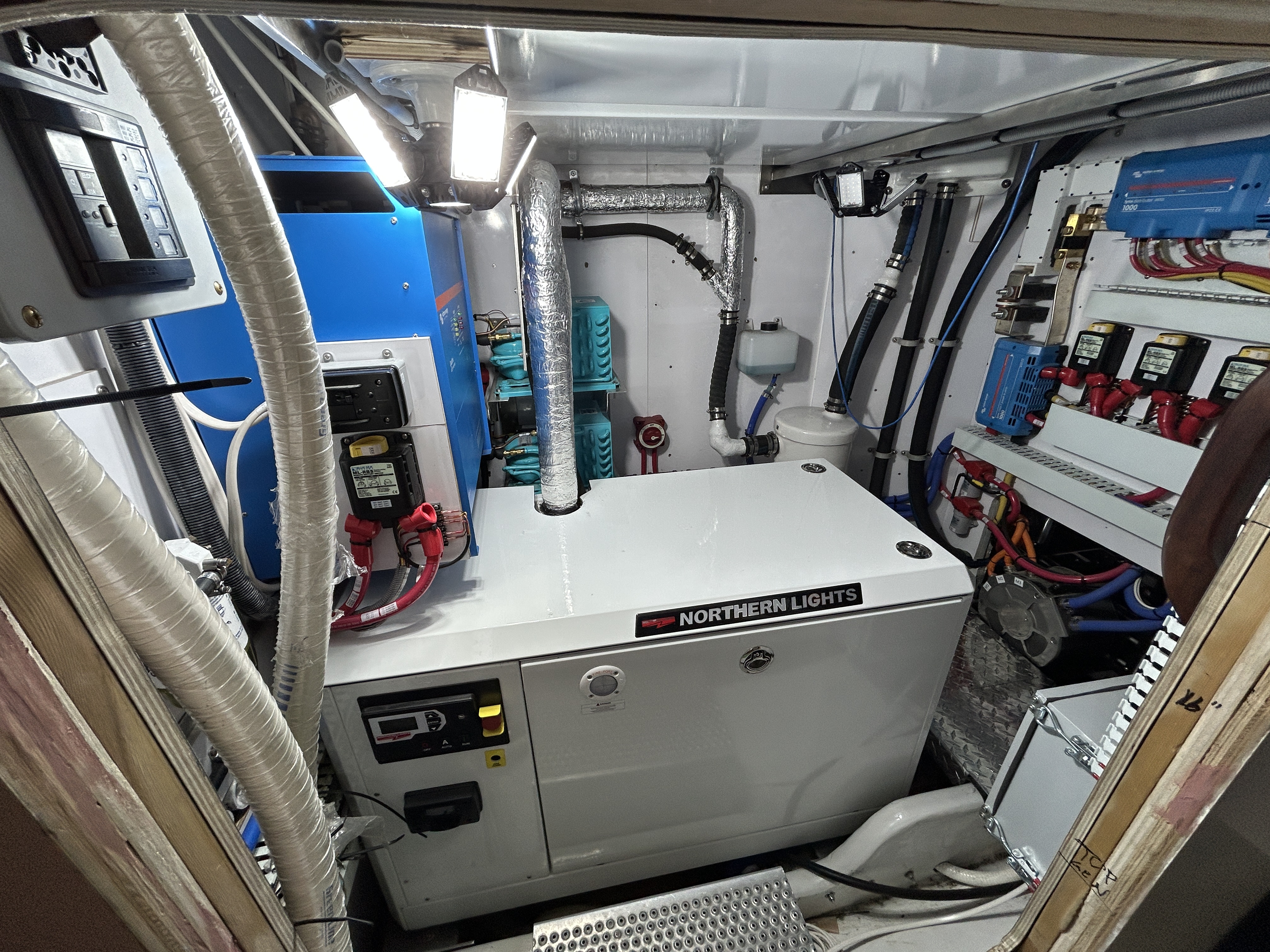
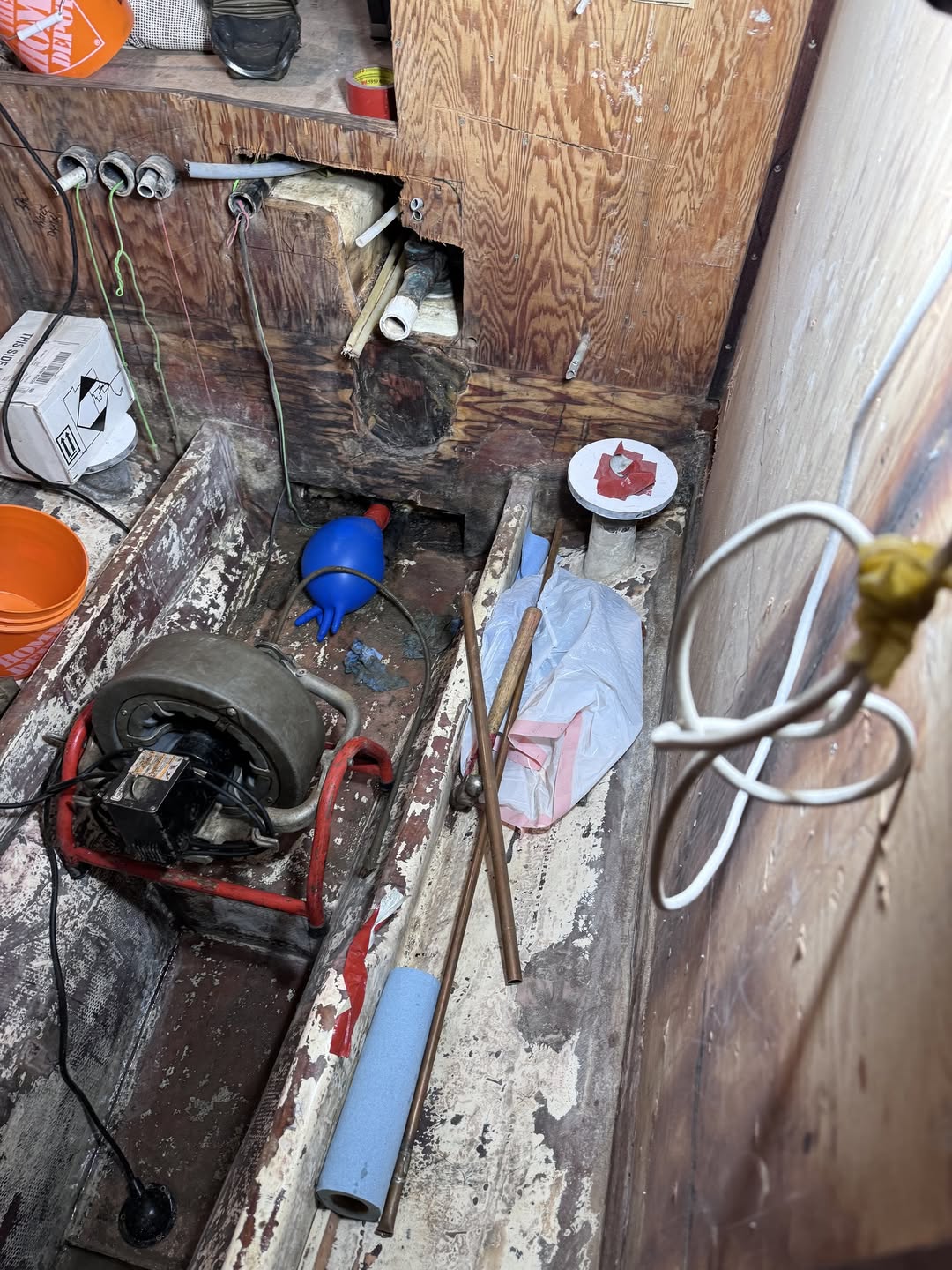
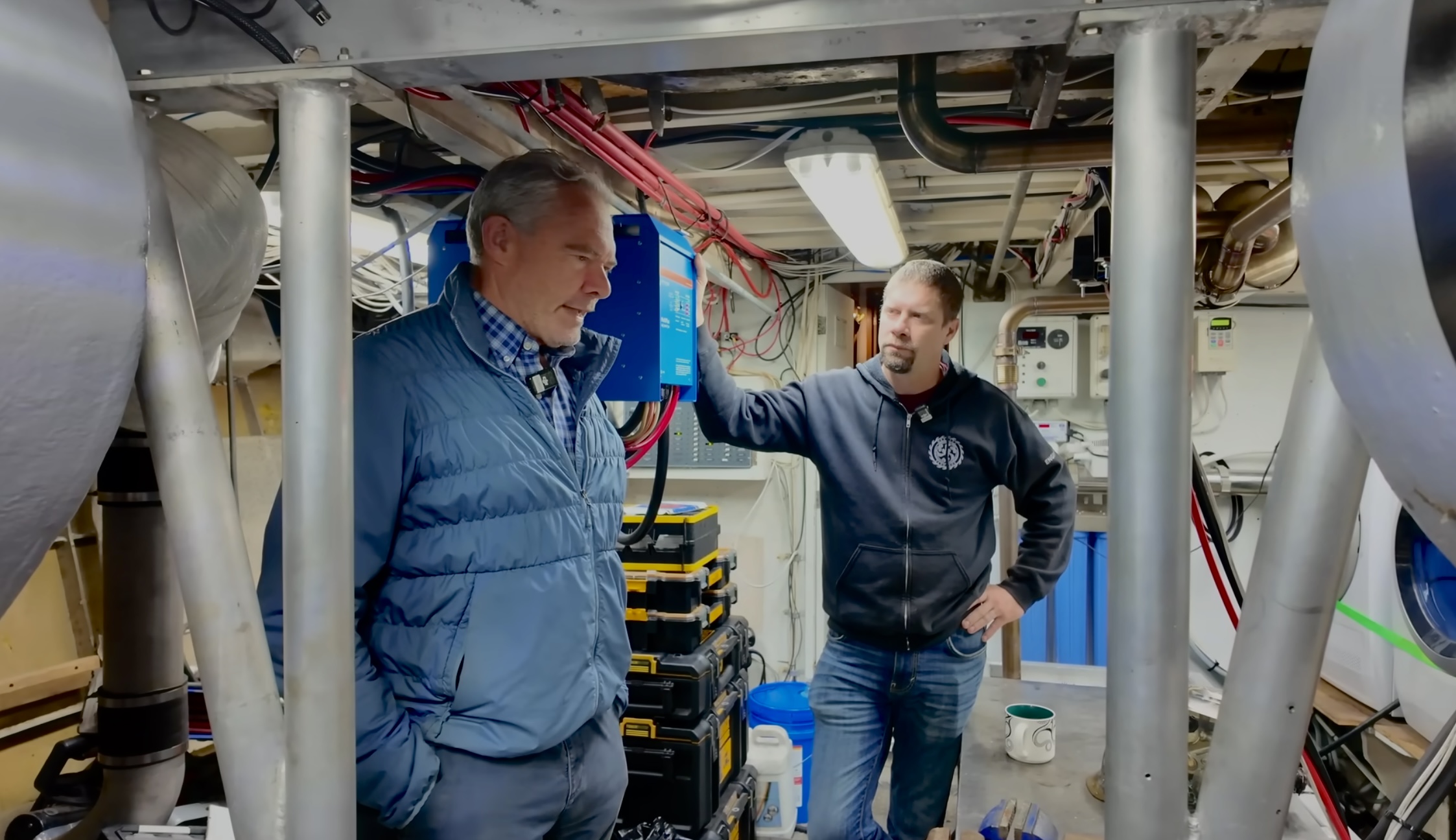
Coming out: the Detroits, the massive mufflers — each roughly half the size of an engine — the 1990 exhaust, and decades of disused cable-television and telephone wiring. Staying: the Naiad stabiliser system and the fire suppression.
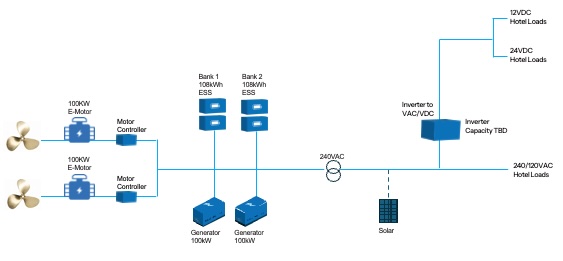
On weight, the conversion roughly nets out. The engines are 5,600 lb apiece as long blocks, plus gearboxes; the batteries are the weight penalty at around 4,000 lb, and the generators lighter at roughly 2,500. David expects to come out close to even, possibly a few pounds lighter.
Where the conversion stands
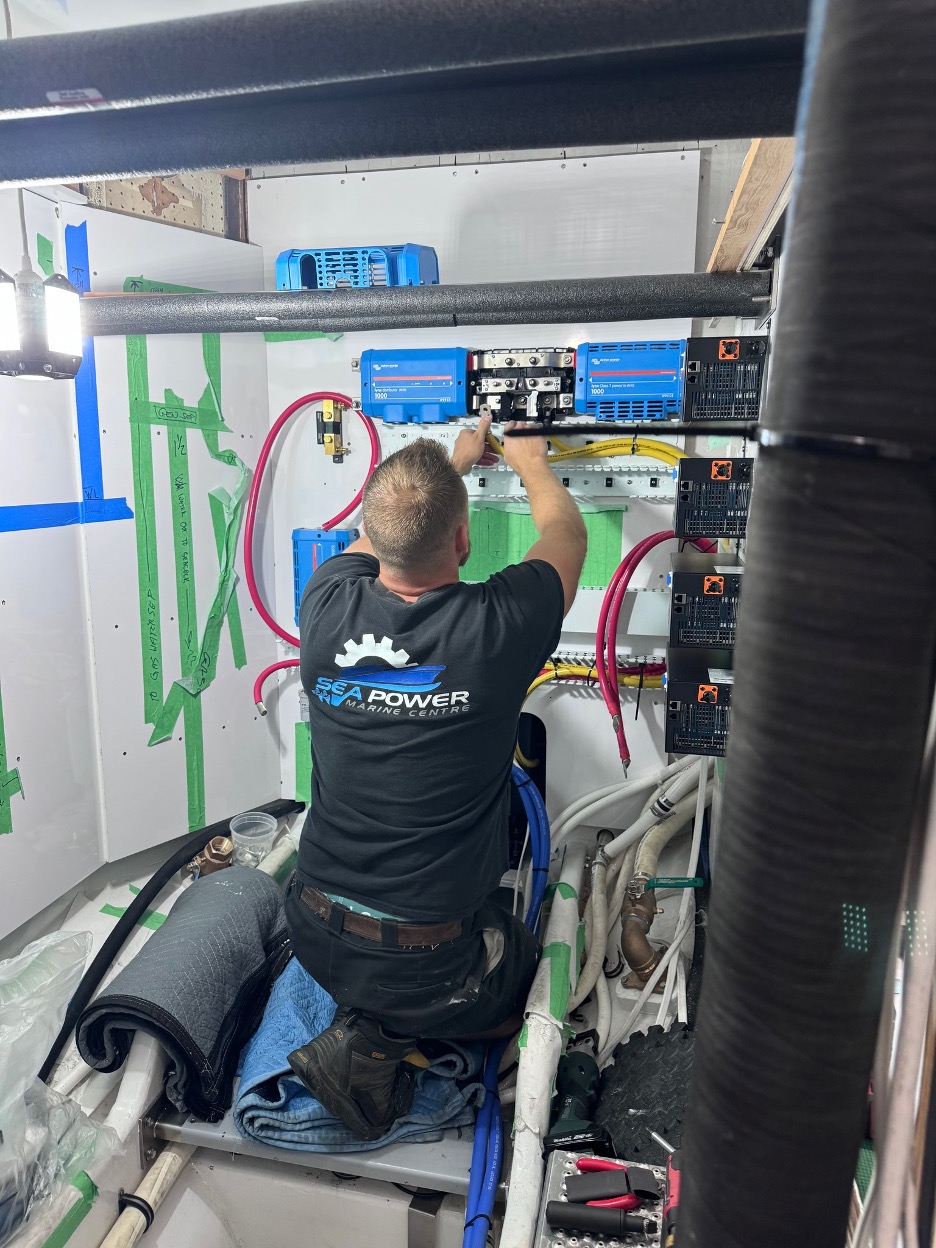
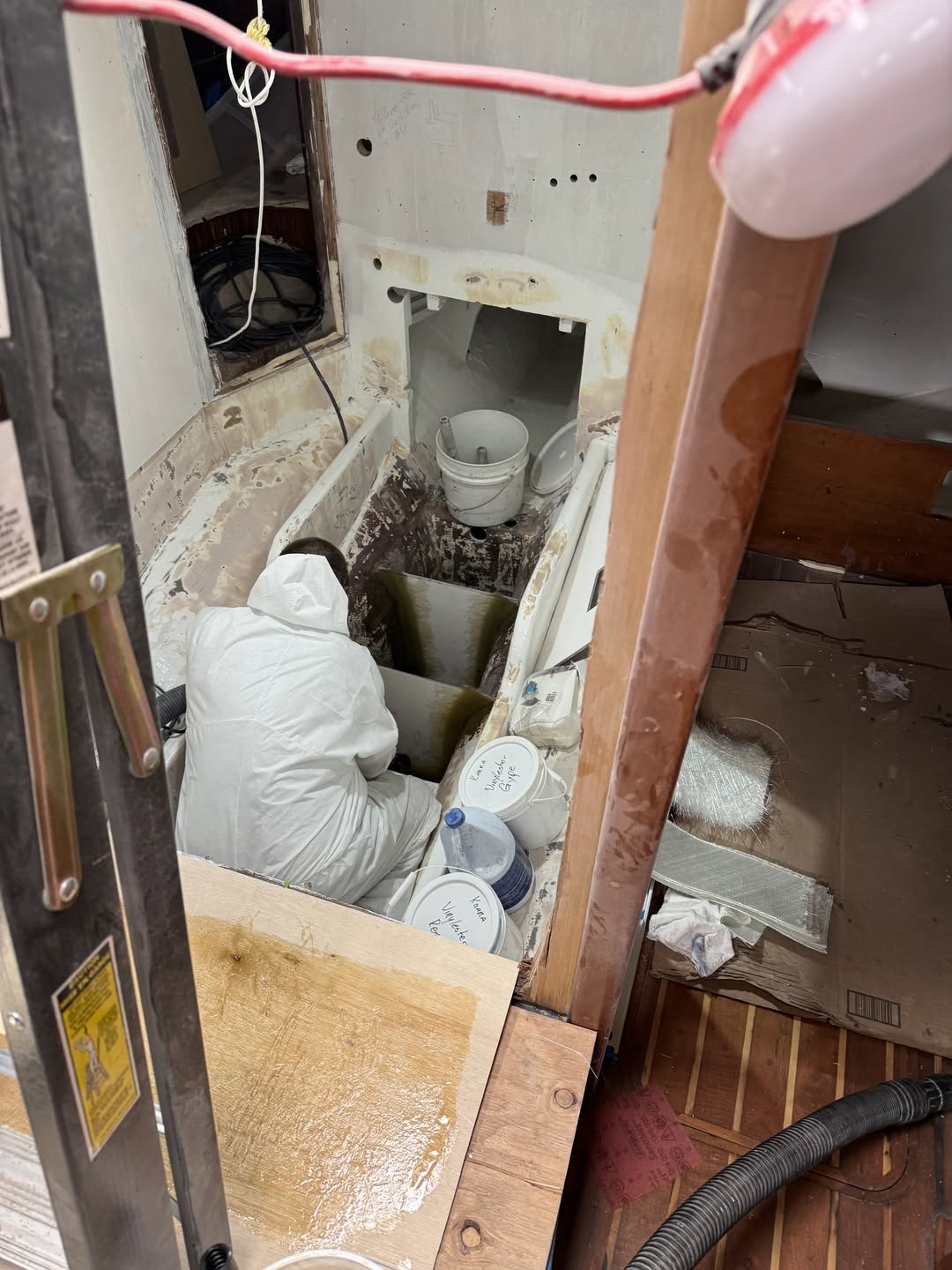
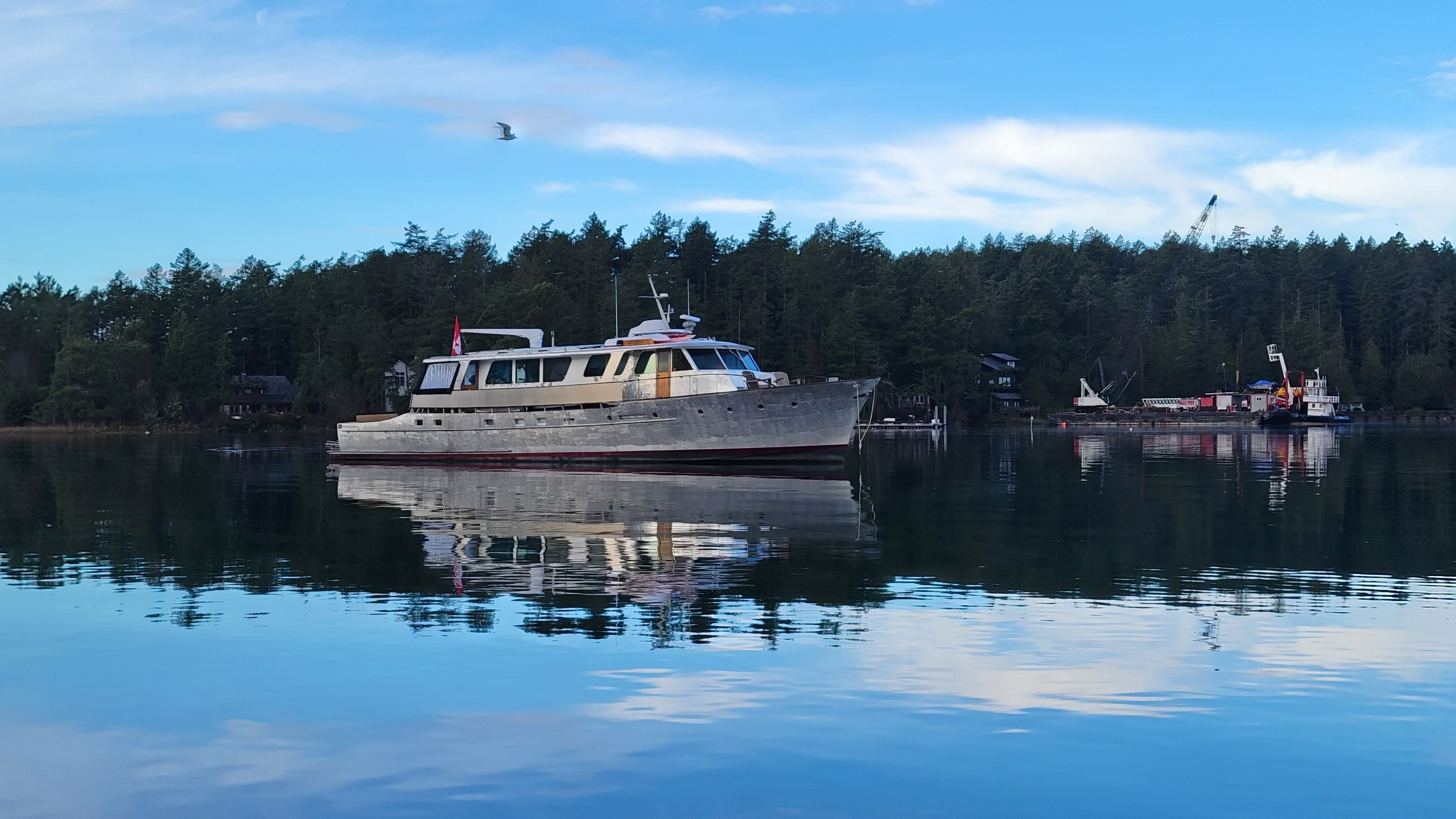
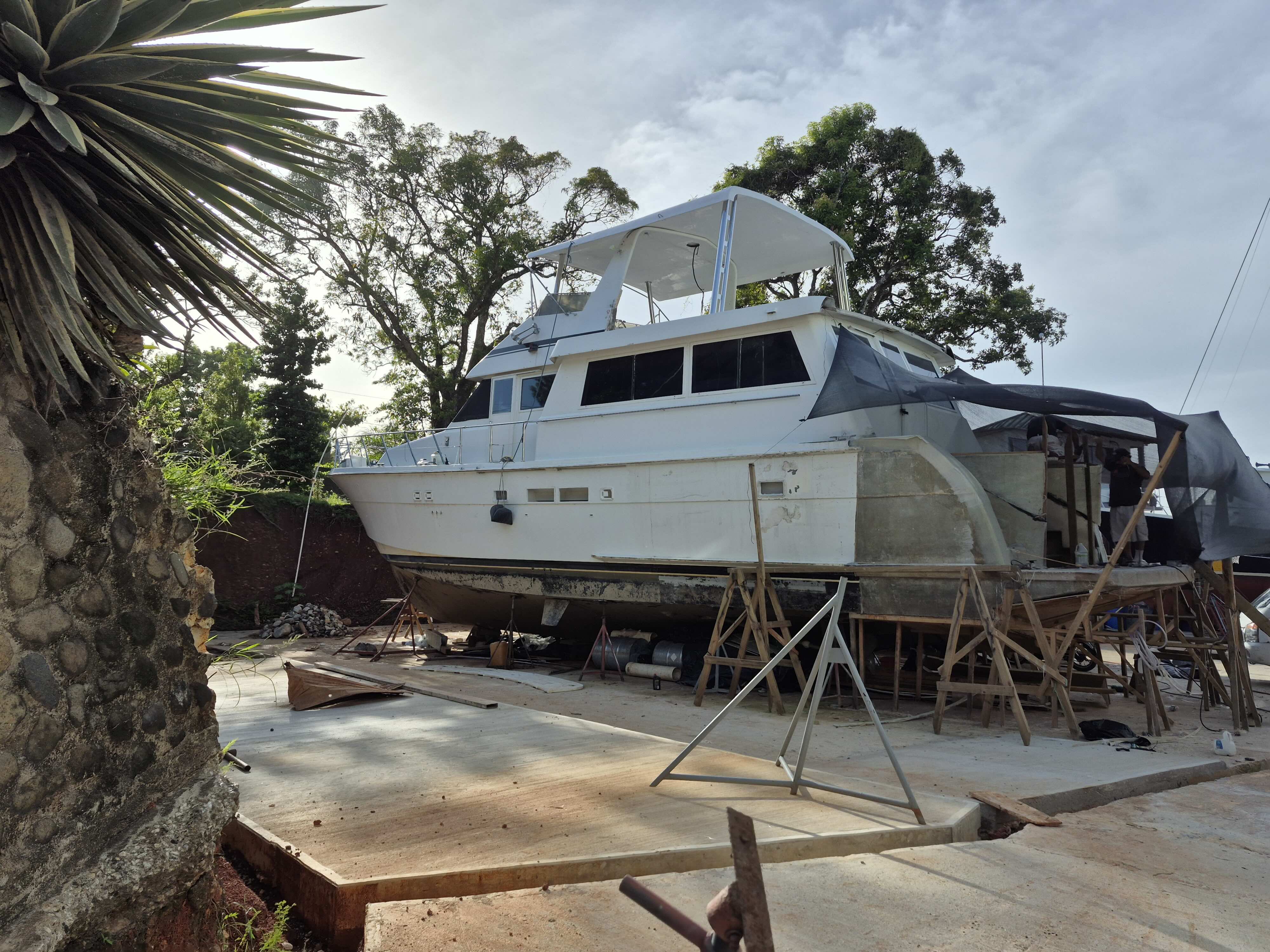
The stern extension is well underway, the boat is stripped and ready for the refit. System sizing and architecture is complete, parts are on order and the conversion is well on the way. A 1990 Hatteras, built to a standard few boats match, set up for another generation of the same family. There'll be more on this one as the work progresses.
For a closer look at the refit, visit the Onboard Tangaroa YouTube page:
https://www.youtube.com/watch?v=NpSgJdvfhkQ&t=1695s