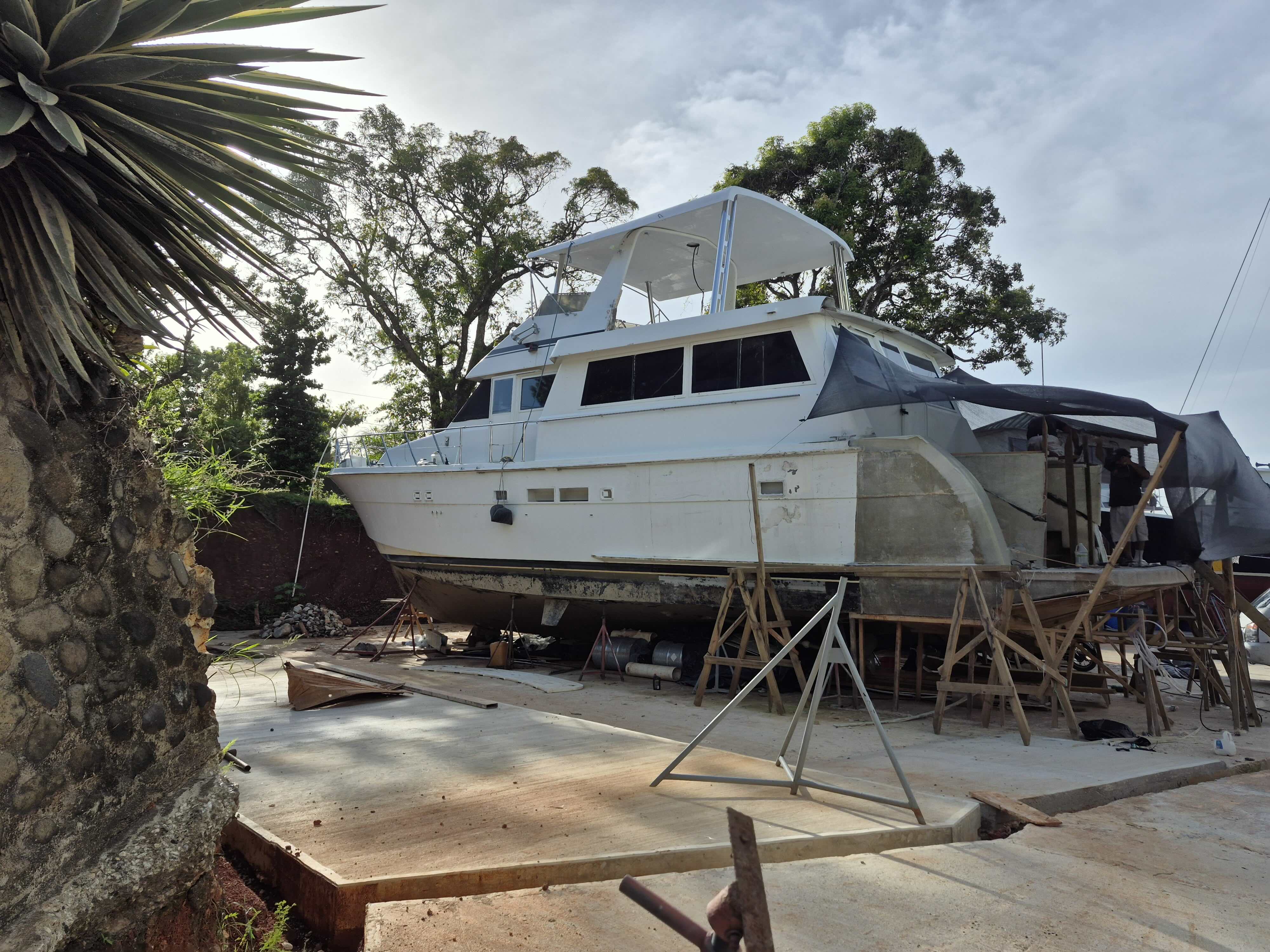

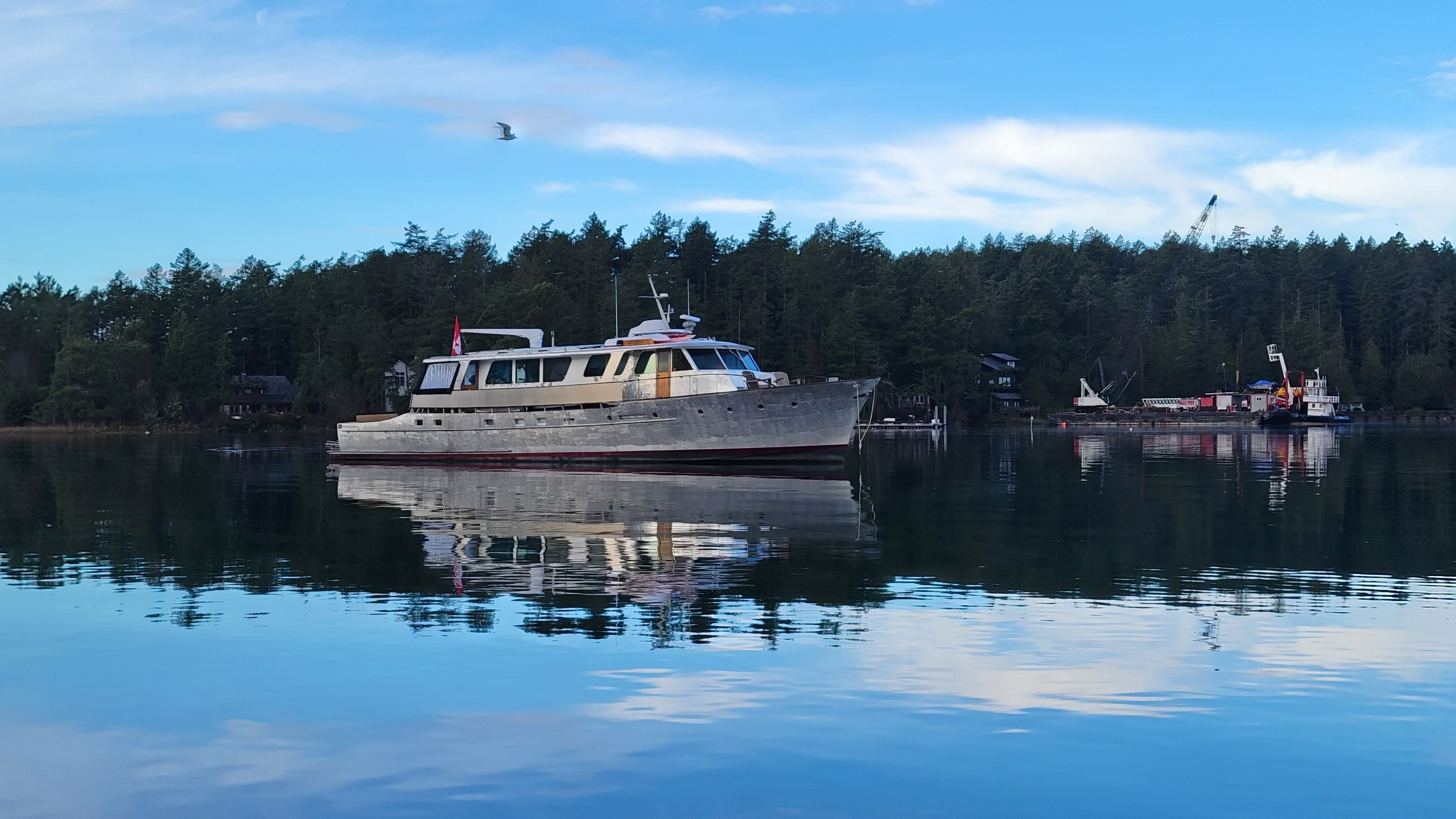
Vessel:Tangaroa — 1969 aluminum-hulled motor trawler
Where Every Build Begins – Is Tangaroaa Fit for Hybrid-Electric?
Before any contracts are signed, we begin every potential project with a deep dive on not just the vessel, but even more importantly, how are the owners going to use the boat, and what are their goals.
How they use the boat:
- Cruising at 7–9 knots the overwhelming majority of the time
- Long passages — the voyage plan demands weeks at sea between long stops
- Anchoring in remote locations — strong preference for arriving with full batteries and not running generators in anchorages
- Silence is a core value — the two things owners consistently value most are quiet at anchor and not being the Johnny generator in the harbour
Their Goals
- Full household capability underway and at anchor — no compromises on what gets turned on or off.
- Freedom from generator dependency, with solar extending off-generator time.
- Minimal environmental footprint in sensitive locations — Alaskan fjords, remote Pacific anchorages.
- Long-term reliability far from any service network, with an on-board inventory for managing all events, and available service tailored to support their vessel travels.
Blaine and Janis had just replaced their engines, so on the surface, this repower did not make sense financially — until we fully understood Blaine and Janis's "Why." The value of silence, extended range, reduced running costs, and the adventure of installing this system overwrote the financial implications of removing almost brand-new engines.
As a vessel, Tangaroa makes a lot of sense had we started this project when the Detroits were in place- When the existing powerplant(s) are at end of life and there is an opportunity to add another generation of vessel life, electrification now represents a cost effective and operationally sound decision, with overall improvement in reliability and reduced risk, along with the benefits of off generator time, silent living and less environmental impact.
Where a repower is coming regardless — the cost of conversion makes sense, and the performance case is strong. For new builds, the numbers can work from day one.
Blaine and Janis are unique OSĒA clients. We stay awayfrom true DIY projects because of the implications of lack of engineering and integration have on an electric system — this is not that. While Blaine and Janis are very involved in the build of the project, and all decisions of supply chain are made with their approval as well, all engineering and supply chain decisions and integration are handled by OSÉA to ensure the safety and longevity of the system.
We are often asked “Why OSĒA?” OSÉA Brings 45 years of vessel design, construction and electrification to the table, and combines our unique experience in both marine and electrification to bear on selecting componentsthat work for our clients regional use, integration of all components that are used, validation and long term warranty of system parts, global support of our clients and incorporation of all existing standards and approvals in the design process. To read more about the typical OSĒAprocess, [click here].
We Did a Full Power Analysis - What Did it Show?
Tangaroa ran well. That wasn't the issue. The issue was that she ran well while burning fuel she didn't need to burn. The Cummins repowers had halved consumption from the Detroits, but Blaine's own data told the rest of the story: the boat needed roughly 80 horsepower to cruise at eight to nine knots. The Cummins were running at about 20% load — chronically underloaded, generating heat, accumulating hours, and spending almost no time in an efficient operating range.
Tangaroa Diesel SLD
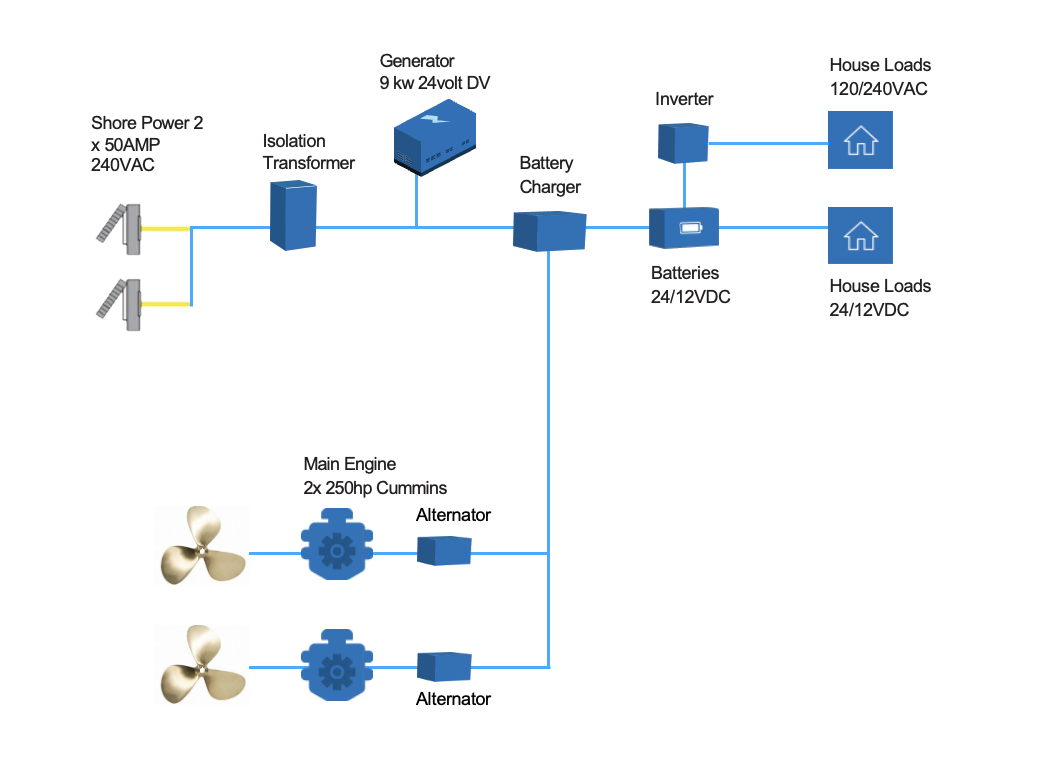
Add generator dependency at anchor, noise underway, and diesel particulate in the remote anchorages— and the case for a different approach becomes straight forward.
OSĒA's first step is always performance, not components.
Tangaroa is rated to 16 knots, which demands a lot of power — but in their lifetime of owning the boat, Blaine and Janis have never exceeded 12 knots. The power analysis produced the numbers that sizes everything downstream: 45 kW to cruise at 7–9 knots. Blaine's own fuel burn data confirmed it independently. Ther are occasions they need to push hard toward 12 knots, the requirement climbs to around 190 kW. That becomes our starting point for designing the perfect system.
Stage 1: System Architecture - January to February 2026
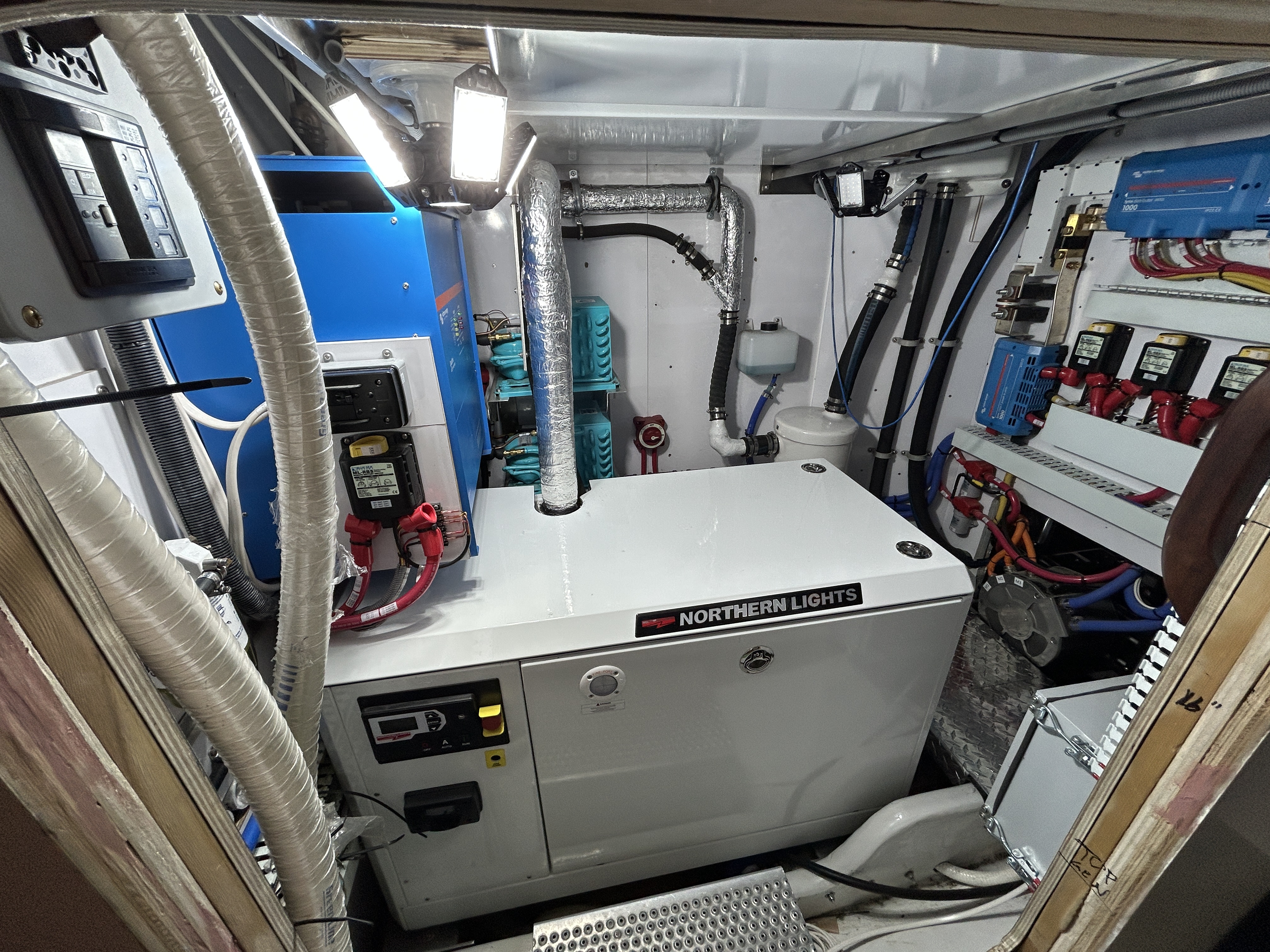
The system decided upon is a serial hybrid with parallel get home drives. Generators charge the battery bank. The battery bank drives the propulsion motors and supplies all hotel loads. Generators never directly drive propulsion — though in a worst-case scenario, if all battery banks failed, a parallel emergency drive via hydraulic PTO provides a backup path to the shafts.
Three 50 kW generators and the batteries, each run at constant speed and constant power, cover the full operating range.
Tangaroa Hybrid SLD
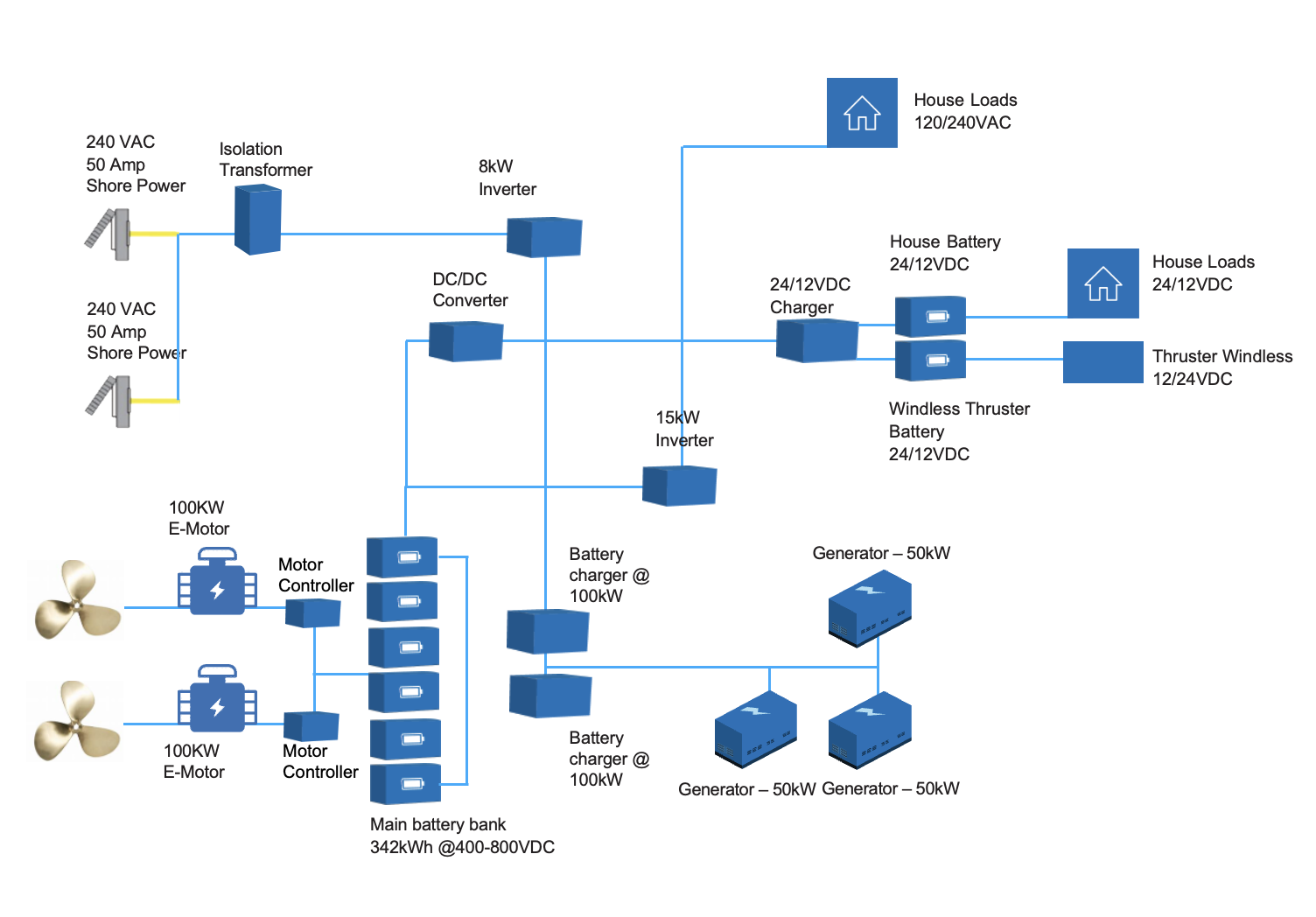
At cruise, one generator runs — handling the 45 kW propulsion load with capacity left over to charge the batteries. When demand climbs past 50kW, the battery bank bridges the gap until Battery SOC falls to 50%, then the EMS will signal generator to spool up, adding its 50kW to deliver up to 100kW of charge- meaning any energy not consumed by propulsion and hotel loads will be charged back into the batteries. The system scales that way through all four generators if maximum power is needed. The batteries are the bridging technology — absorbing excess generation and covering demand spikes so the generators always run at their optimal constant-speed, constant-power point. This is where the system savings show up, in both fuel and maintenance. If extra power is required, you have the battery bank to supply that extra power until it is empty.
Running three identical generators means maintenance is spread across three units, parts inventory is simplified, and there are three layers of redundancy plus the energy storage before any total power loss canaffect your operations.
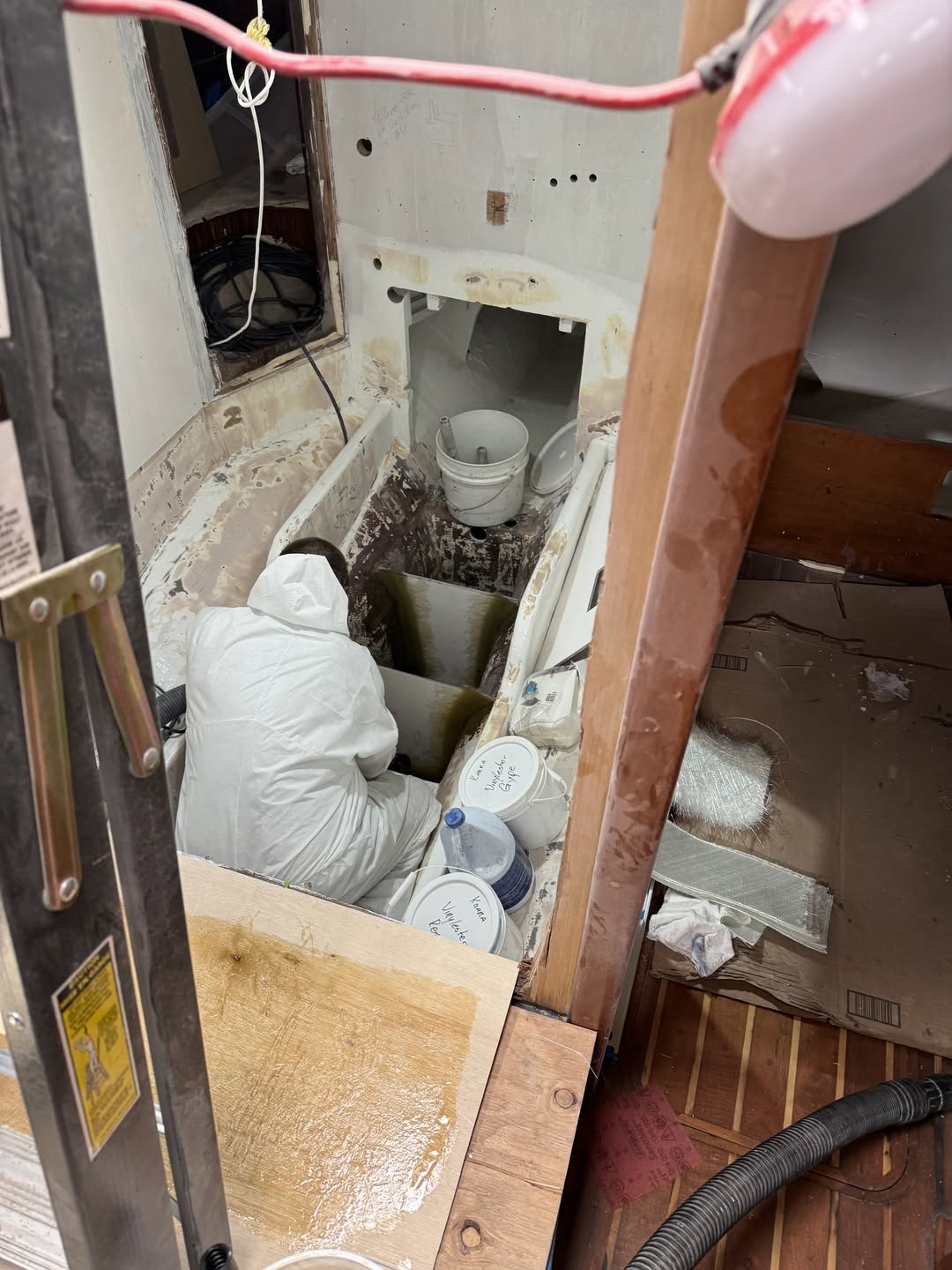
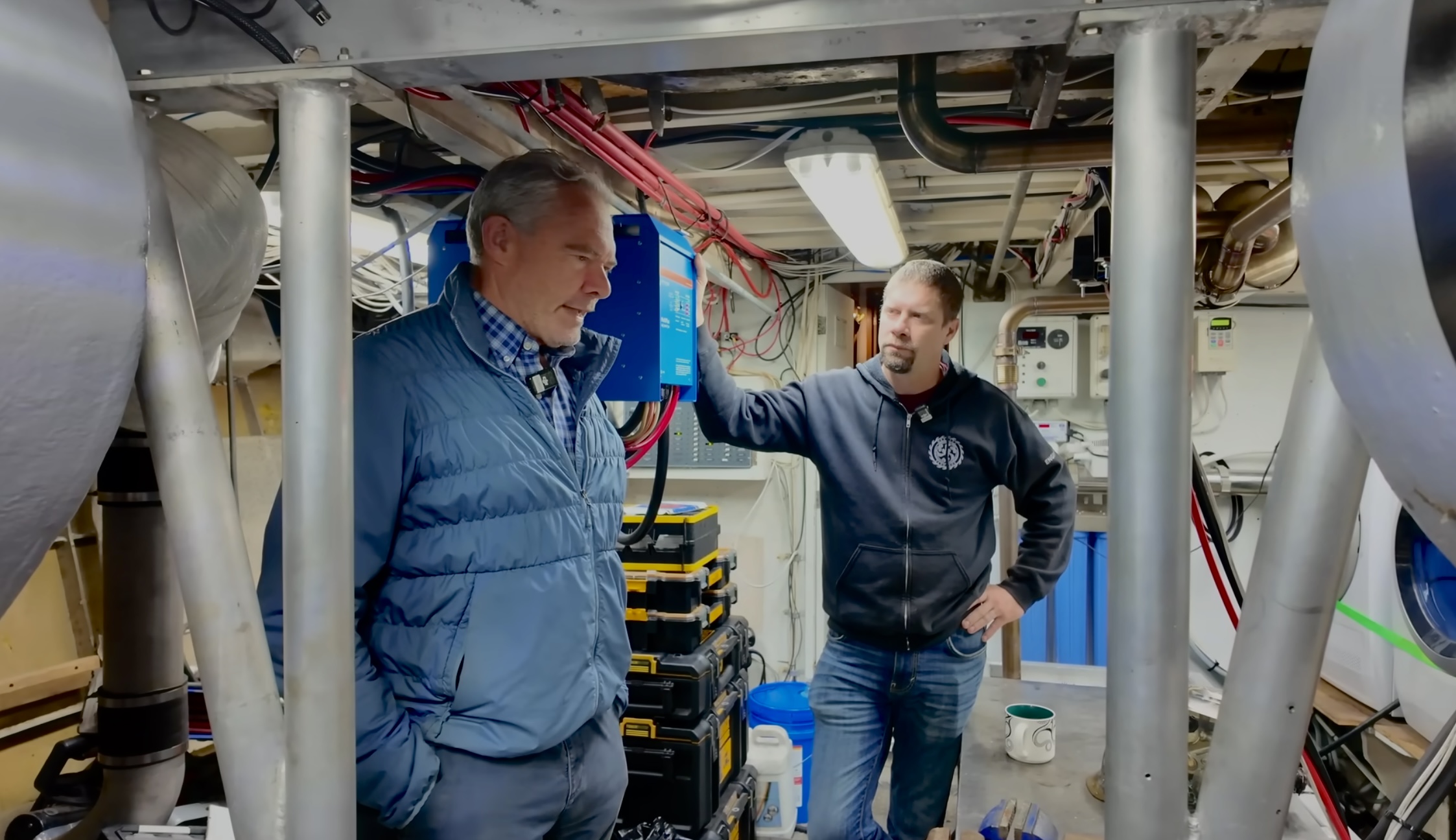
Tangaroa Engine Room - Pre Refit
See the rest of the project progres - next episode here