
Stage 2 — System Specification - February to March 2026
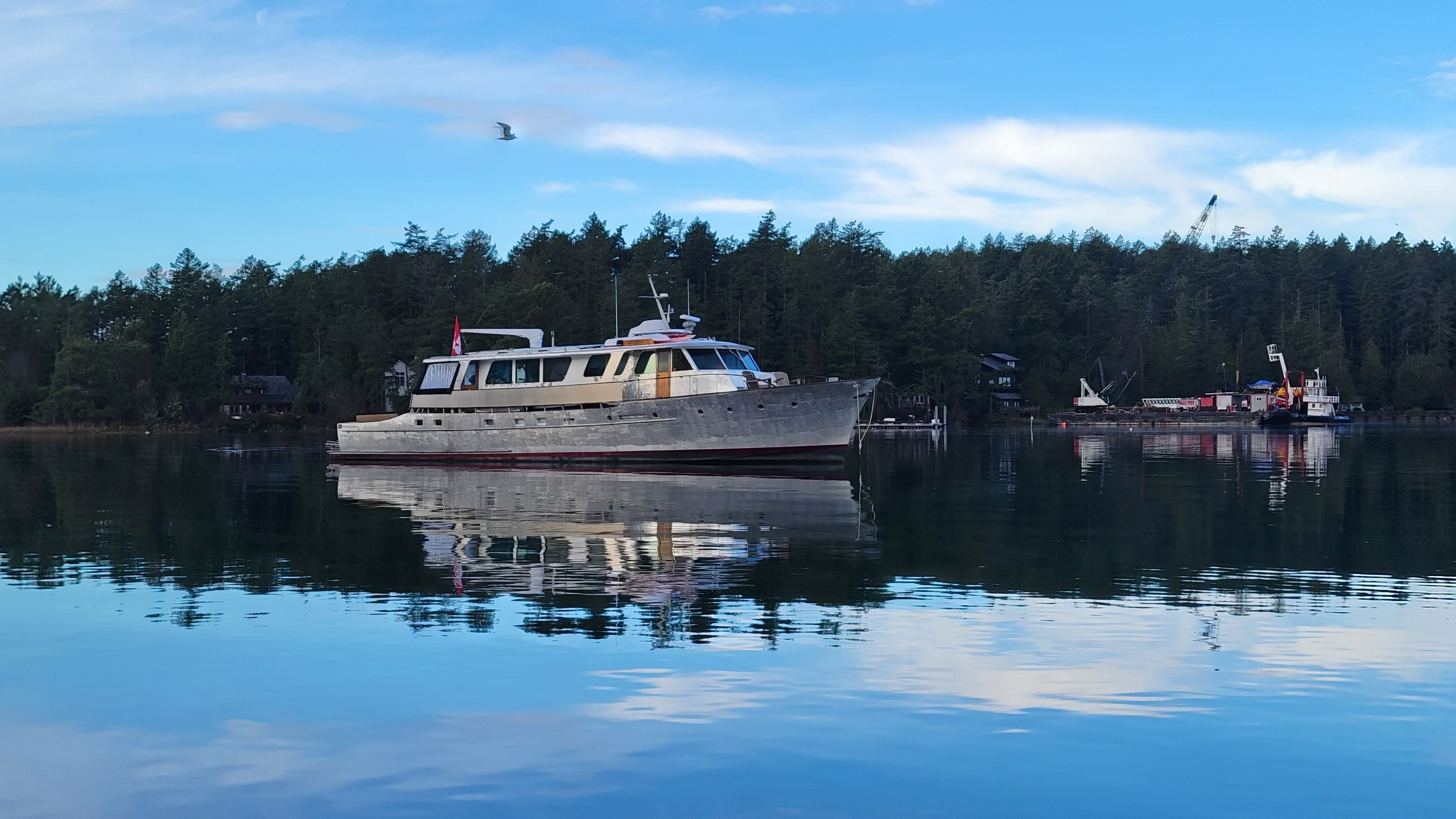
After running all the data through analysis and discussing the best setup for both Tangaroa and the type of cruising Blaine and Janis plan to do, the plan comes together.
Propulsion:Two electric motors, 100kW each (able to operate up to 200kW per e-motor), direct drive to existing shafts with thrust bearings. ~500 RPM at cruise, liquid-cooled, six-pole, with integrated thrust bearings.
Batteries:The original design called for 200 kWh. When air conditioning and stabiliser loads were factored in, power demand climbed and the spec was revised to 350–400 kWh — enough for approximately four days off-generator time at anchor, and 5–6 hours of battery-only cruising range. 600V nominal, LFP or NMC chemistry, specified at 1C–1.5C but operating at ~0.5C in practice. Rack-mounted, IP67-sealed, front-access modules.
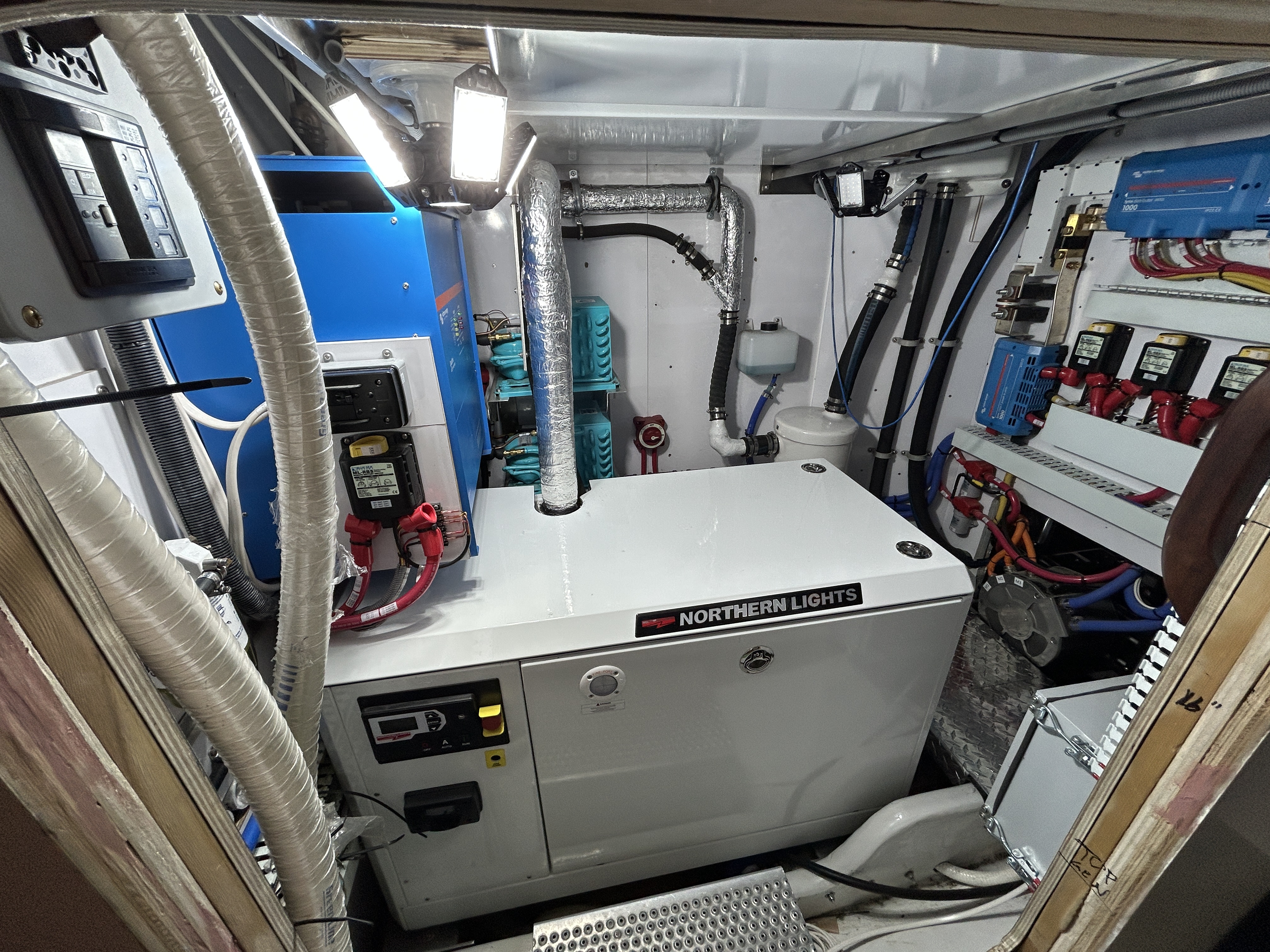
Generators: Three units, 50 kW continuous each — not "50 kW rated," genuinely 50kW sustained at constant speed and constant power. Each paired with its own dedicated 50 kW charger, isolated from the others, eliminating the phase synchronisation risk of running AC generators in parallel. All equipment operates at a fixed 60 Hz — no frequency variation, no downstream equipment affected by fluctuating loads.
High-voltage bus: 690–700V DC. Enables 2-gauge cable runs where a 48V system would need 4/0 —lower current, less heat, better efficiency throughout.
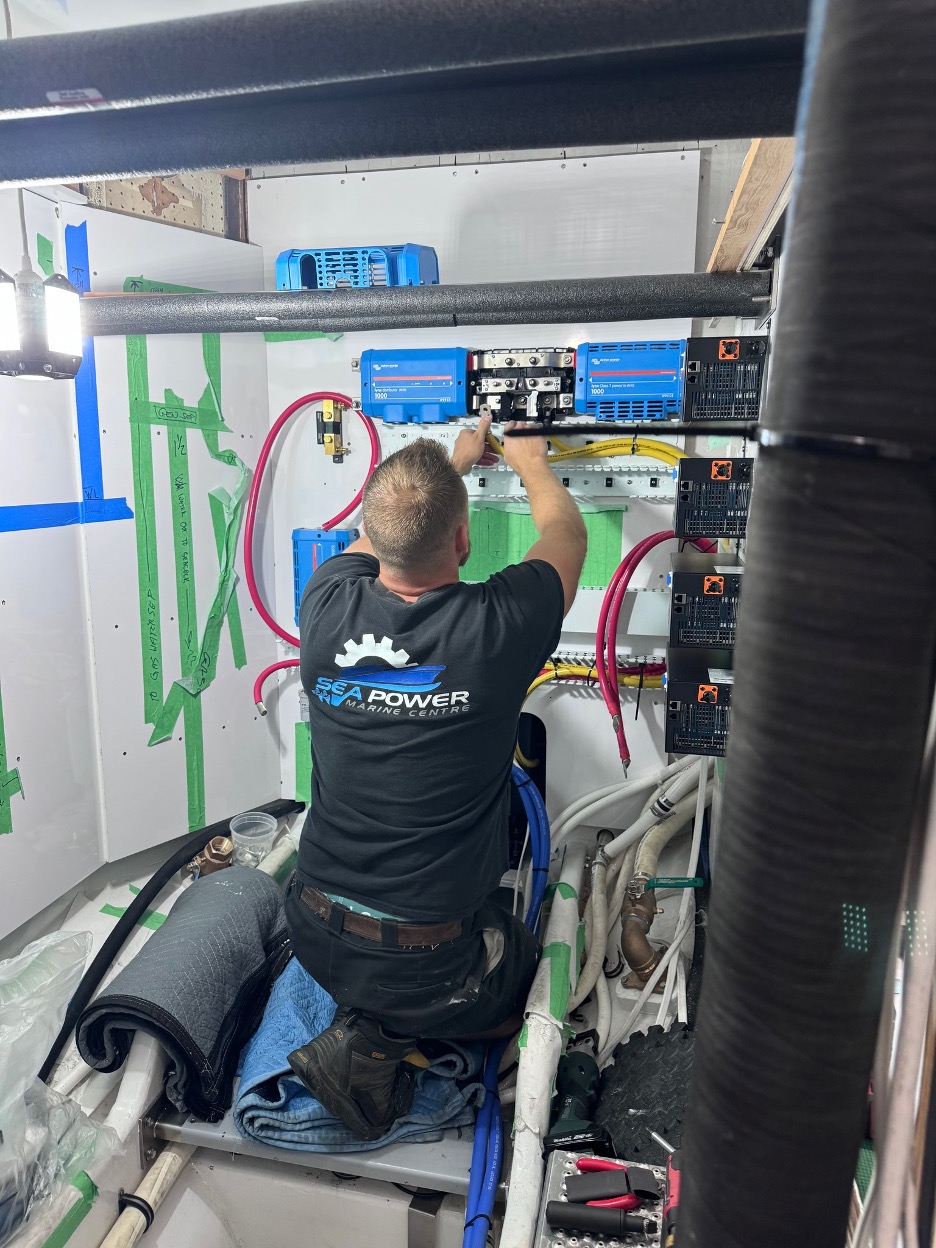
House systems: All hotel loads drawn from the battery bank via DC-DC converters (12V/24V) and inverters (120V/240V AC). Shore power feeds chargers only — compatible with any voltage or frequency worldwide.
Expected performance: 5–6 hours battery-only range at cruise (~40–45 nm). ~2-hour recharge. Estimated total passage range 6,000–7,000 nm, up from approximately 4,500 nm today. Fuel efficiency improvement of 30–40% over the Cummins configuration. All figures modelled on worst-case assumptions — the ocean is the ocean.
Stage 3 — Supplier Evaluation (InProgress) February – March (expected)
Unique to the OSĒA approach is that we don't push any one piece of equipment. Each boat is different. The way people use it and where they take it is different. So the equipment must match a multitude of factors —and that's where supplier evaluation begins.
Seven generator companies and five integration companies have been engaged. Several have eliminated themselves — unable to meet delivery timelines or not interested in the application.
The constant speed, constant power specification became a sticking point for some. Marine generator manufacturers are accustomed to variable load profiles; this duty cycle reads as unusual to them. Retail marine generators also fall short of commercial efficiency benchmarks — best-case figures from suppliers came in around 230–248 g/kWh against a commercial benchmark of ~190 g/kWh at constant-speed operation.
Supplier selection for this project is specifically weighted toward global support — Blaine and Janics need a service network that functions in Japan, Australia, and the remote Pacific. That's not always the right criteria. For other clients, a BC-based supplier who answers the phone on a Friday afternoon is exactly the right call. These are practical decisions that have to reflect how and where the boat will actually be used. Because Tangaroa is a bluewater, offshore vessel going to some of the most remote places onearth, OSĒA has guided toward proven technology with established global support— pragmatic choices over cutting-edge ones.
Factory visits are planned before final selection.
Stage 4 — Vessel Preparation (InProgress) February – end of March
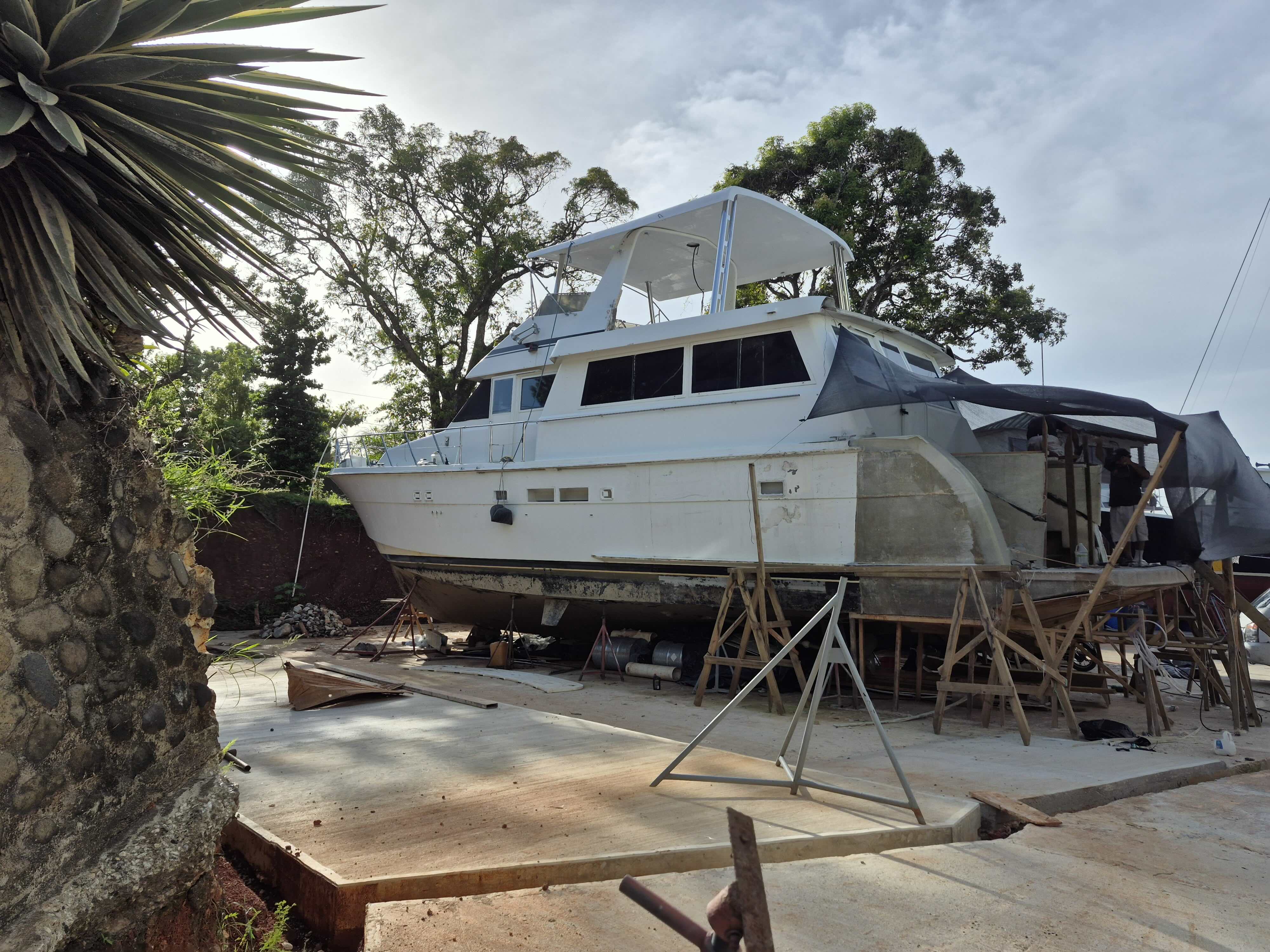
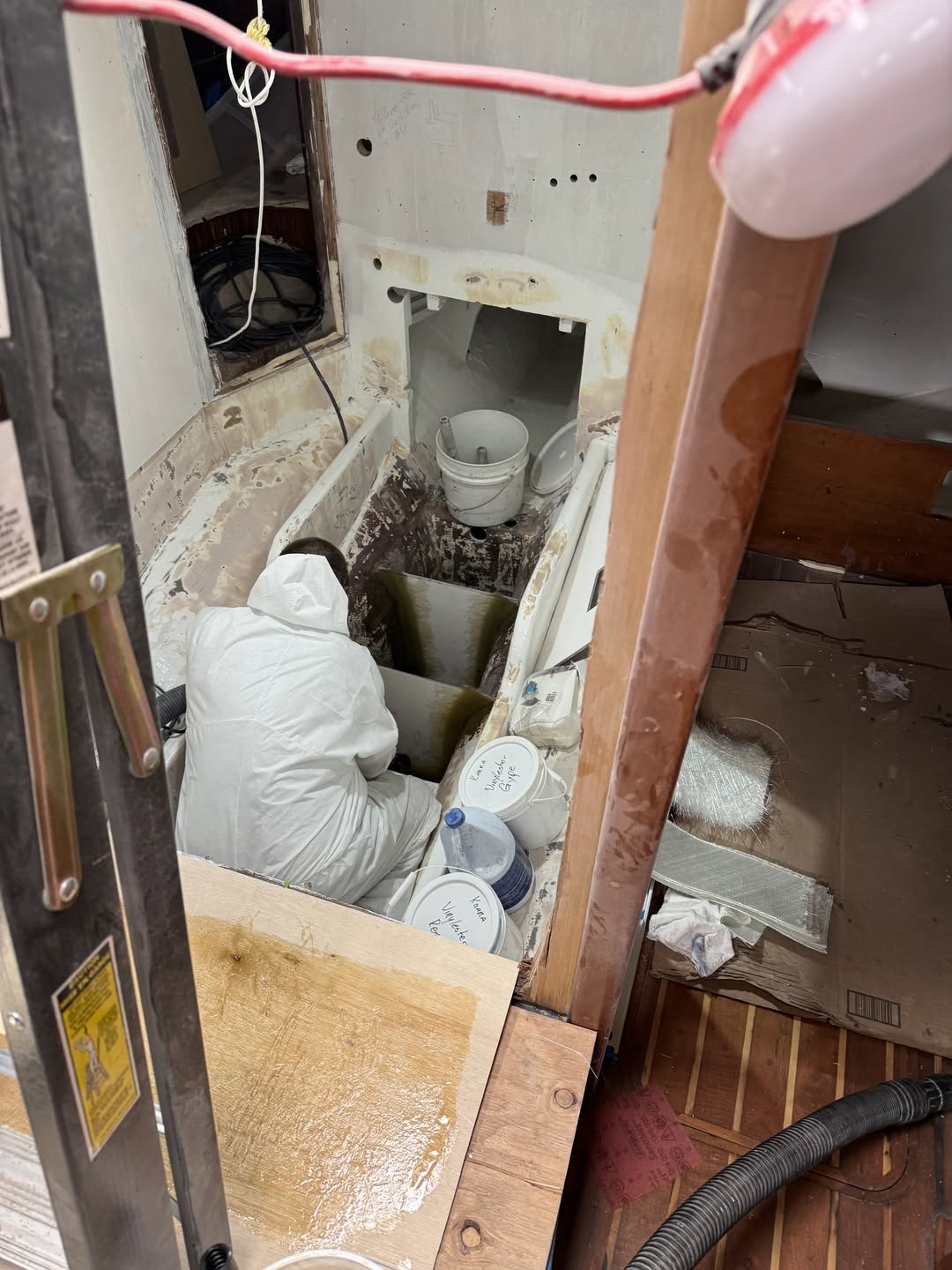
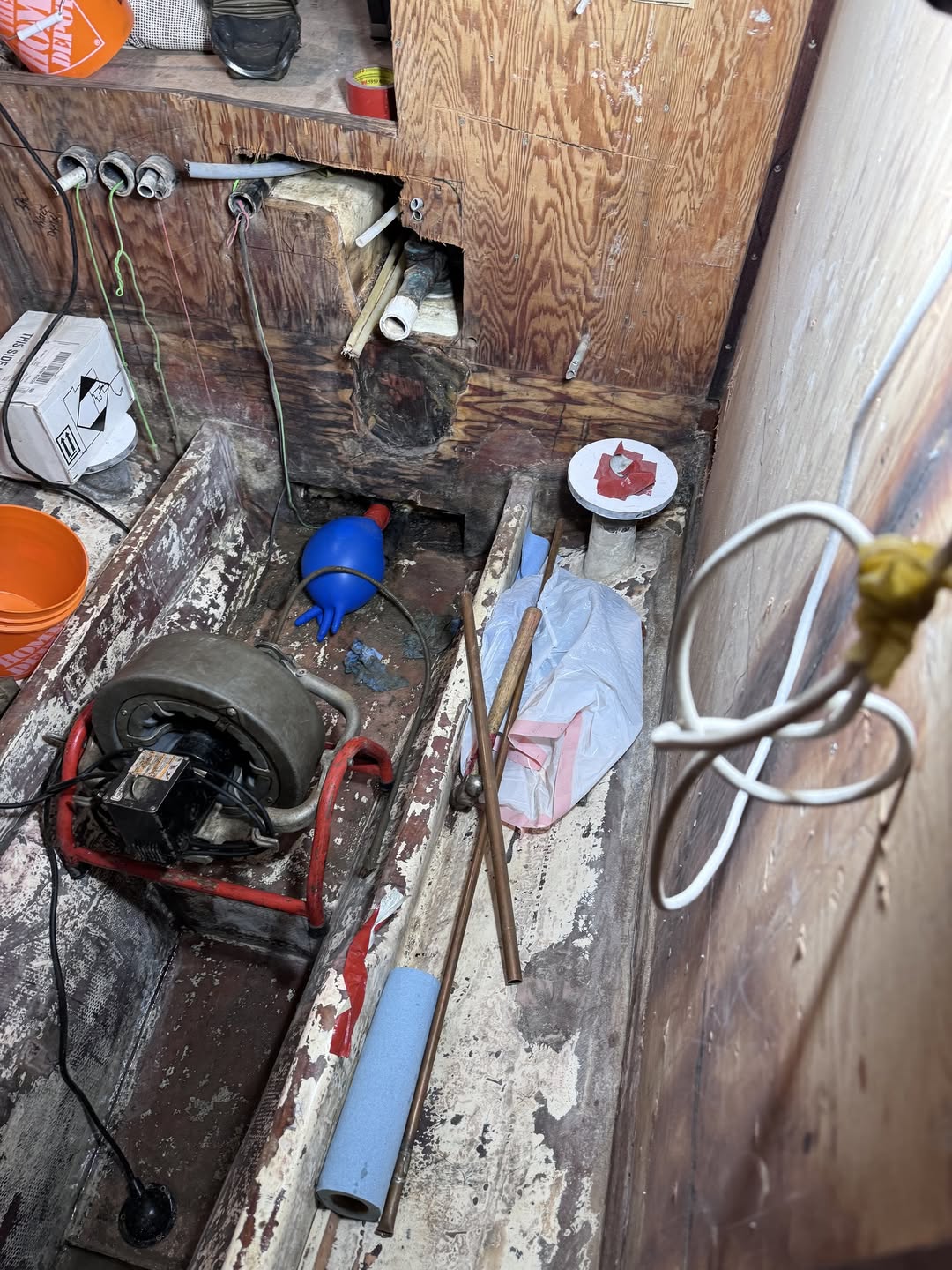
This stage of a typical OSĒA project looks quited ifferent from what people are seeing on the Tangaroa videos. Most clients can expect to swap out old equipment for new, with wiring and cabling updates handled by a boatyard of the client's choosing — or one OSĒA recommends if needed. Blaine and Janics are doing the work themselves and have chosen to under take a larger overhaul at the same time.

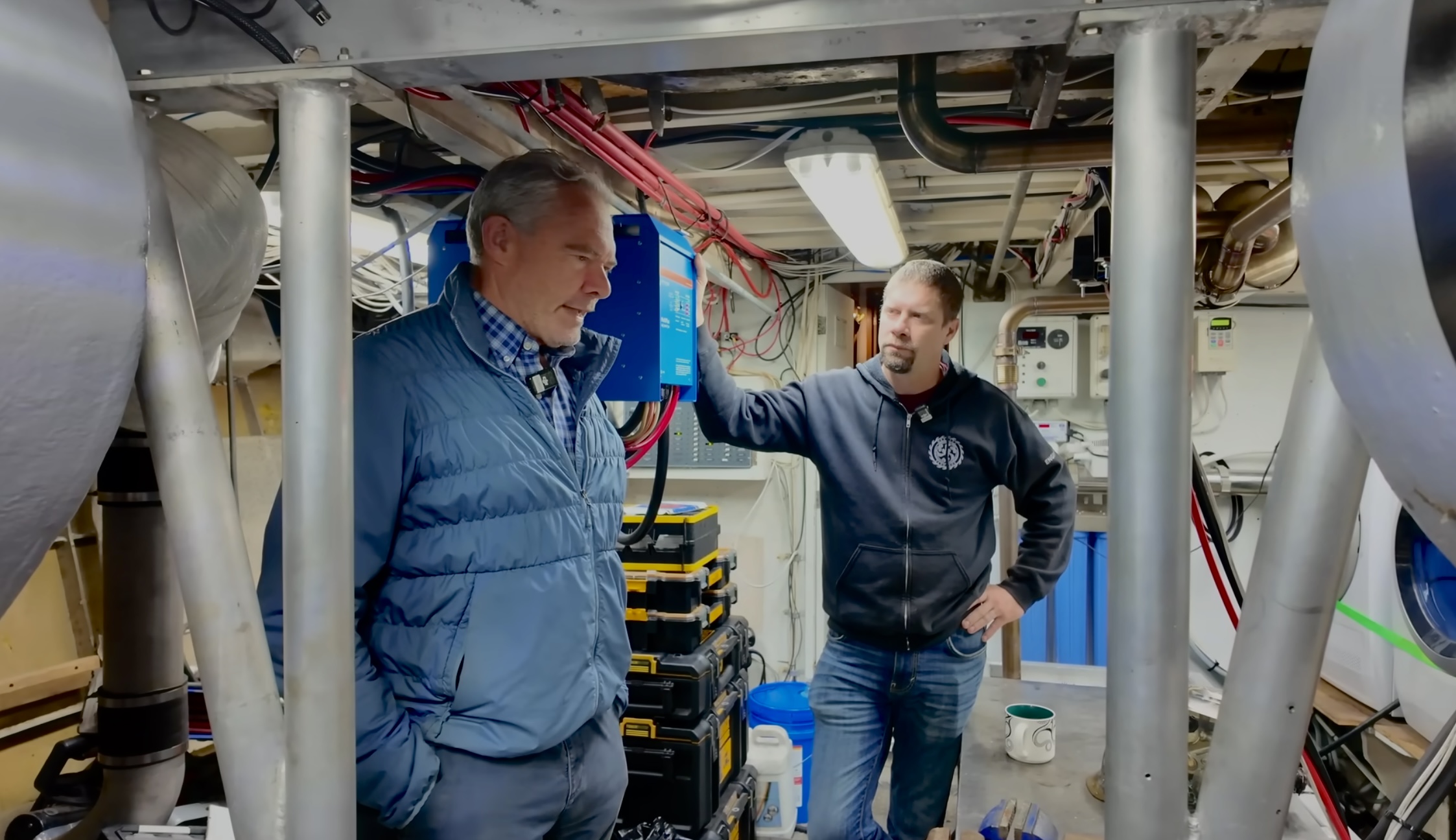
Both Cummins engines have been removed. The engine room has been steam-cleaned. Insulation materials were burn-tested and water-absorption tested — rockwool is fire-safe but absorbs water and cannot contact aluminum directly. The finalised approach: cork sheet against the hull, rockwool to fillthe void, plywood over that, formica wall panels.

3D door-skin mockups of all major components have been built and iterated through multiple layouts. The engine room will be divided by a new bulkhead into two sections:

- Aft — Machinery Space: Three generators located in the corners of the machinery space and at midships, exhaust, ventilation. Double isolation mounts throughout for vibration management on the aluminum hull. Batteries split into two banks on facing inwards on the aft bulkhead of the machinery space. The batteries will need to be built into cabinets that can be uniquely vented to make the temperature management unique from the generator space.
- Forward — Utility: Washer/dryer, tool bench, electrical panels, fuel manifold. Watermakers Air drawn down through the existing stack duct flows over the batteries and exhausts back to the machinery space. The pilot house sits directly above — the bulkhead provides an additional noise/temperature barrier.
Overall displacement is expected to land around 85,000–86,000 lbs — comparable to the original Detroit diesel configuration, with weight low in the hull and fixed rather than varying with fuel load.
Pending
- Final generator, motor, and battery supplier selection
- Fire suppression system
- Propeller evaluation
- Day tank sizing and keel cooling vs. impeller decision
- Wiring and installation
Target: in water early summer. Aleutians–Japan crossing