
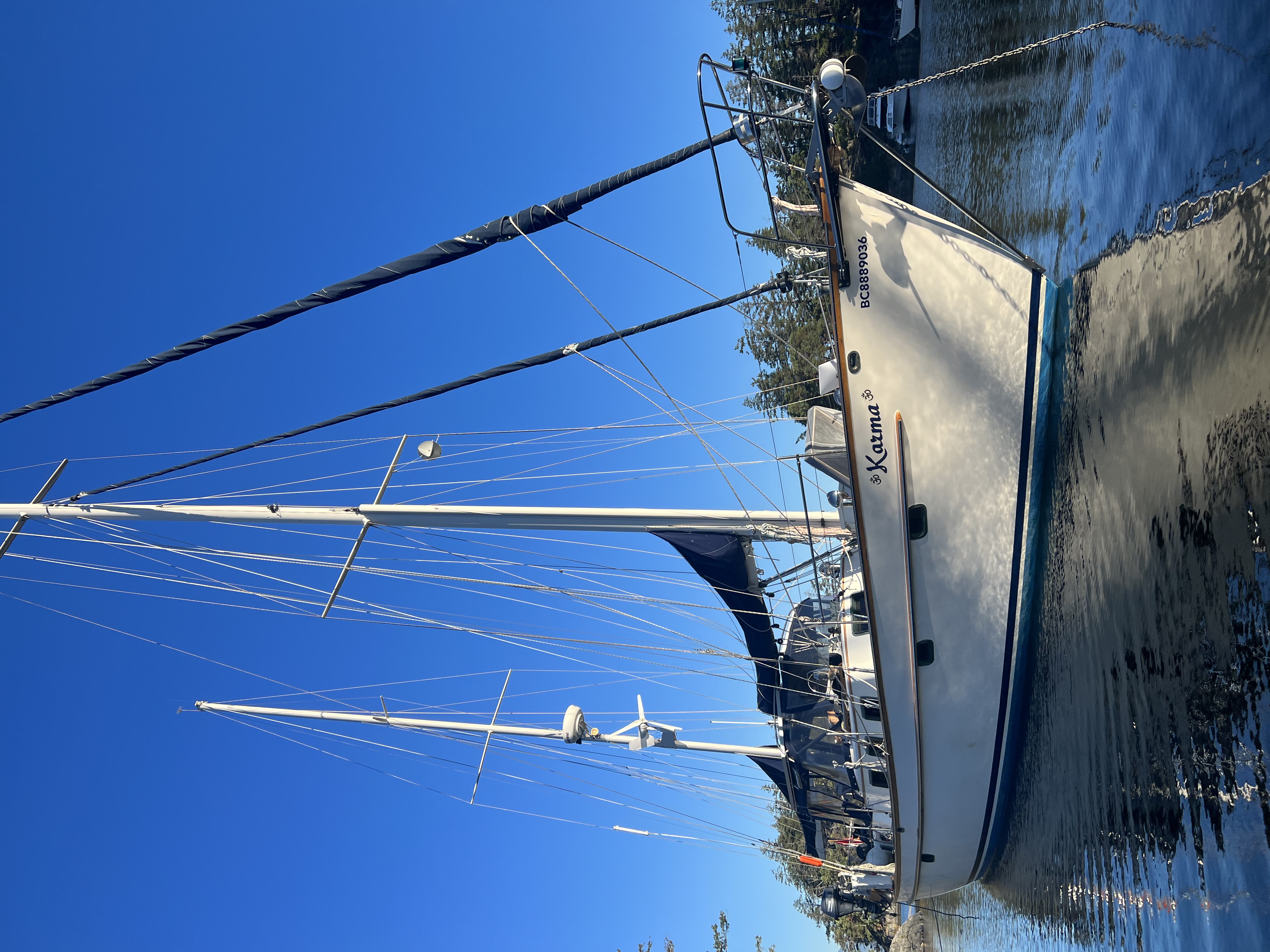
The Karma Project Part 1
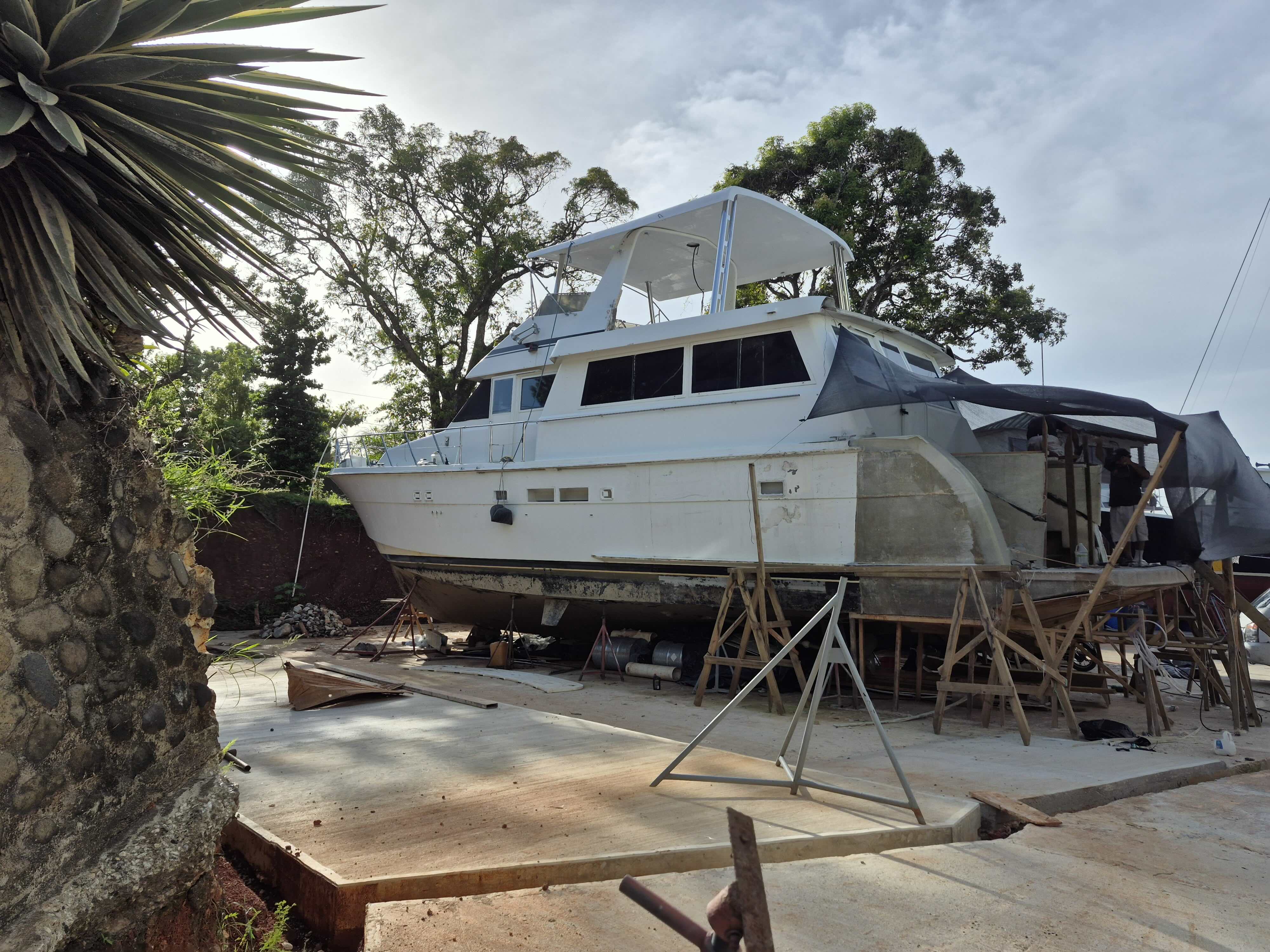
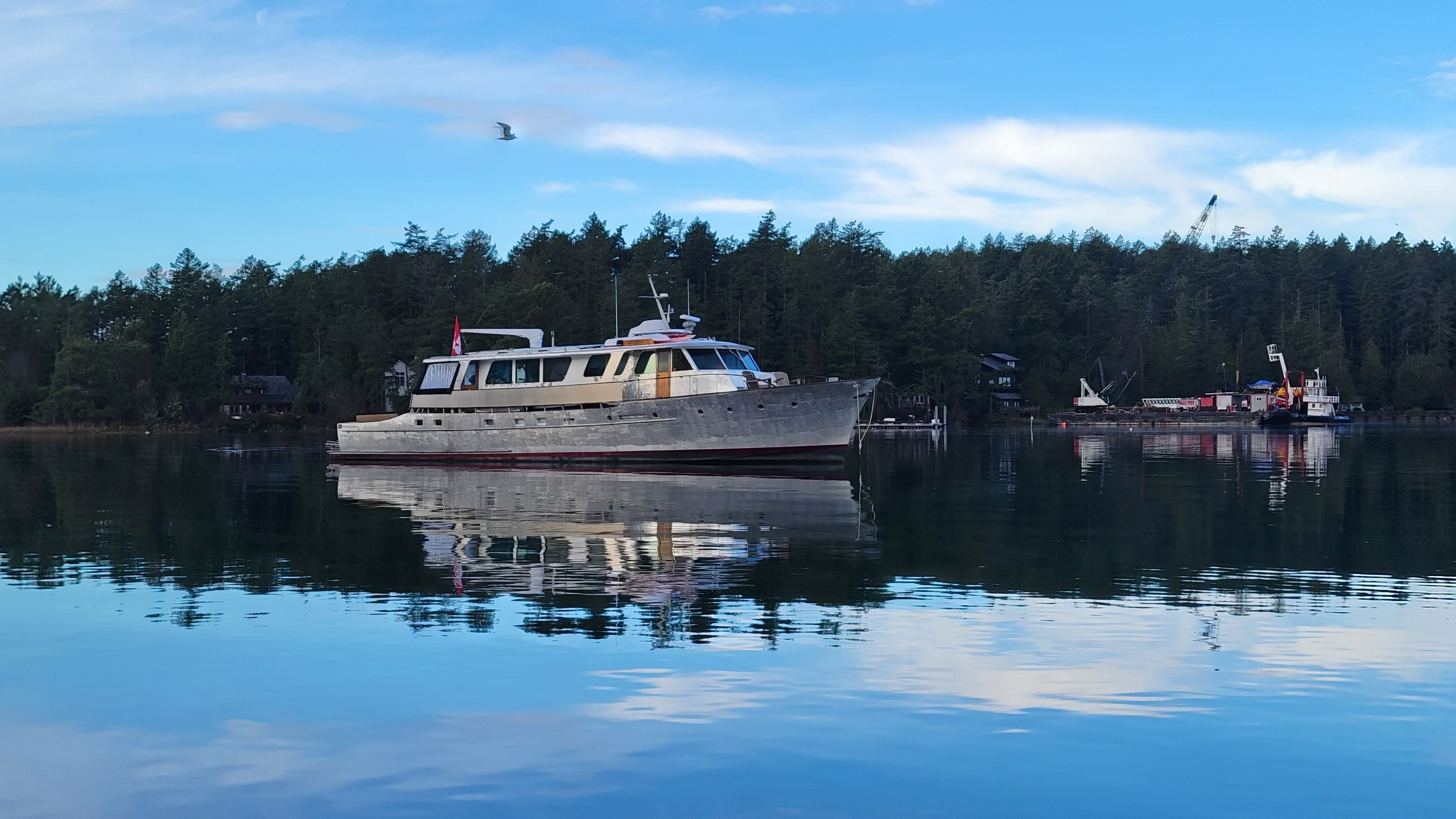
Lets start with the backstory - Karma was chosen deliberately over years of investigating blue water sailboats . She’s a proven bluewater vessel with strong structure, offshore miles behind her, and a great quality foundation- a boat that has another 25-30 years of life available ift he systems allow it. A full refit made sense- a great result at a fraction of the cost of a new boat. She’s not a concept vessel or a blank slate—she’s a real cruising boat, with real constraints and real expectations.
For Brent and his family, Karma needed to be more than capable—it needed to be livable. This was the boat they planned to sail, live aboard, and take around the world as a family. That requirement grounded the project in reality from day one.
That’s exactly why she was the right platform for this project.

Choosing the Right Boat (and Defining the Job)
We searched for the right boat for three years, and before we started to refit, we lived aboard — sailed, anchored, powered, and used the way the family intended to use it. That year onboard wasn’t about performance testing. It was about understanding what actually mattered to Brent and his family. It guided all of our design and refit decisions about what was really important to us.
What We Determined:
- The changes we wanted to the boat on top of the electric conversion, from galley updates, storage capability, and adding a washer drier
- Energy use at anchor, underway, and offshore
- How long the boat needs to operate without starting a generator
- A real understanding of how much energy we needed to live worry free, with unlimited opportunity to live the way we wanted to live
- Before new technology is added, we take the opportunity to review the ship as a whole—its systems, access, and serviceability—to see where improvements make sense. Hybrid-electric refits areabout far more than adding batteries; they’re an opportunity to make the entire vessel more efficient.
- That’s why we always define the mission first.
Our needs beyond electric propulsion:
- Karma was transforming from a boat for two to a boat for up to five. That meant that we could not use the spare berth as a warehouse, we had to have all cabins accessible and livable. Our experience living aboard taught us to really carefully evaluate the actual needs on board-and stick to what we needed to have in order to have as much free space as possible.
- We are a cooking family, and although Karmas galley was great, it did not have the ability to support the way we eat and cook, so we had to make some changes to the salon area to improve usable space and increase organization.
- We did not like having propane cooking on board, on our offshore history accessing propane in foreign countries was an adventure, and the boat was designed with everything draining to the bilge, for us this meant that if we ever had a propane leak it would end up in the bilge.
- We needed to improve (reduce) the energy consumption of the refrigerator and the two freezers, this meant new compressors and plates- it reduced our consumption by about 40% on actual energy to run the Fridge and Freezers.
- We need to add an ice maker for the boat.
- The old pantry storage was a jumble of plastic boxes stacked in a good size locker, which meant whatever needed was always on the bottom of the pile
- The cockpit was another critical space for us. Karma has a large cockpit, but it was dedicated to the steering wheel and had no table for eating or playing cards or doing puzzles.
- We needed to convert the V-berth into a private apartment for our son
The Game Plan: Assessing the space + our equipment needs
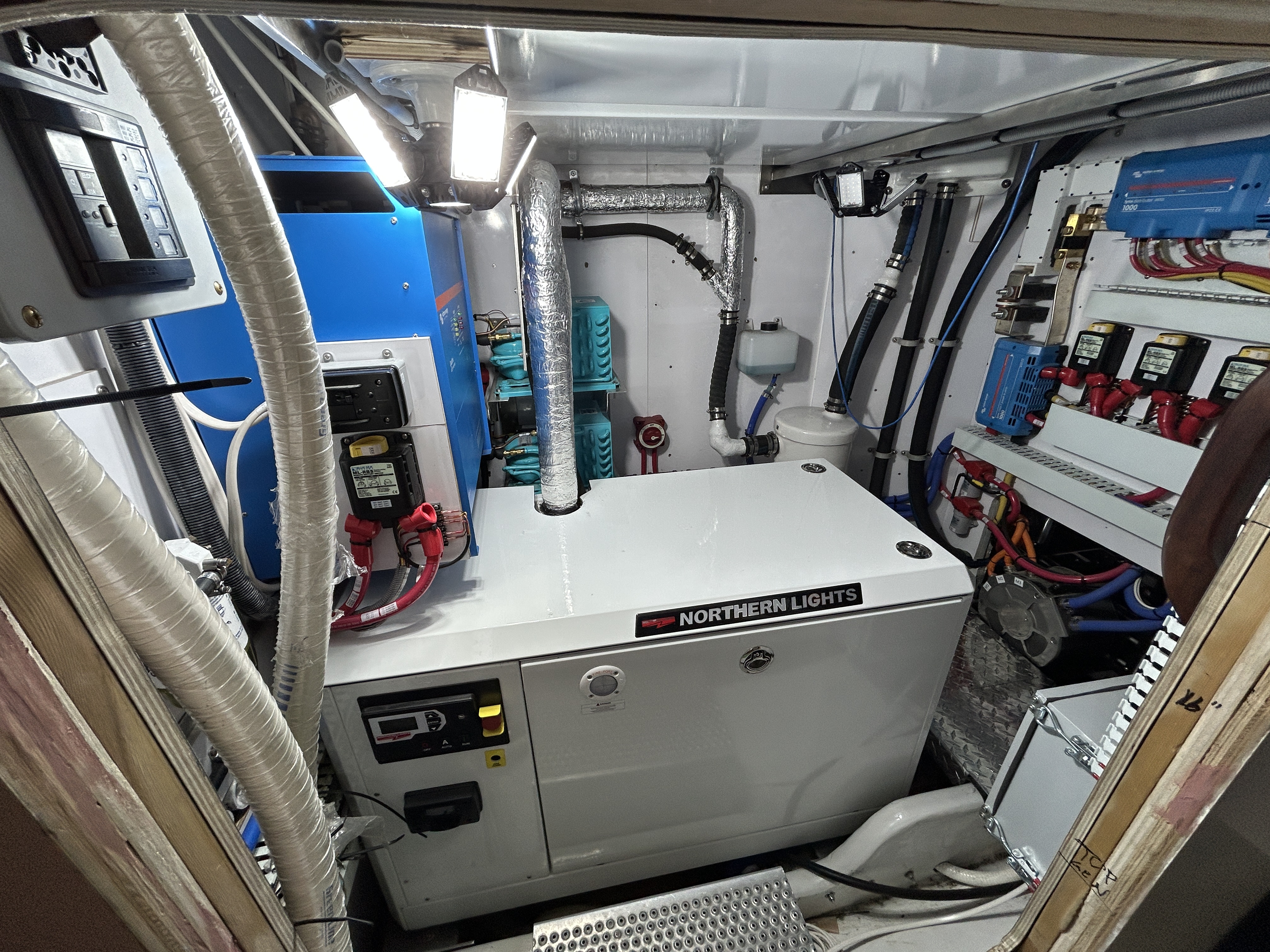
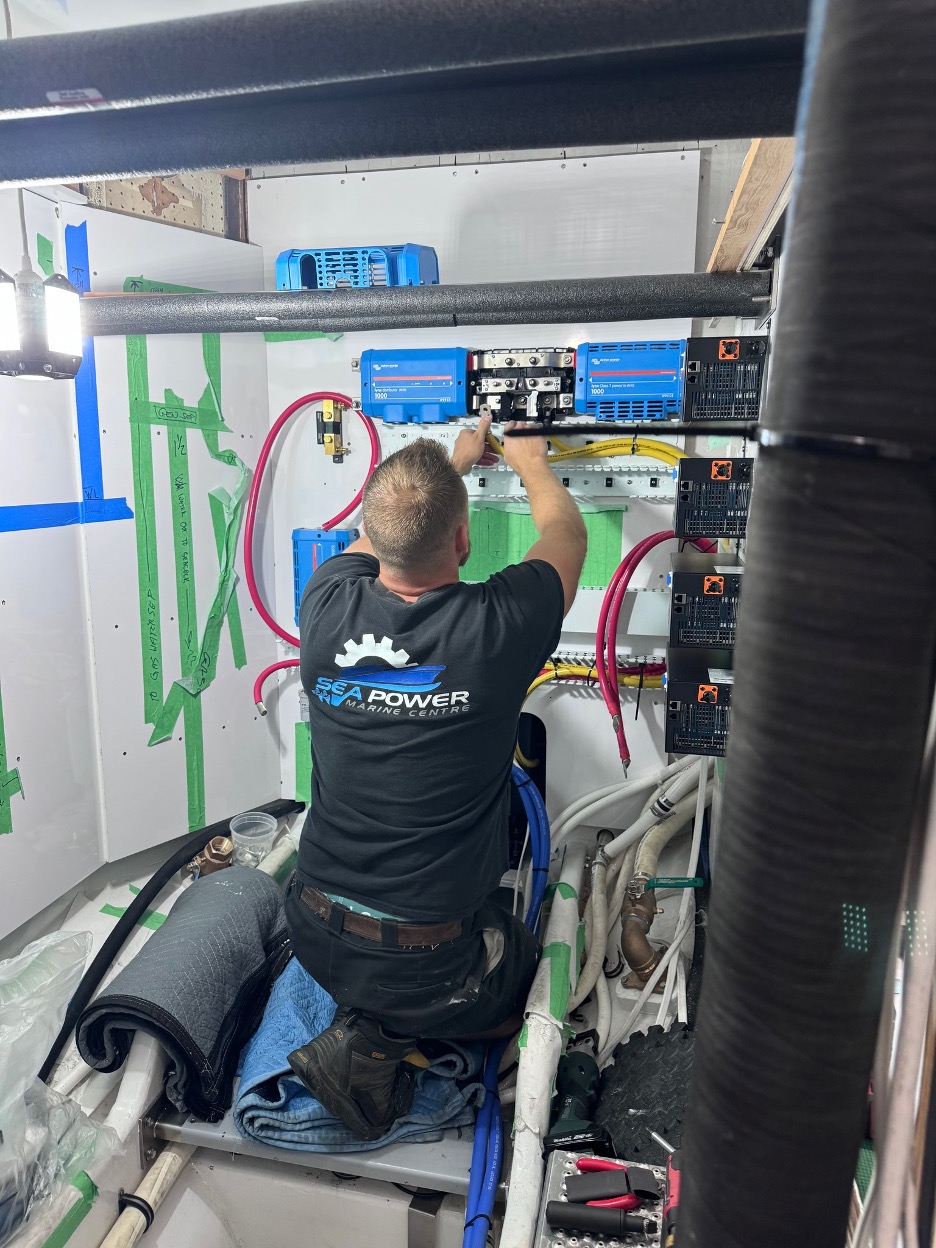
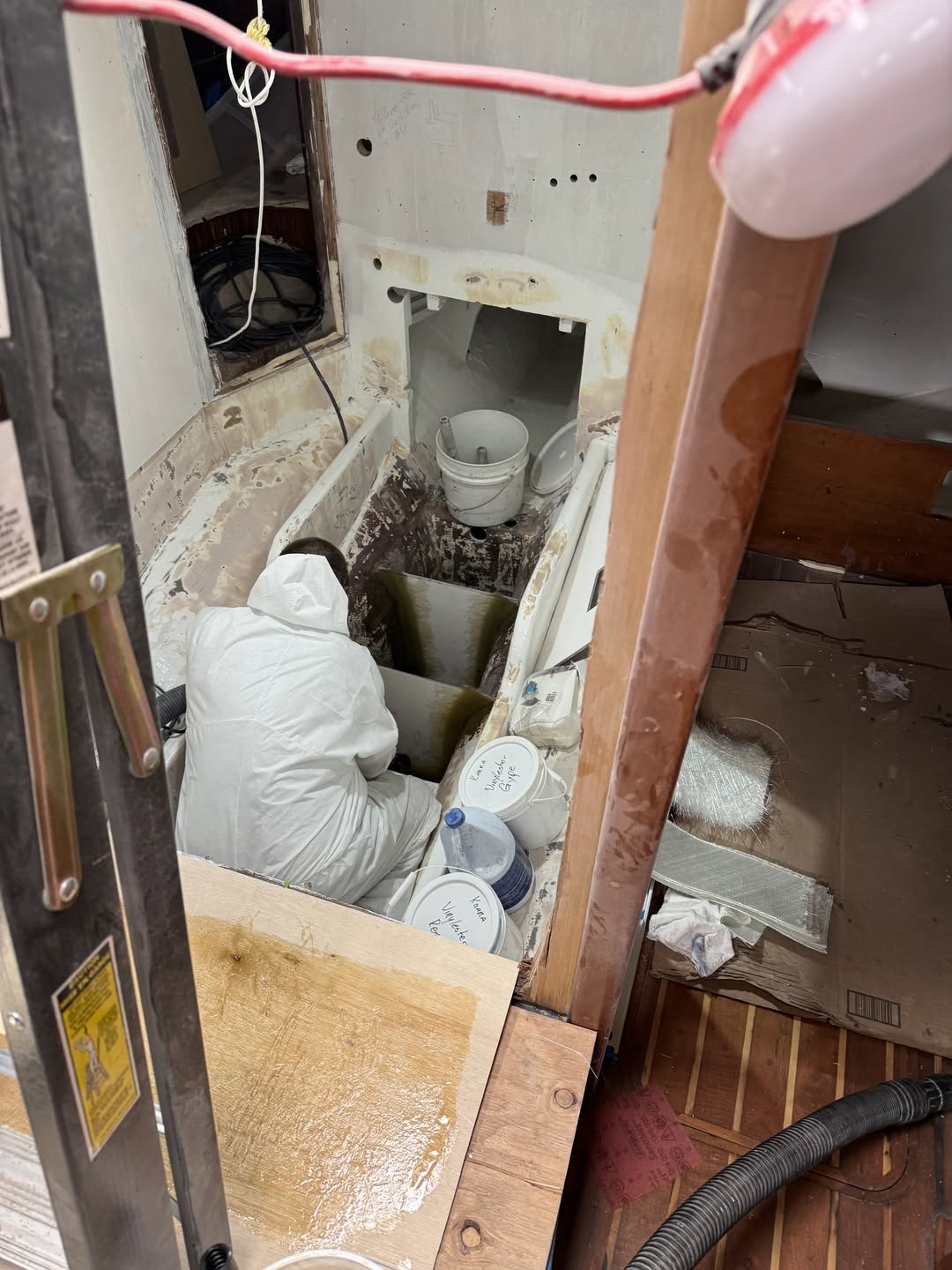
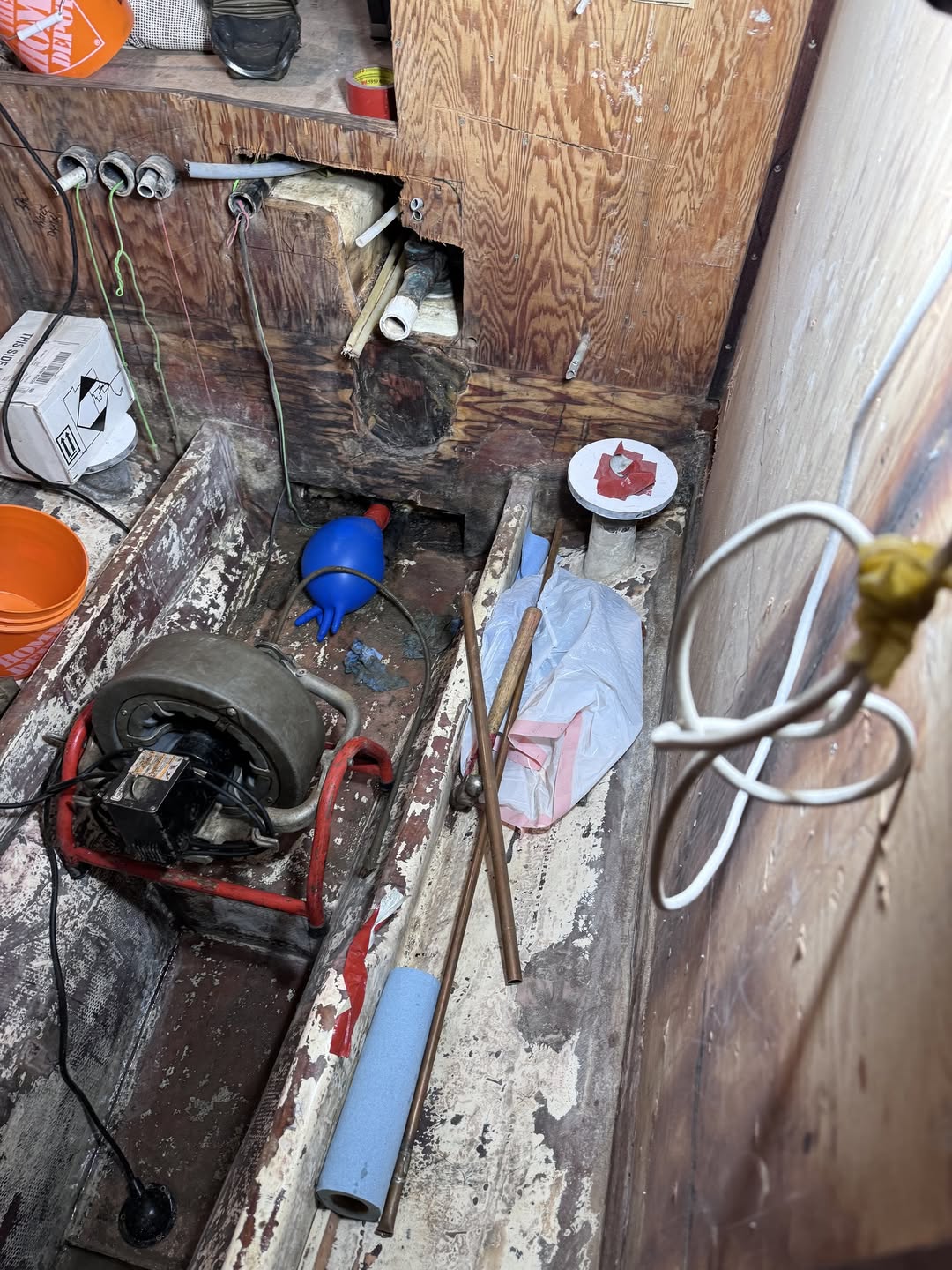
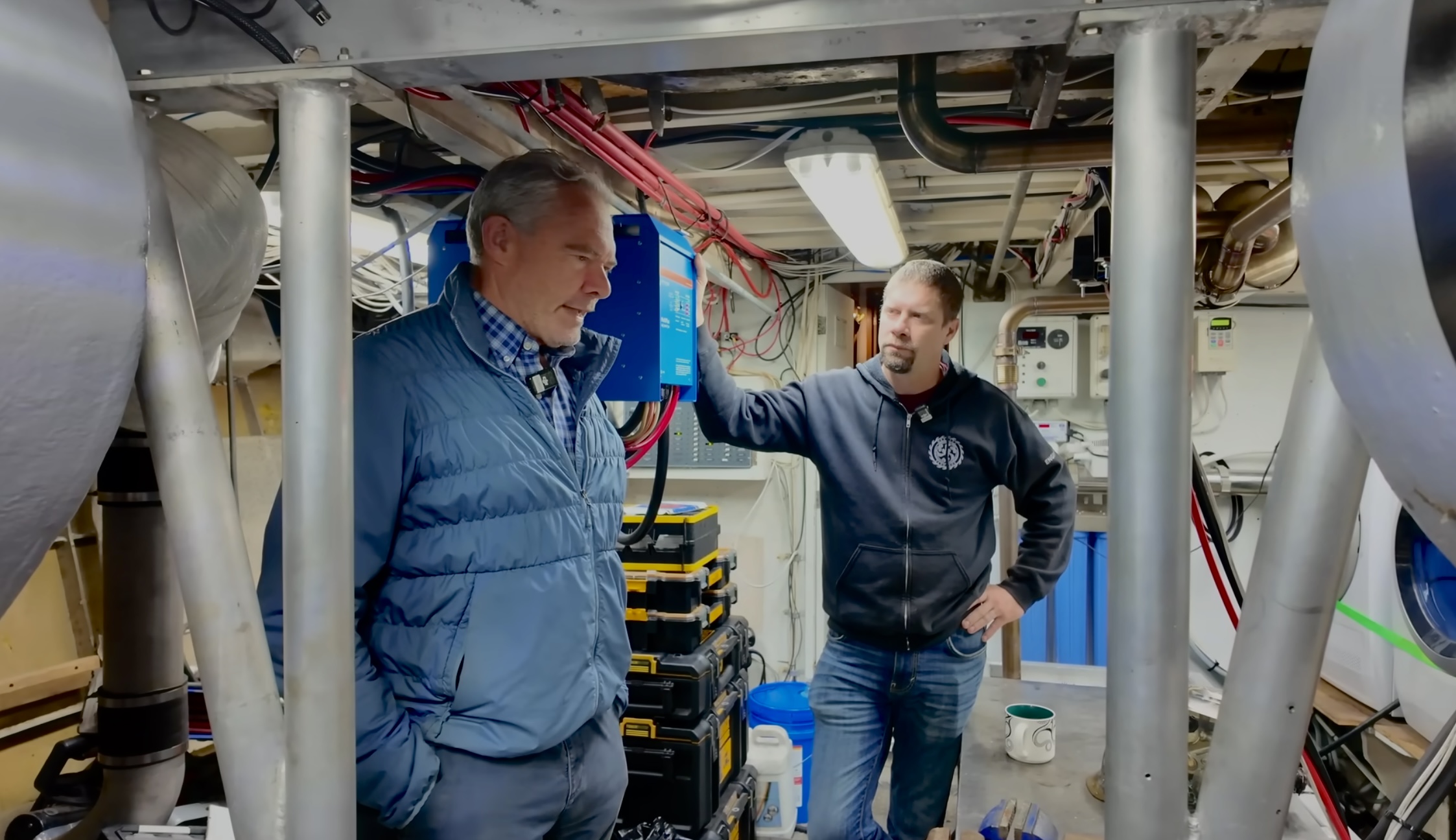
With the operating profile defined, attention turned to the engine room —starting with the machinery space and existing systems. This meant documenting the original engine installation, wiring pathways, tankage, access points, and service limitations. The downside of an older vessel was the lack of construction drawings and accurate machinery and wiring diagrams.
Understanding what was already onboard—and how it was installed—allowed us to plan a system that would integrate cleanly, add in serviceability and improve overall reliability rather than add complexity.
(This section will visually show the original engine room, wiring, and system layout.)
Next Steps:
With the operating profile defined, the build moves from discovery into execution:
- Finalize architecture (voltage, redundancy, charging strategy, system layout)
- Component selection + supplier audits (batteries, motors, generators, power electronics)
- Begin vessel prep (engine room strip-out, wiring pathways, mounting design, safety systems planning)
- Build schedule + integration plan for haul-out and install
Three Key Takeaways
Most electric conversions start with a motor or a battery. That’s backwards.
A propulsion system can’t be designed in isolation. Until you understand how a boat is actually used—how often the engine runs, how long it operates at different speeds, and what systems are being powered—you’re just guessing.
From the outset, three principles guided the project:
- Define the duty cycle before touching components
- Design for real use
- Prioritize reliability and flexibility when things don’t go perfectly (build in a planB!)
This approach isn’t unique to Karma—it’s how we approach every hybrid-electric project.