
Powering Up
When Decisions Stop Being Reversible
By the time the machinery space began to come back together, one thing was clear:
it was time to commit.
Up until this point, most choices could be revisited.Layouts could shift. Systems could move. Access could be rethought. Once propulsion power, generator size, and core electrical architecture weres elected, those decisions would ripple through every remaining system on the boat.
This is where electrification stops being theoretical.
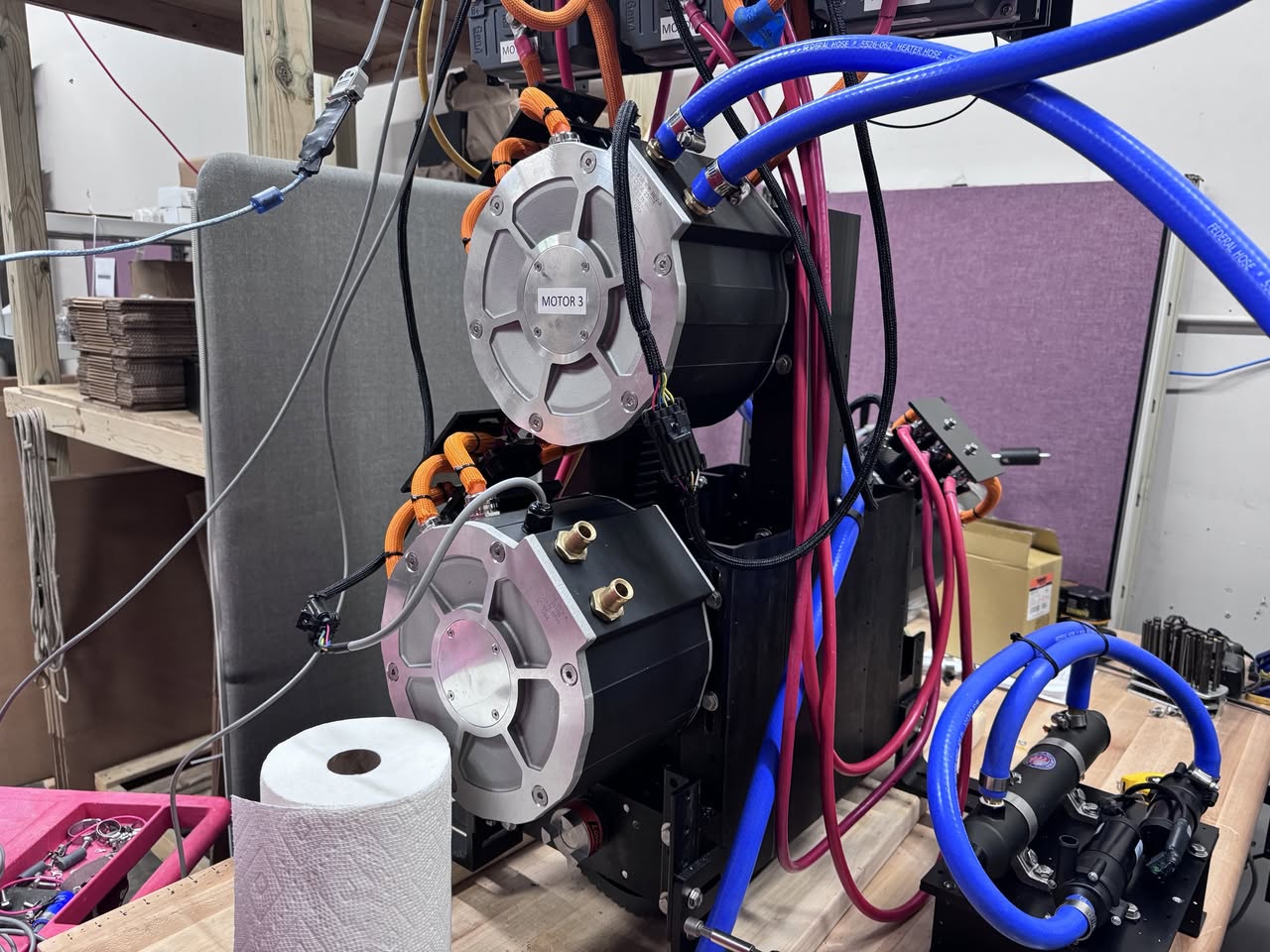
e-MotorSizing - Settling on 30kW (and Why It Was the Right Call)
I spent a long time exploring electric motor sizes up to 60kW. The numbers worked. The performance curves were appealing. And in isolation, there was no technical reason not to do it.
But boats don’t operate in isolation.
Insurance requirements, recreational marine standards, charging infrastructure, redundancy planning, heat management, and serviceability all begin to stack up quickly once power levels climb. Every additional kilowatt demands more from batteries, cabling, protection systems, ventilation, and control logic.
At some point, “more capable” quietly becomes “less practical.
After working through the full system — not just propulsion — we committed to a 30kW electric motor.
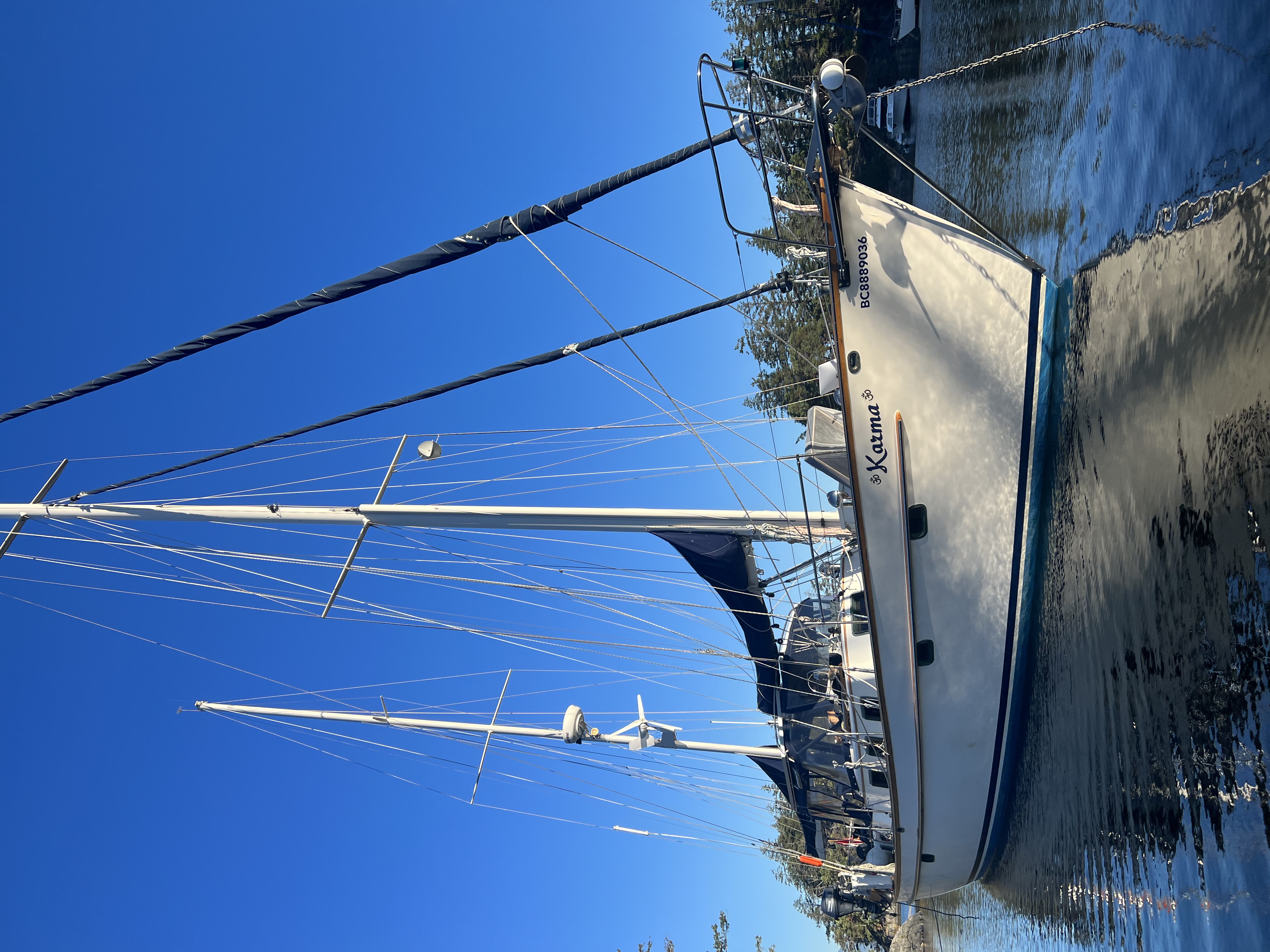
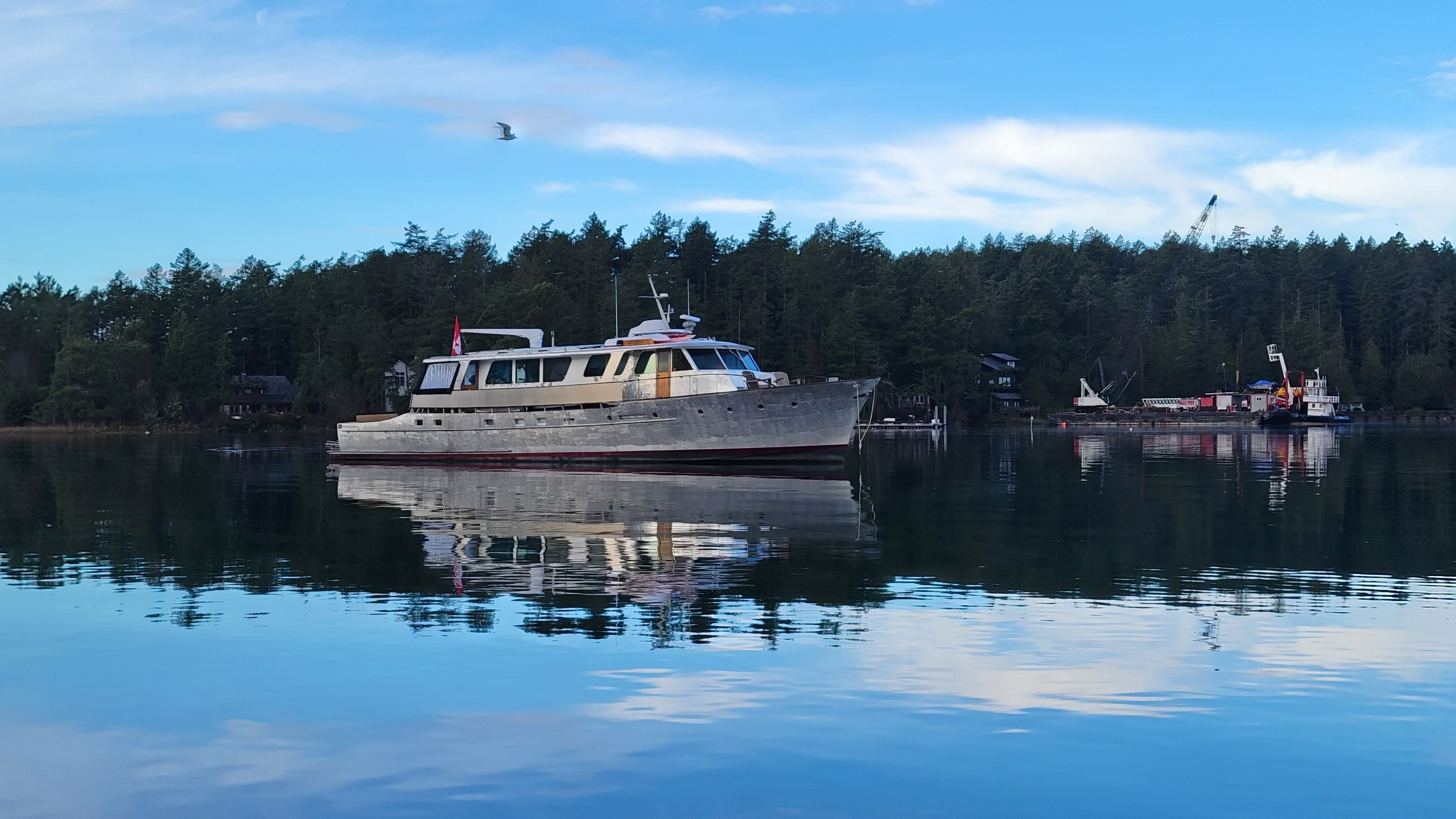
That decision was grounded in how Karma is actually used:
- Real cruising speeds, not theoretical top speed
- Long-duration motoring capability
- Predictable charging behaviour
- Alignment with available marine-certified components
At 18kW, the motor delivers over 7 knots of continuous cruising speed, with additional headroom available when needed. Just as importantly, it allows the rest of the system to remain balanced.
Electric propulsion rewards restraint. Over sizing doesn’t add safety — it adds complexity.
Generator as Range Extender, Not Crutch
With propulsion power defined, generator selection became clearer.
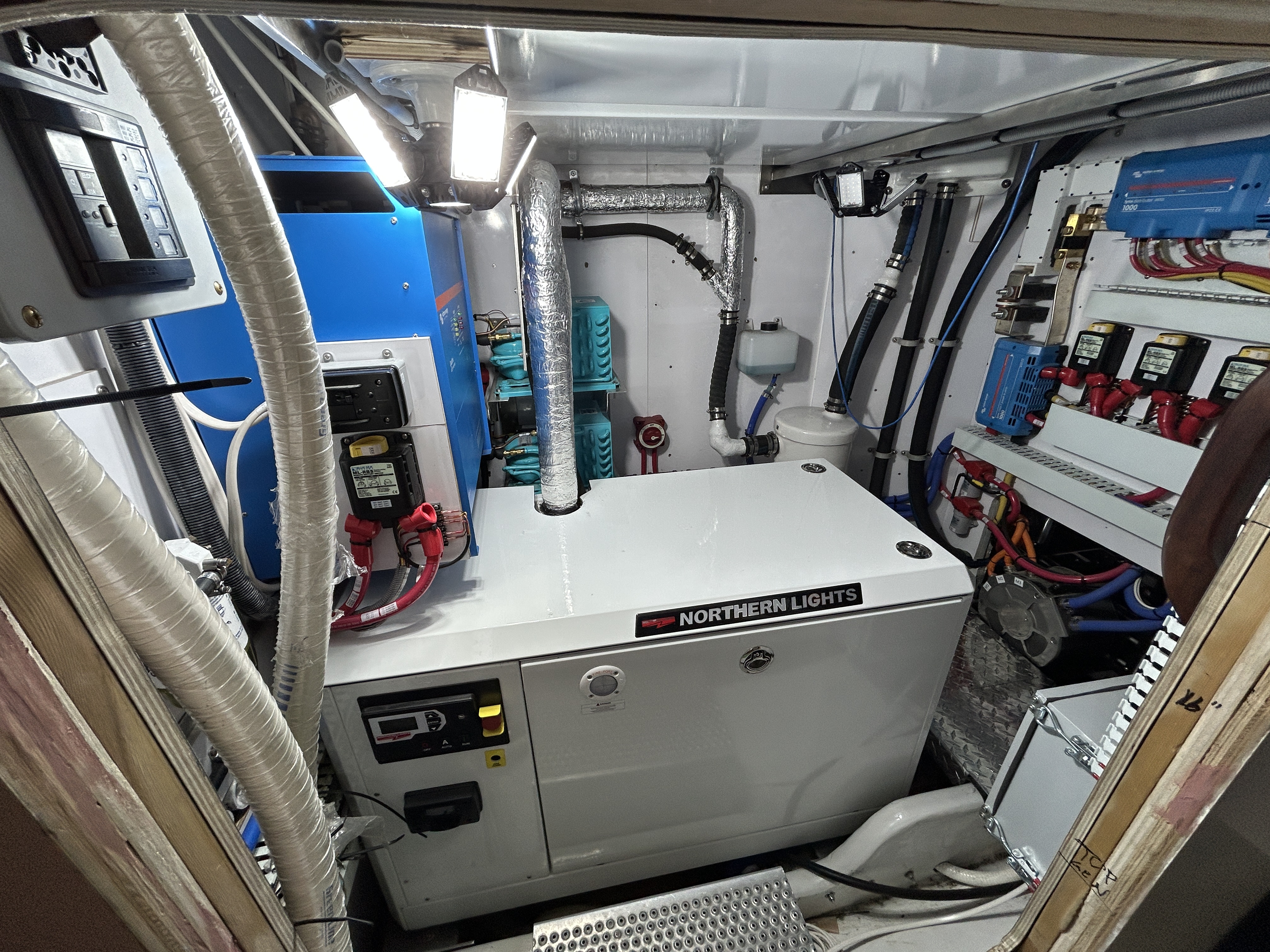
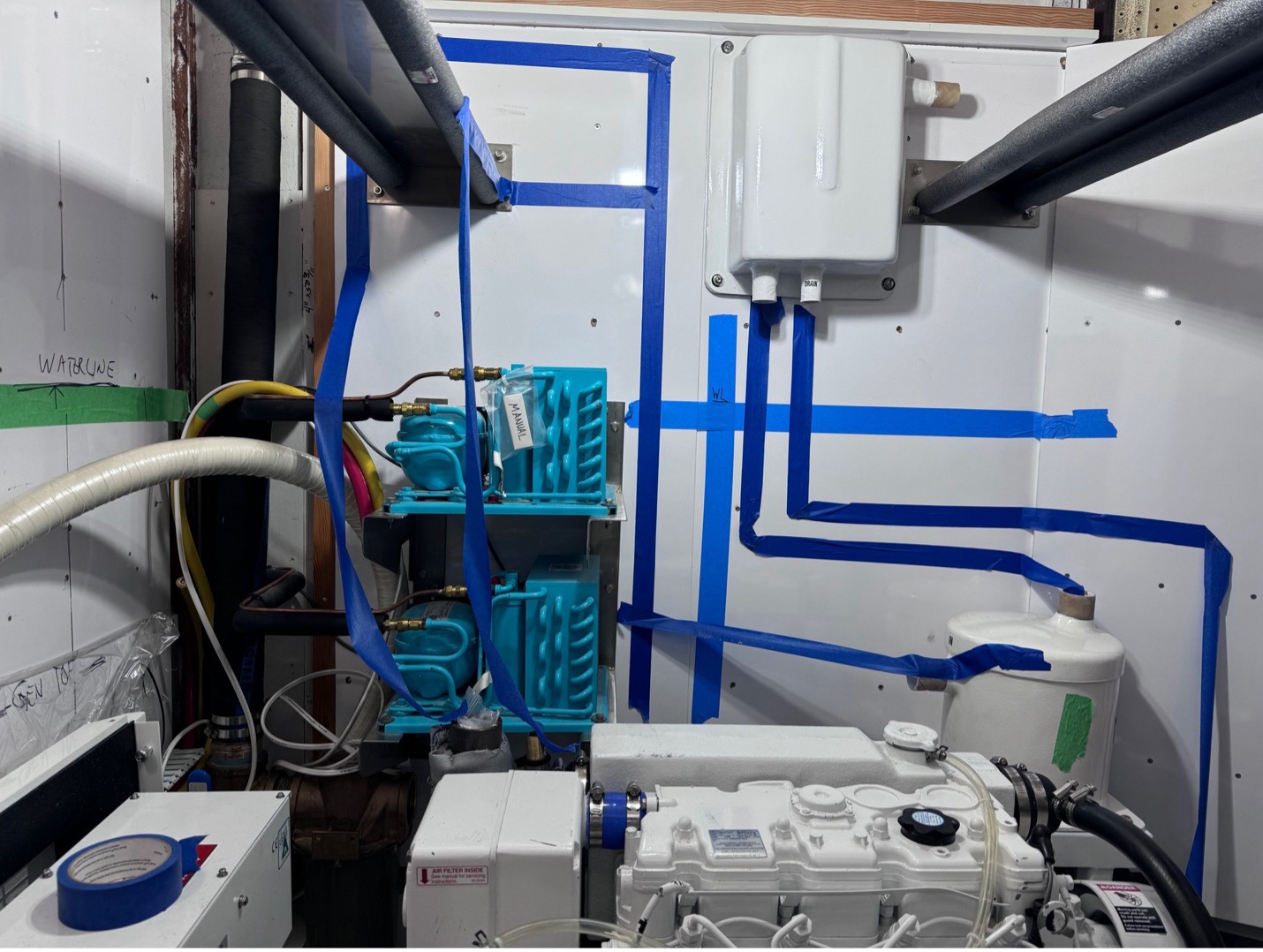
We chose a 20kW Northern Lights generator — not to chase peak loads, but to act as a steady, efficient range extender. Its primary role is charging batteries under controlled conditions, not responding to every onboard demand in real time.
Installing it below the waterline introduced real design constraints. Intake and exhaust routing had to be carefully managed to eliminate flooding risk at any heel angle. Gas and water separation, vented loops, and custom exhaust fabrication were non-negotiable.
Architecture Before Hardware
Rather than layering systems on top of each other, we committed early to a simple electrical architecture:

- 48VDC as the primary backbone
- DC-DC conversion for 24V and 12V systems
- Centralized inverter for 120/240VAC loads
- Generator dedicated to charging
- Isolated AGM battery banks for specific purposes- generator start, electronics, bow thruster and windlass- all managed by isolated batteries that charge off the main 48VDC lithium battery- it was really important to manage all possible safety issues with redundancy and focus on reliability.
This approach reduces parallel systems, simplifies fault-finding, and makes energy flows predictable. It also forces discipline —loads must justify their existence.
Before a single battery was installed, we knew how power would move through the boat.
Seeing the System Take Shape
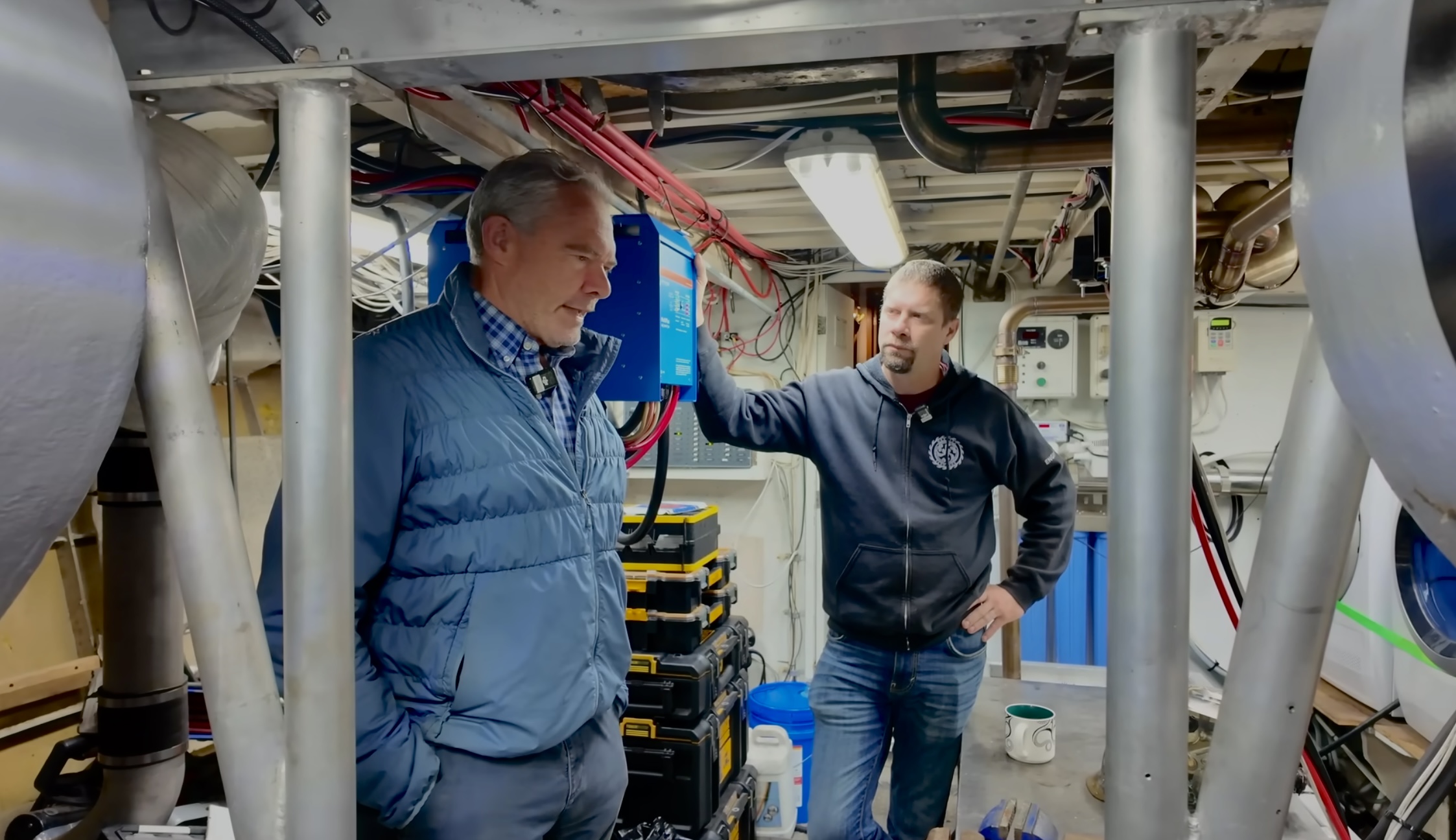
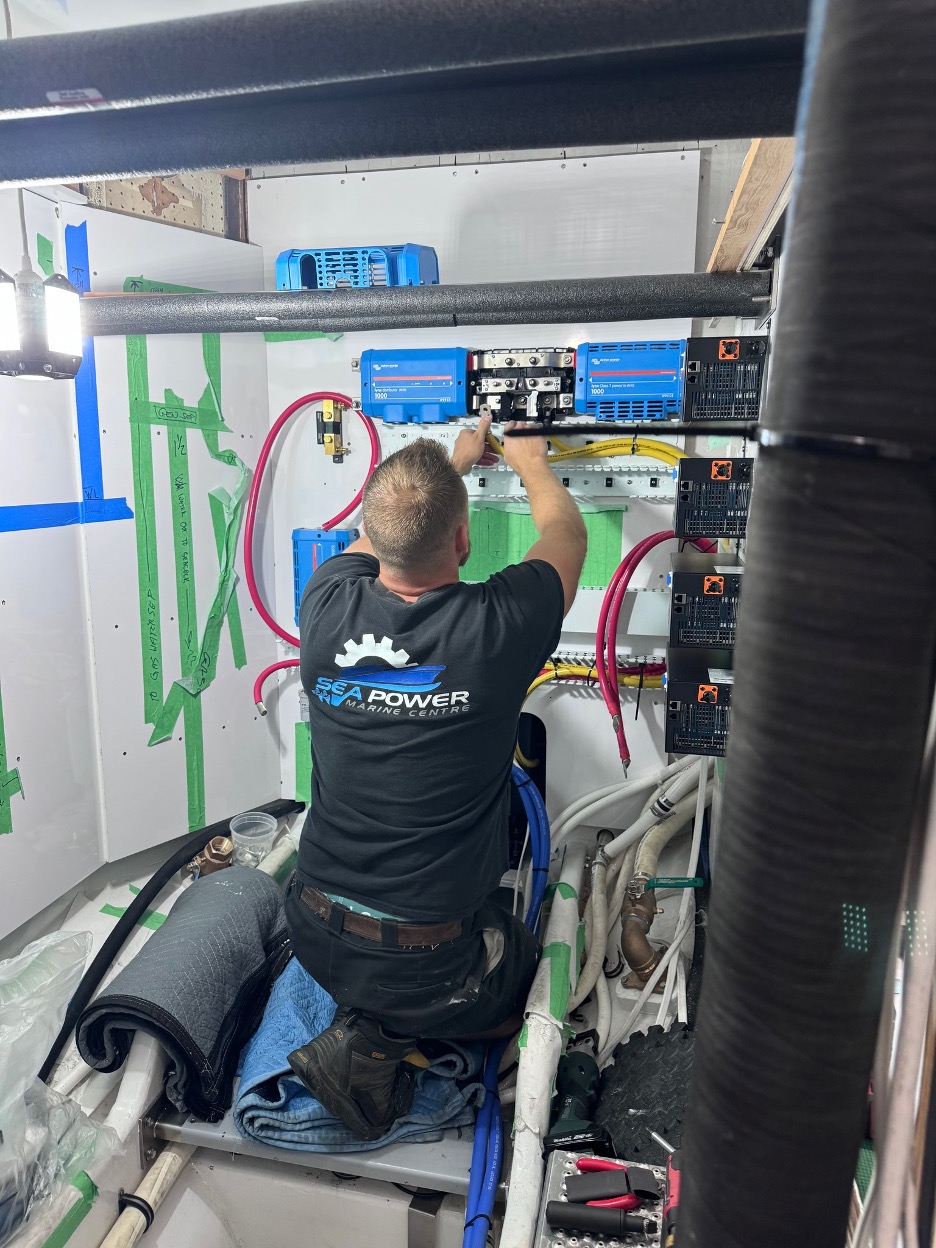
Once the power electronics began going in — busbars, chargers, converters — the machinery space finally felt cohesive.

Clear cable runs with tagged wires and routing for longterm service.
Logical separation of systems.
Access that made sense.

This was no longer a collection of components. It was becoming a system.
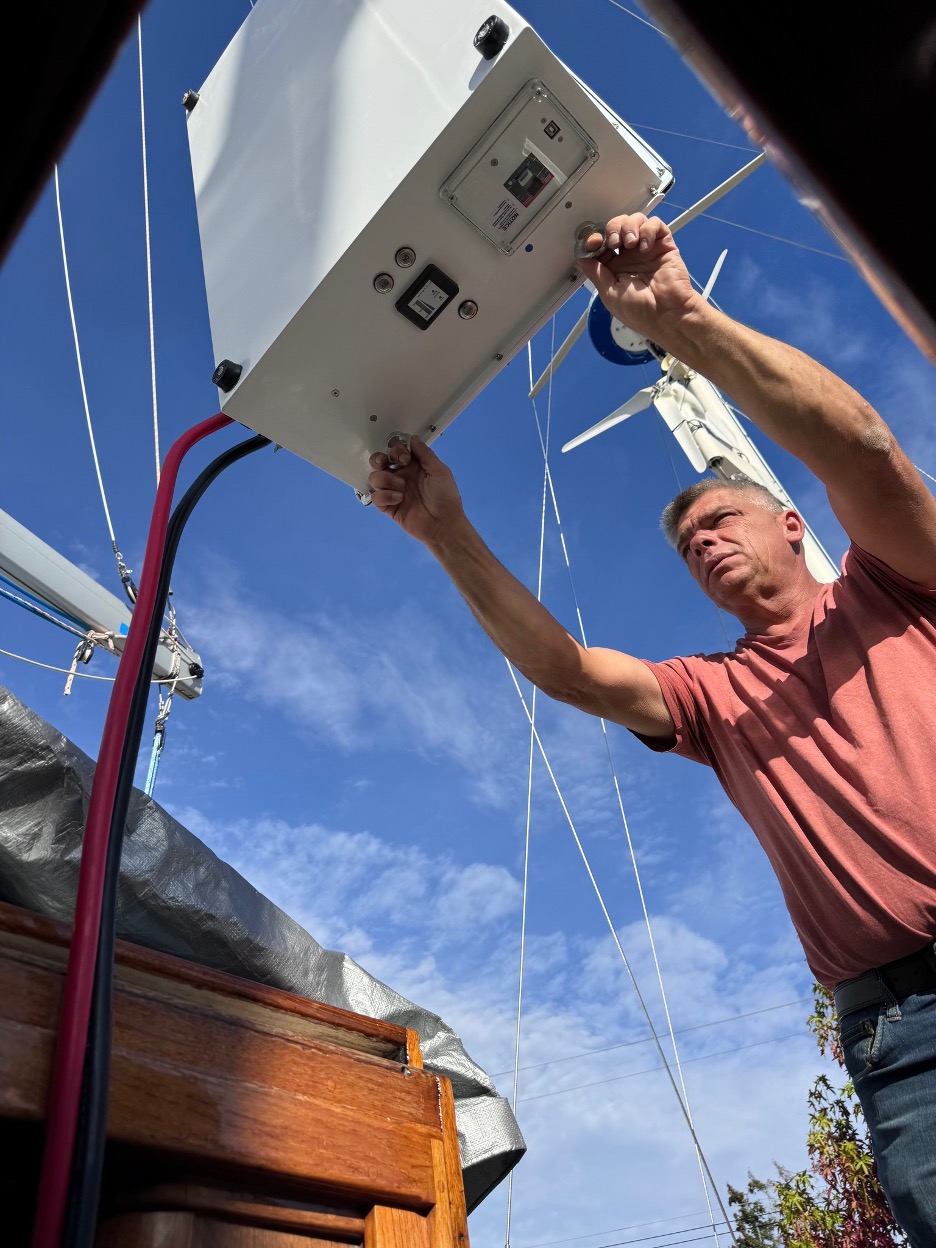
And importantly, it was a system designed around how the boat would be lived on, not how impressive the spec sheet might look.