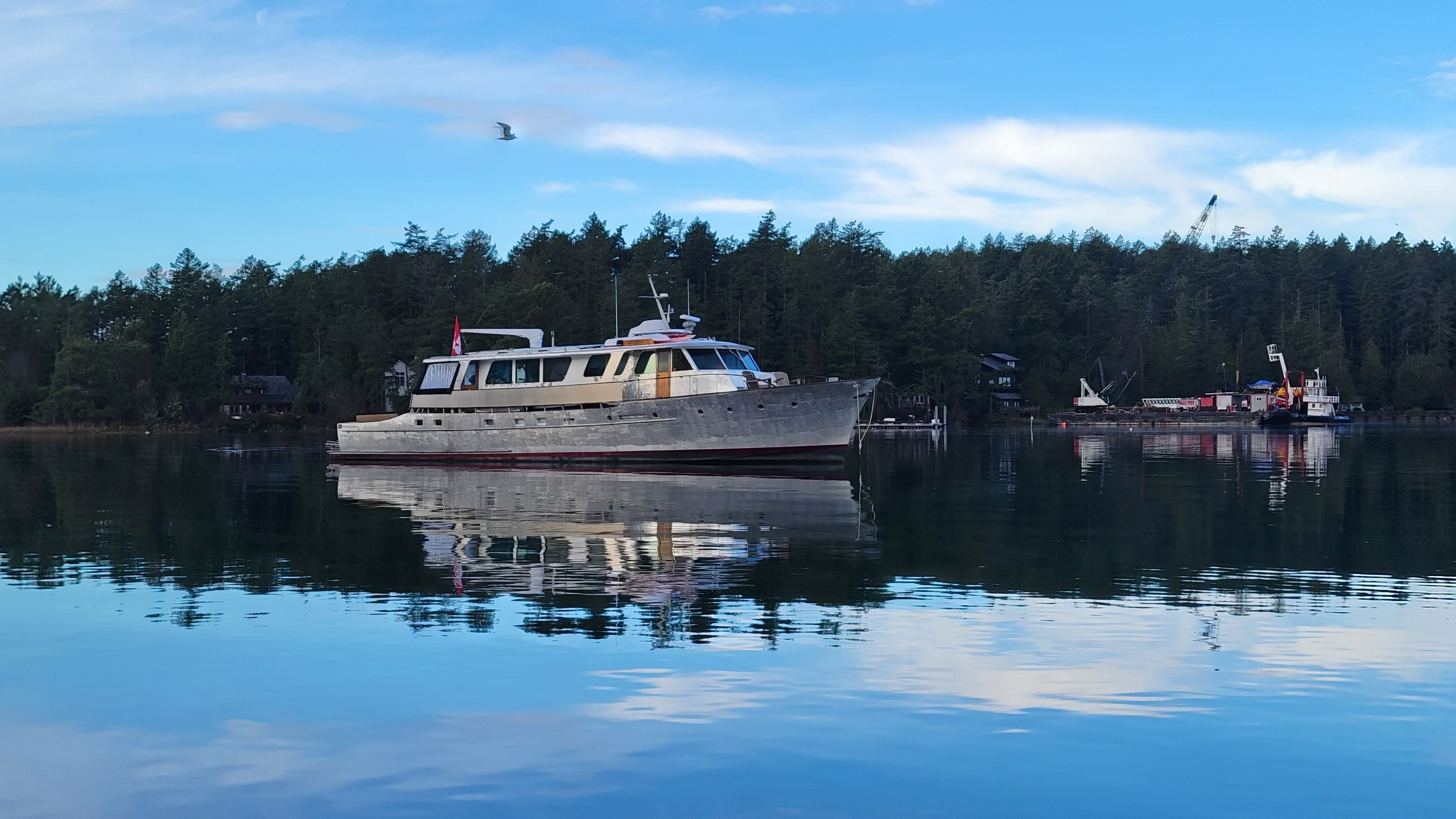


Vessel: Inside Passage - Chris-Craft 47 Rumrunner
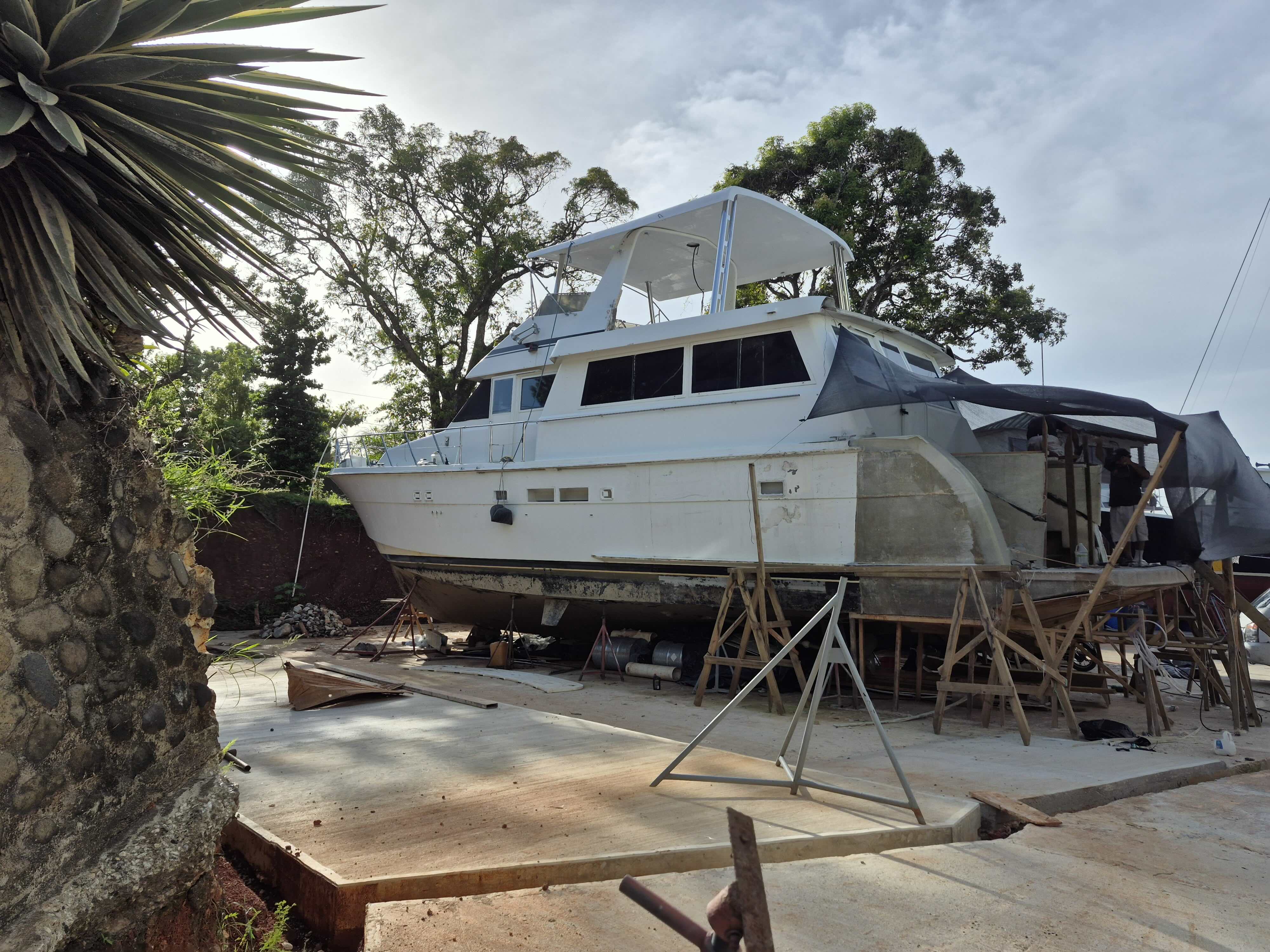
Inside Passage has been turning heads for over forty years. Built on a Chris-Craft 47 hull with a custom mahogany and teak superstructure, she is one of three boats commissioned in the early 1980s by the founders of Force 10 — cast from the same fibreglass hull mould, each topped with hand-built rum runner topsides lowered on by crane. She has been running with the same power plant since she was new.
Ken and Wendy had been thinking about electric propulsion for some time. For Ken this has been a a dream 50 years in the making. They found OSĒA through a Blue Water Cruising Association talk. Brent came to see the boat. The project followed from there.
Defining the mission
Before OSĒA designs a system, we need to understand exactly how the boat is used. How far Ken and Wendy travel. How long they stay at anchor. What runs every day — refrigeration, lighting, cooking, heating, electronics. These are the hotel loads, the power the boat consumes beyond propulsion.
For Ken and Wendy, the mission was clear from the first conversation:
- Inside Passage is a coastal cruiser — the Strait of Georgia, BC coast, protected waters
- They time crossings for flat water, early morning, minimal sea state
- They live aboard full time — hotel load is continuous, not occasional
- The engine had reached the end of its serviceable life — leaking oil, loud enough that conversation underway meant raising your voice
- A new diesel was considered and set aside
- The brief: quiet and low maintenance
Designing the system
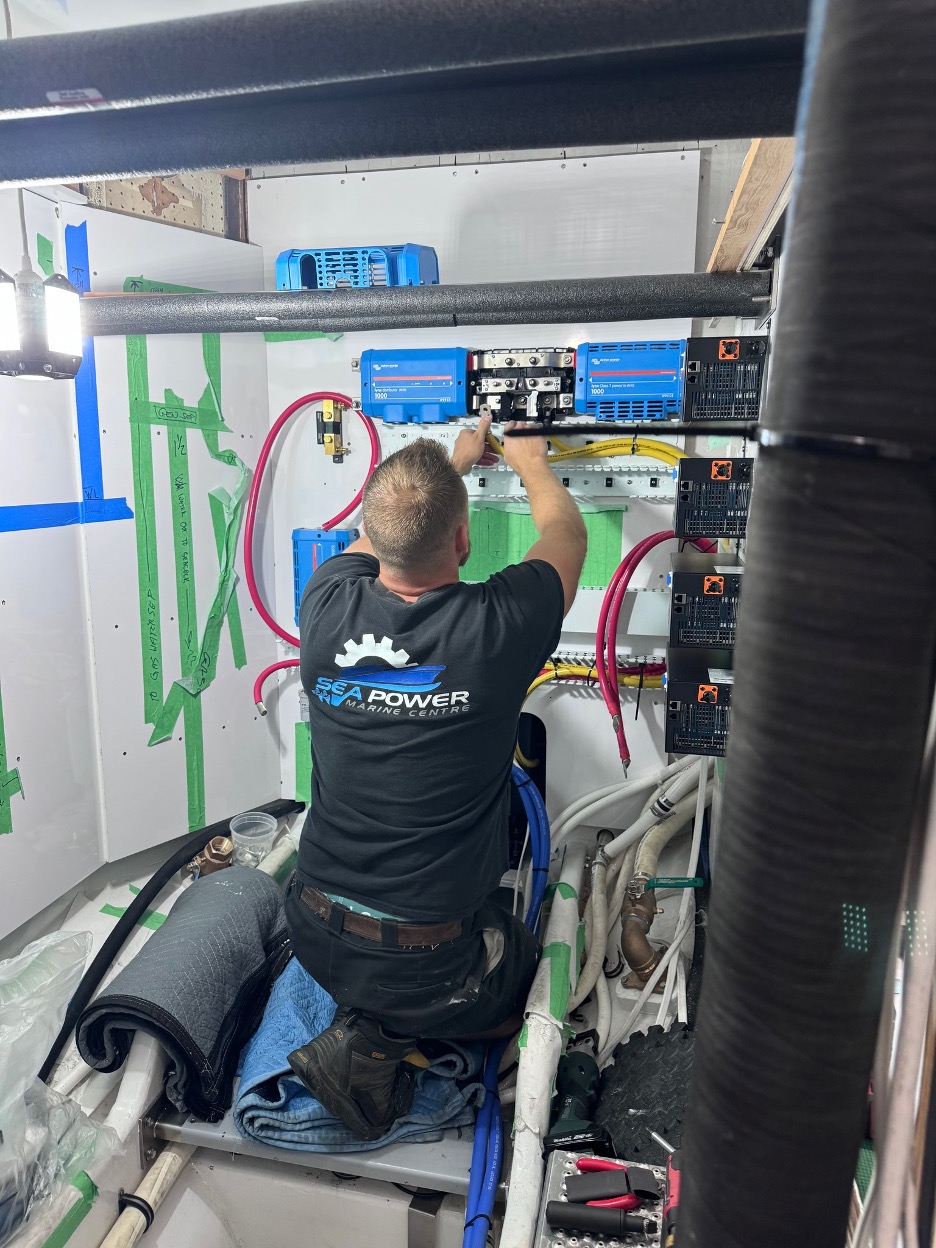
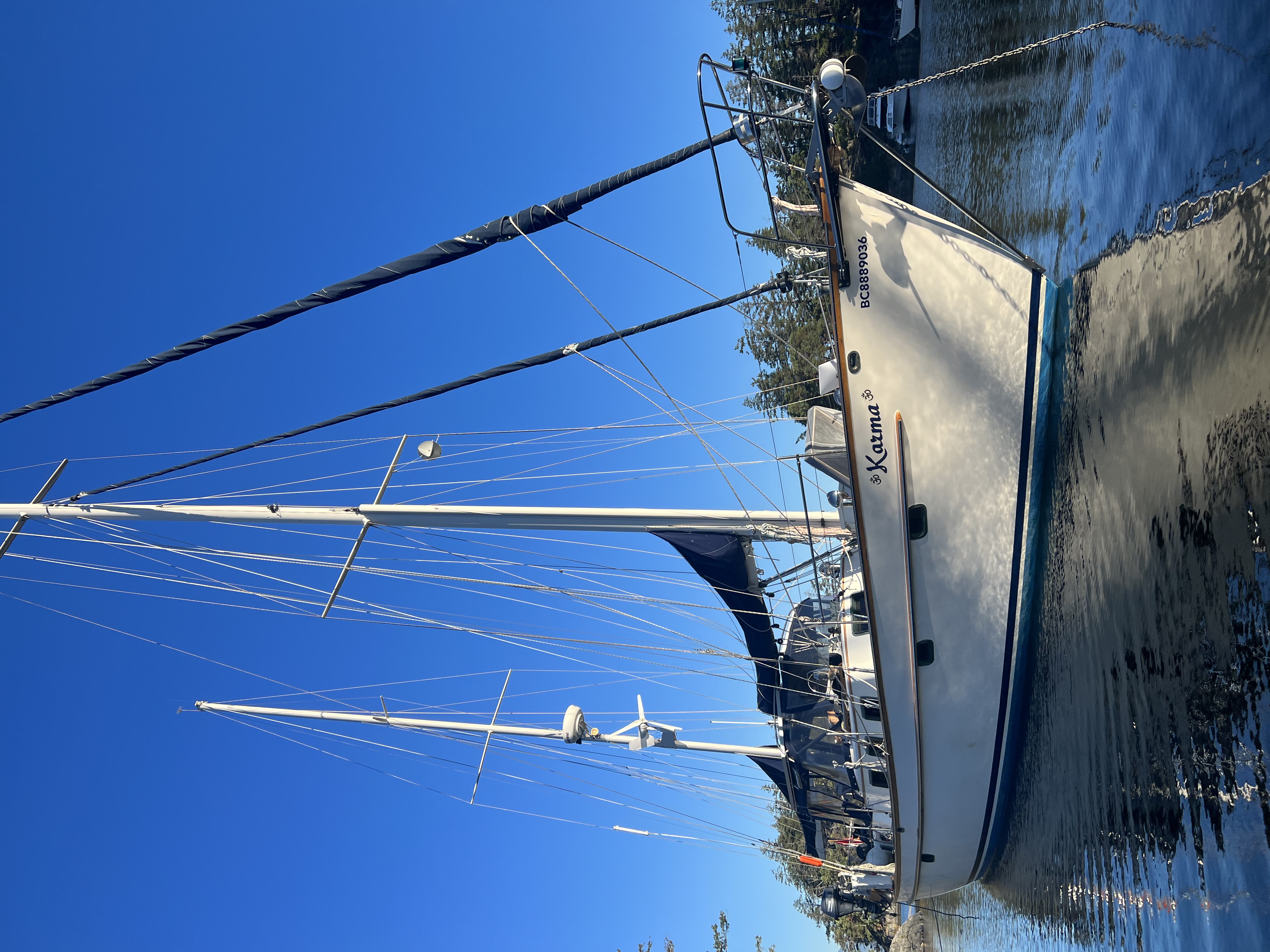
Inside Passage is a 48V DC platform — closely comparable in architecture to Karma, an OSĒA's sailboat conversion.
Battery bank:Two 30 kWh blocks, mounted in the stern — 60 kWh total, 4,800 amp hours. Mounted on top of the tanks in the aft lazarette- 540kg.
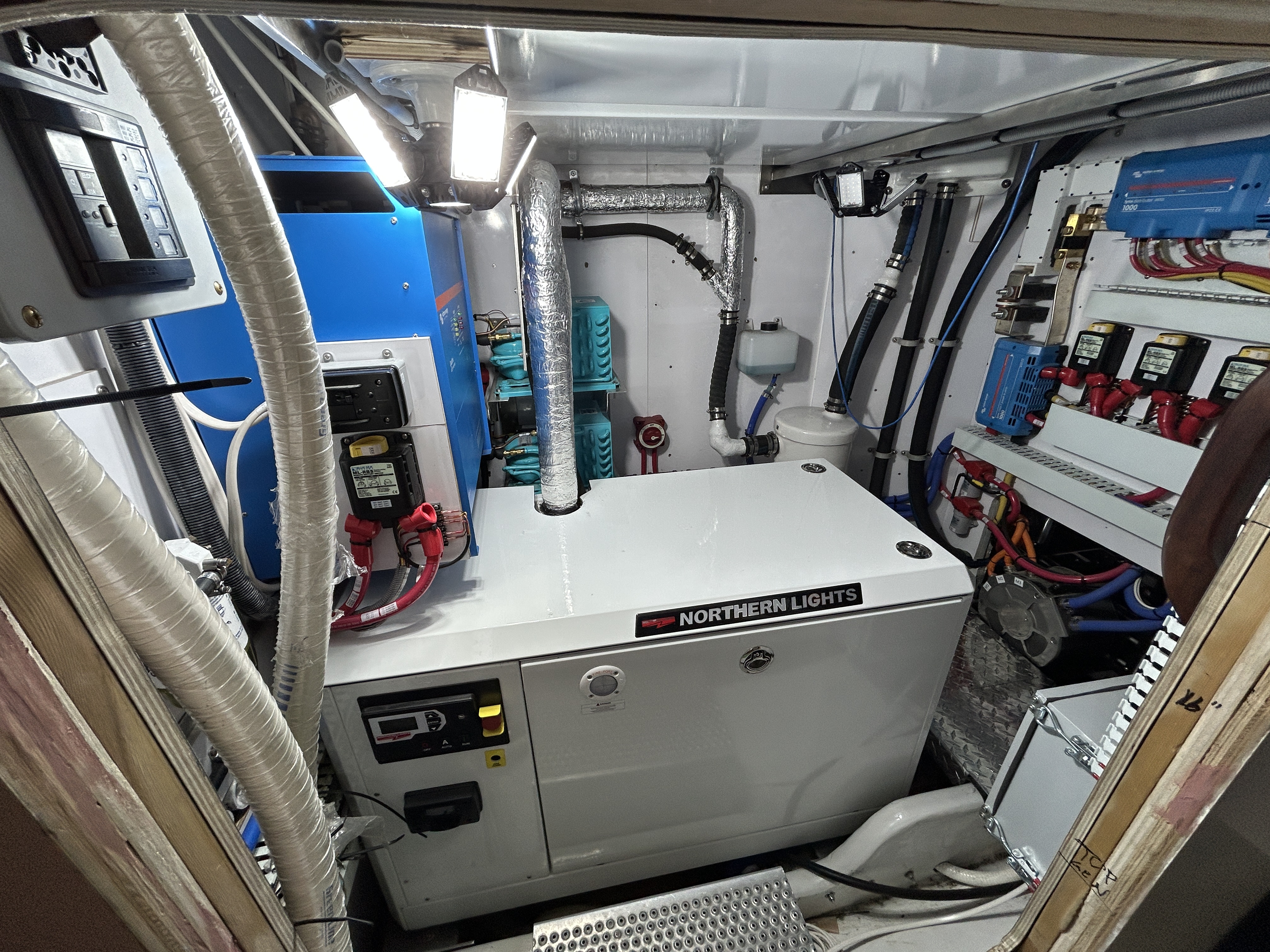
Generator: 15 kW DC generator, direct to each battery for charging. Roughly half the physical footprint of the diesel it replaces. Sound-shielded enclosure targeting 60 dB at source — approximately 58 dB in the wheelhouse under power. There will be a manual transfer switch to be able to apply the power directly to the e-motor in case of battery failure.
Redundancy: With two battery banks, two e-motors and a take home ability to directly connect the generator to the e-motor, the level of redundancy is significantly better than on a normal “one motor, direct drive” installation.
Solar: 900W on the roof, charging the bank continuously through the day.
Shore power: Feeds the battery bank primarily, with the ability to switch directly to the AC side of the boat — compatible with any voltage or frequency.
Galley: Fully electric. Two induction cooktops, air fryer, convection oven, bank of 20-amp outlets. DC refrigeration.
House systems: 12V DC loads fed via converter from the 48V bank. Existing AC infrastructure —hot water and everything else — unchanged.
This system is actually adding more redundancy and safety then the original, where there was one point of failure before, there is now multiple layers of redundancey built in.
Stage 1 — Vessel prep and engine removal
Stripping the engine room
What could be removed was stripped before the engine itself came out —cables, raw water pump, air filters, exhaust manifold, rocker covers, intake manifold, injector pump, oil filter, alternator, heat exchangers. Everything associated with the diesel that would serve no purpose in the new system.
The goal was weight and dimensions. The engine started at approximately 1,500 lbs. Stripped down, closer to 1,200. The door was narrower than the engine. Both problems had to be solved before anything could move.
The removal
The first crane attempt —could lift but couldn't clear the door height with the engine suspended. The handrail came off to open the clearance.
The solution was a forklift with a 10-foot boom and a chain hoist on a welded eye. The forklift nosed in through the door, lifted the engine to full height, and slowly backed out — easing the block up and over the door sill, out over the port rail, and onto salvaged dock timbers below. The engine that had run since the boat was new was out.
Cleaning and prep
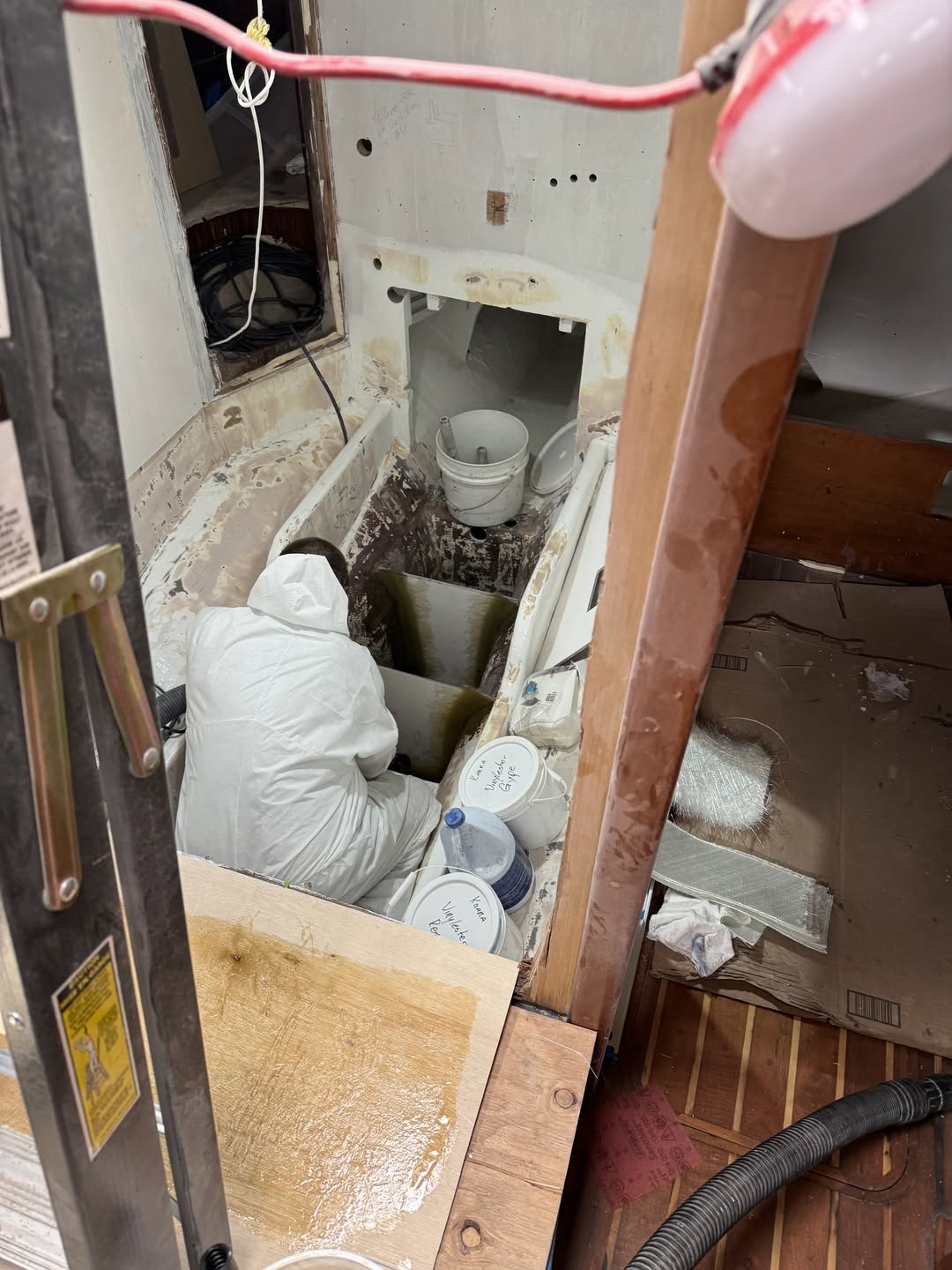
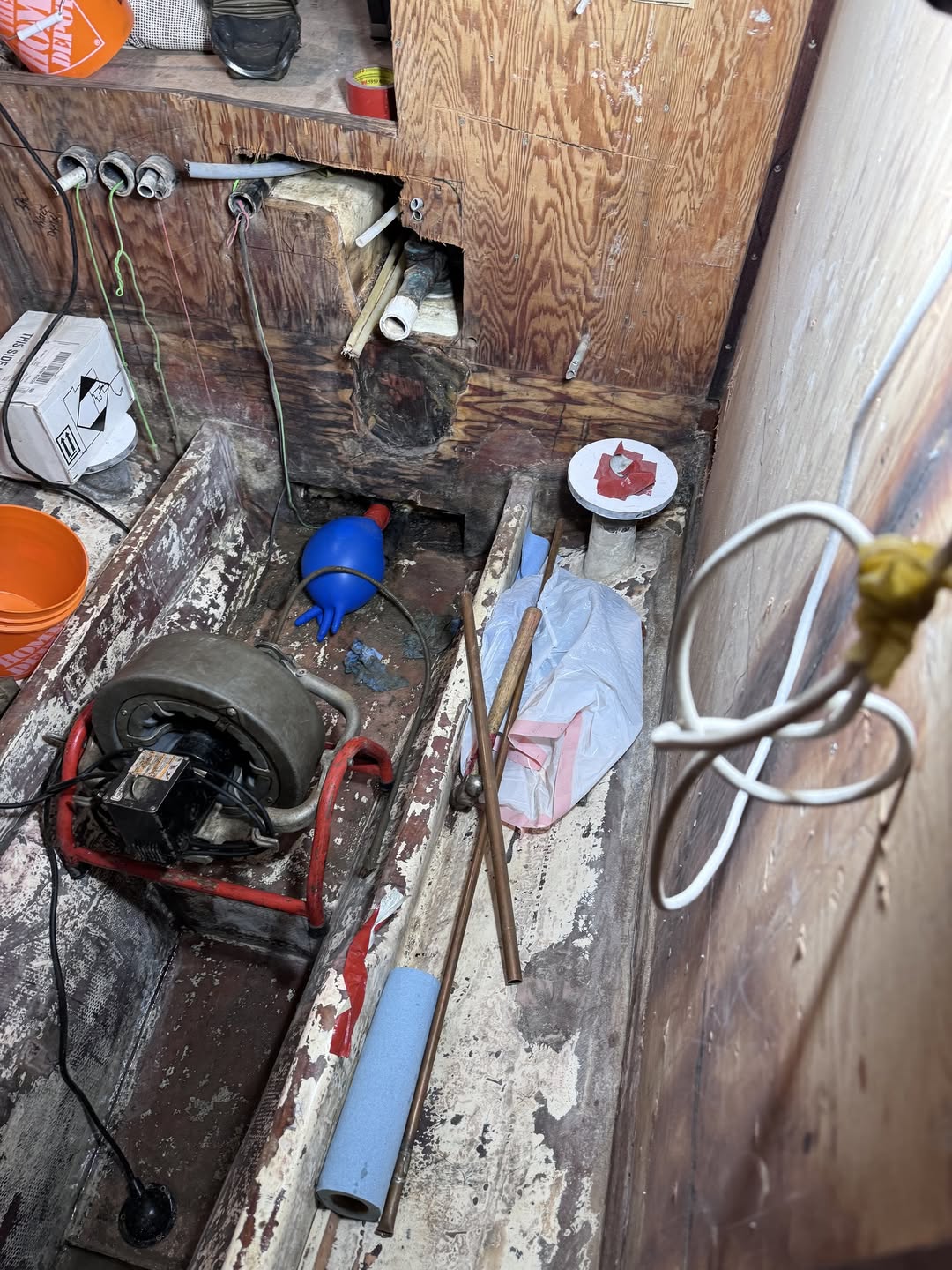
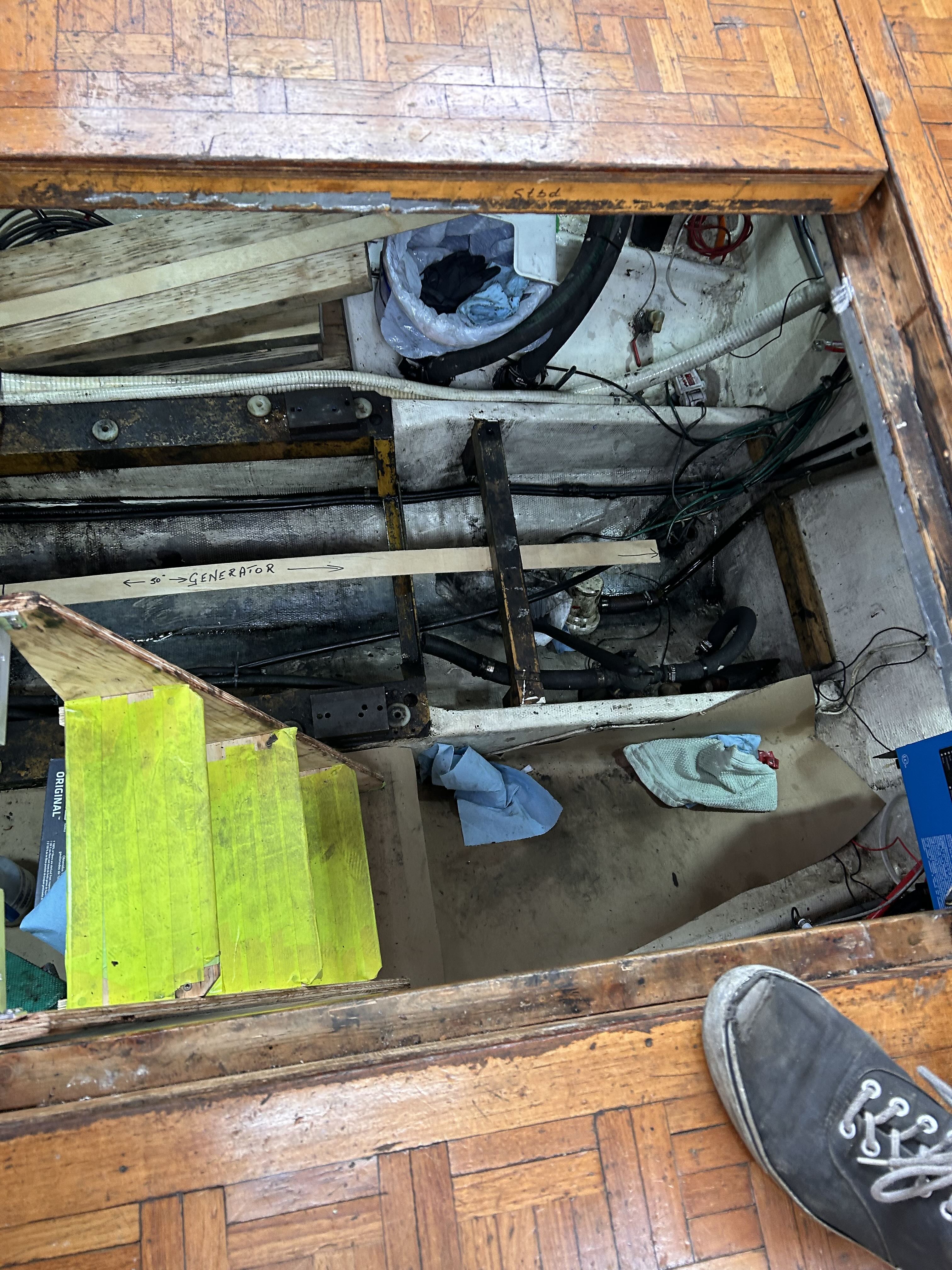
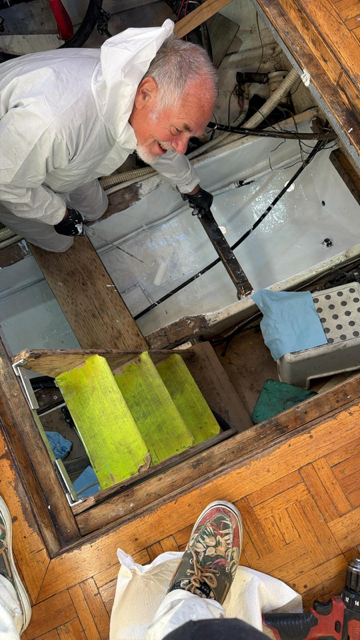
Several days of cleaning followed. Diesel used to thin the oil and grease, soaked up with rags, finished with vinegar and water. The keel cooling pipework demolished from the inside — through-hulls to be fiber glassed once clear. House batteries relocated out of the engine room. Starter battery moved to the shaft alley. The bilge is nearly ready for paint.
Where things stand
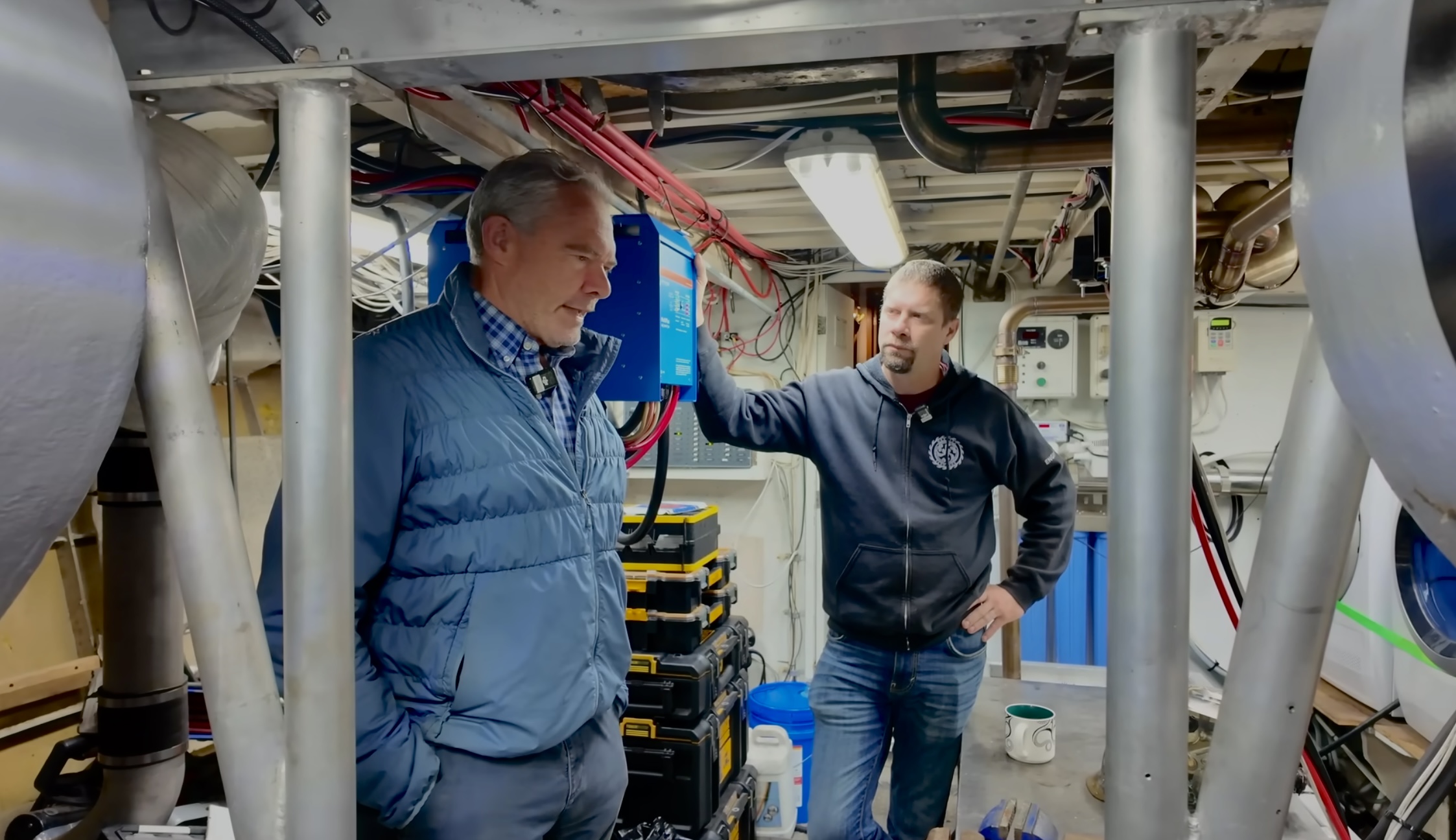
E-motor and batteries have arrived, with them on hand mock-ups are being trialled for fit in the engine room.
Next Steps
- Battery installation in the stern
- Fibreglass keel cooling through-hulls
- Wiring assessment and new lithium domestic 12V system
- Engine room paint and final prep for installation
For a closer look at the refit, visit the Onboard Tangaroa YouTube page:
- https://www.youtube.com/watch?v=oj29pxHZmbw&t=2149s
- https://www.youtube.com/watch?v=BdvG1fsRghw&t=34s