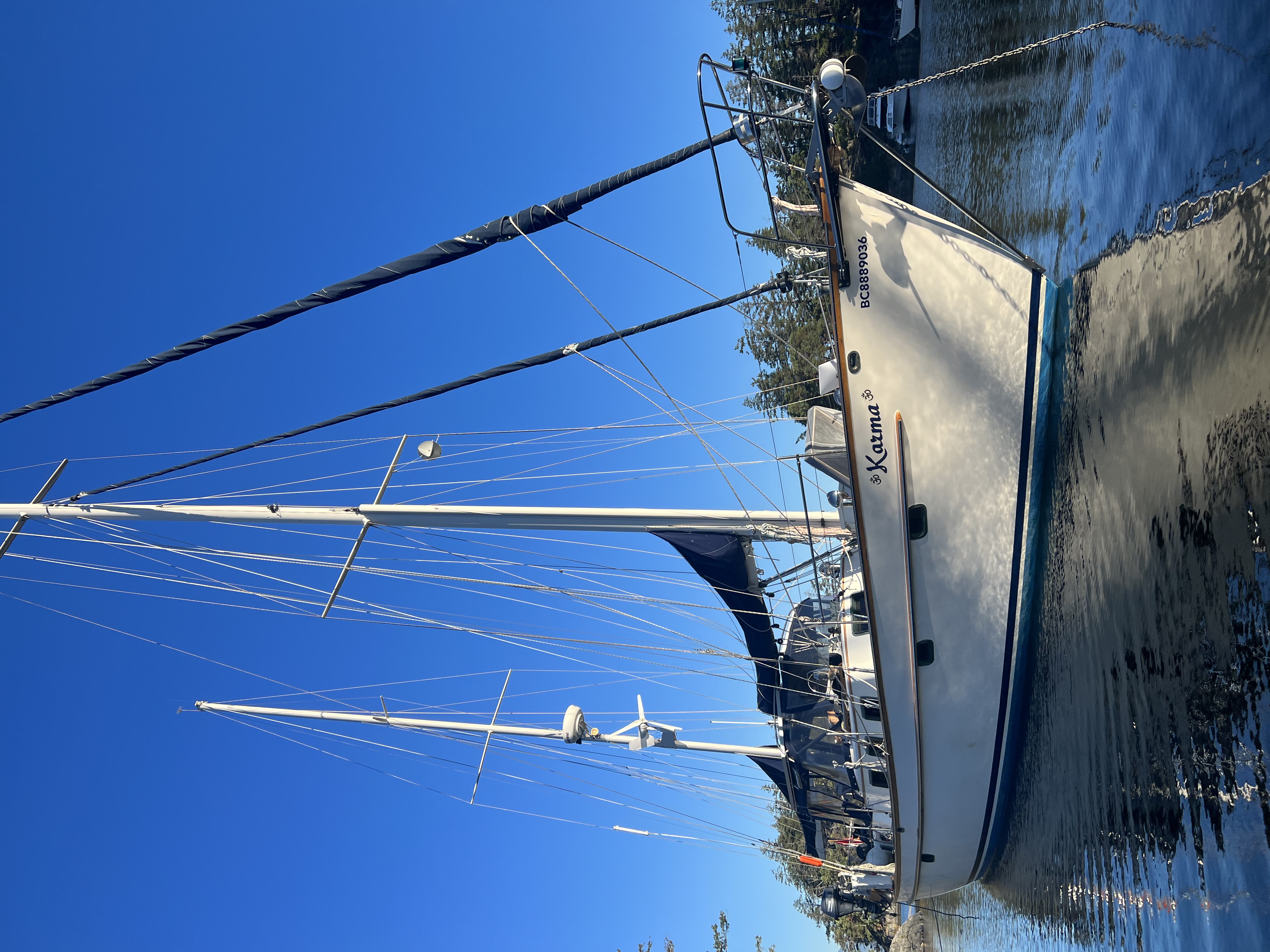

The Karma Project Part 2 - The Undoing
The Reality of a 50-Year-Old Bluewater Design
Before new technology is added, we review the ship as a complete system—its access, serviceability, and supporting infrastructure. Hybrid-electric refits extend beyond batteries alone, improving efficiency across the entire vessel.
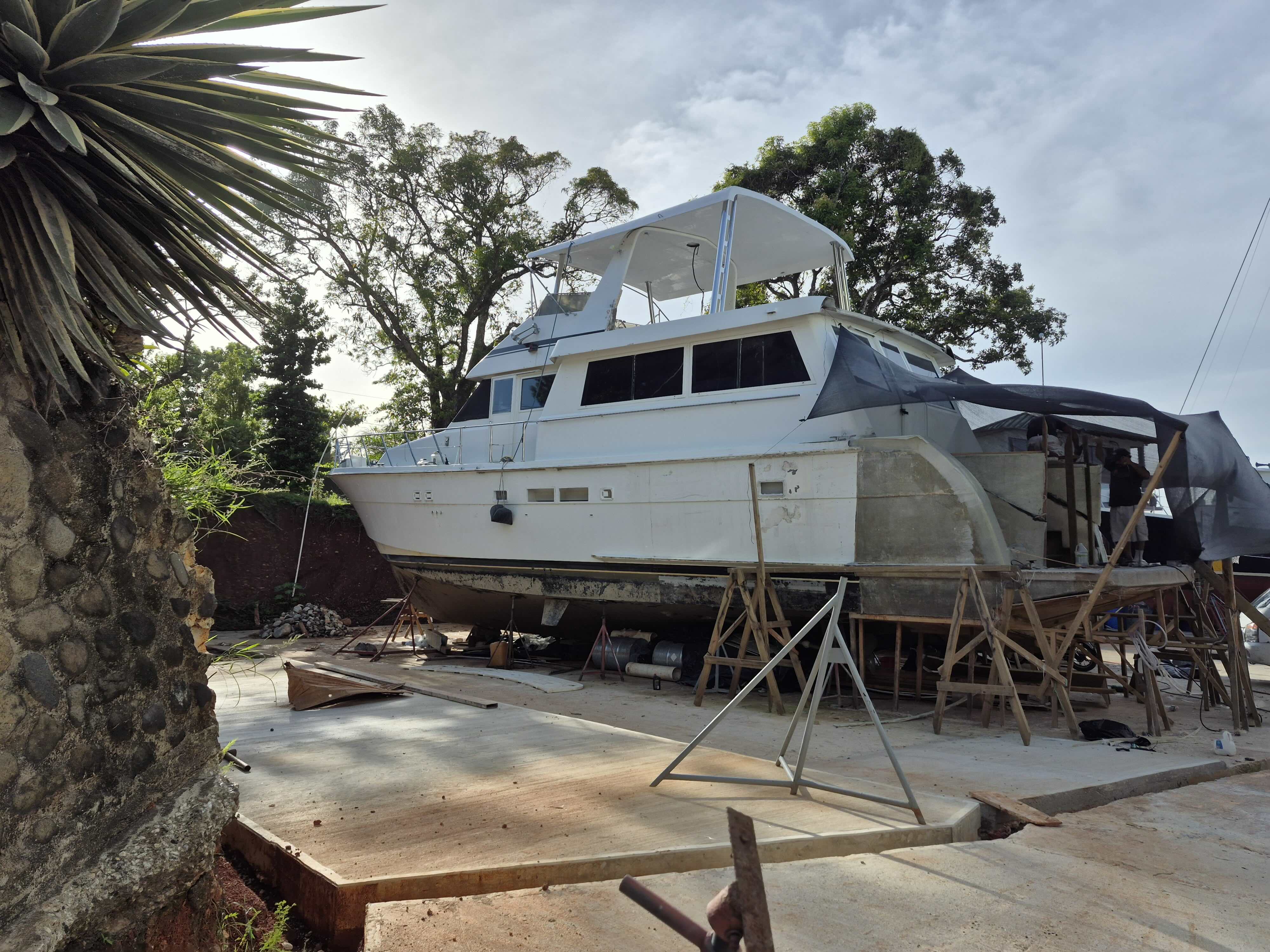
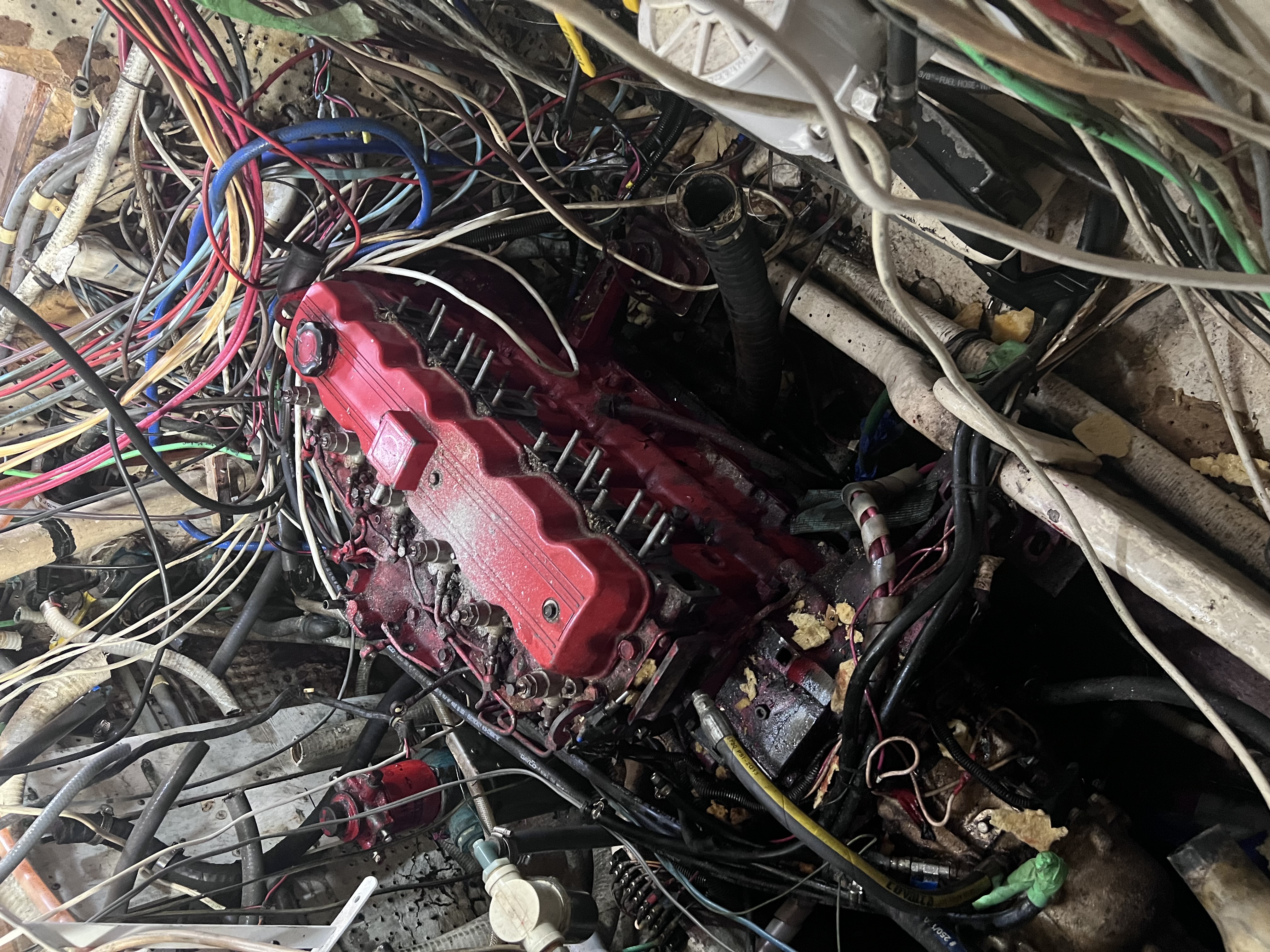
Karma was built to go to sea—not to be taken apart. Early in the refit, we were struck by how many core components were difficult to access. The engine had no practical path for removal. The mast step were buried beneath furniture and flooring. Fuel and water tanks were installed with out meaningful access to plumbing or service plates.
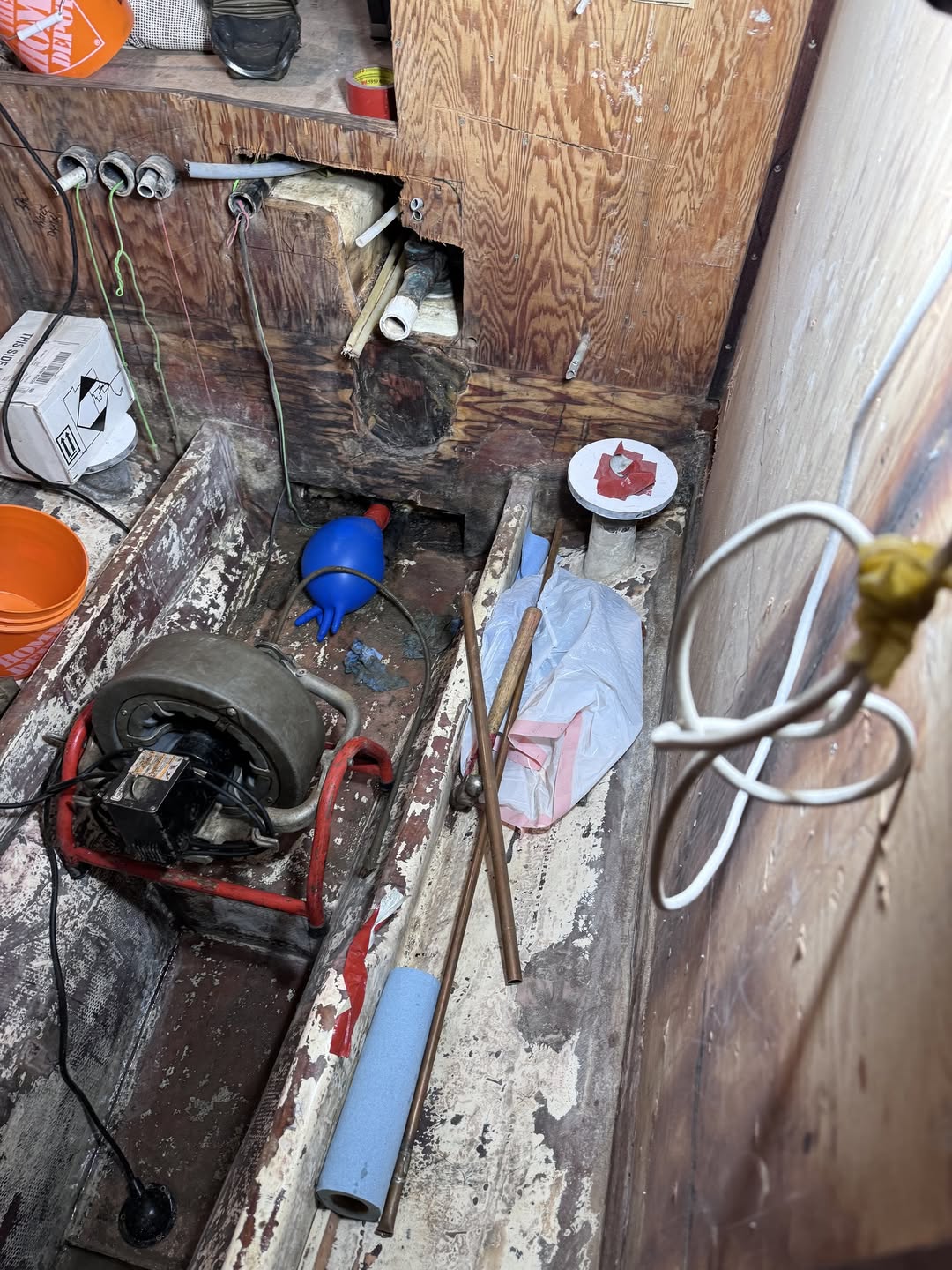
More critically, drainage from the anchor locker and forward head was combined with grey water and black water systems, run beneath tanks in PVC piping, and then encapsulated in spray foam.
None of this is unusual for boats of this era—but a refit is the moment when systems can be thoughtfully upgraded, and proper access and serviceability built in.
Access & Serviceability
One of the first things that became obvious once we really started opening Karma up was this:
she was never designed to be serviced.
Not poorly built — just built in a different era, with different assumptions.
- The engine can’t be removed from the engine room without disassembly and cutting structure.
- The main mast step is buried under furniture and flooring.
- Fuel and water tanks have no real service access.
- Drain plumbing for the anchor locker and forward head runs under tanks, tied into blackwater exhaust, surrounded by spray foam.
- Every system overlaps another system. Everything assumes it will never need to come out.

That realization shaped the refit more than any single piece of equipment.
Living With the Consequences of Old Design Decisions
None of this shows up in glossy refit photos. But it defines how hard — or how sustainable — a boat will be to own over decades.
When systems are inaccessible:
- maintenance gets deferred
- small problems become big ones
- owners work around issues instead of fixing them properly
If we were going to electrify Karma properly, we couldn’t just replace propulsion.
We had to undo years of design decisions that assumed “install once, forget forever.”
That became a guiding principle:
If we can’t access it, service it, or remove it later — it doesn’t belong in the new system.
What Comes Out Before Anything New Goes In
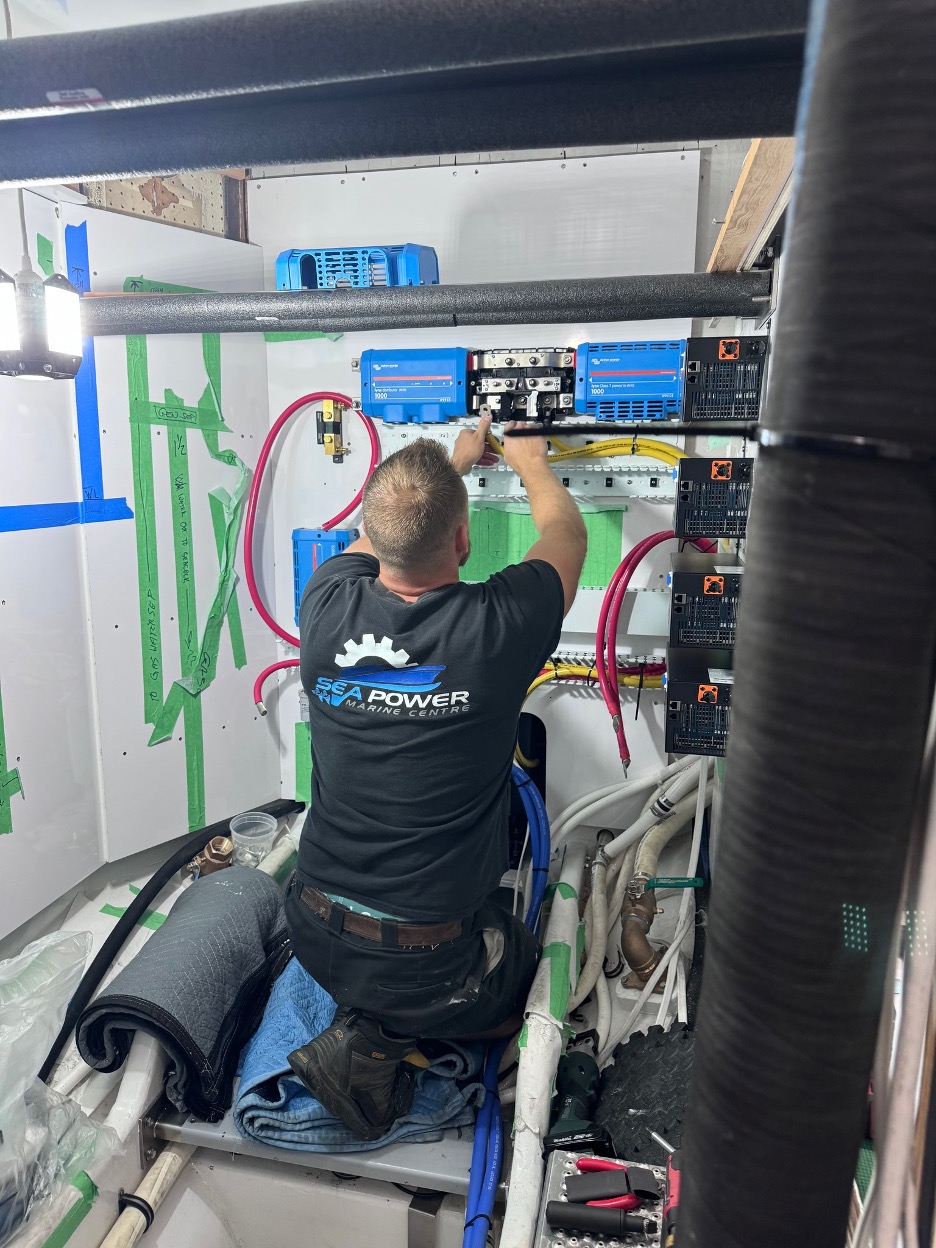
Karma had three owners prior to us, and had the overlapping systems to prove it. A lot had been added to the vessel to make it a blue water boat- wind energy, solar panels, a water maker, airconditioning, several layers of electronics, a SSB, 2VHF radios, three compressors for refrigeration. All had been added in, or as I like to say, zip tied over the original structure. I looked at trying to isolate one system at a time, but it turned out to be problematic, and after a couple of weeks of not being able to make any significant progress, the decision was made to gut the electrical system- there were to many gremlins to work through, and a clean template was needed to achieve our goals of a 10-20 year platform that we could service and repair. Then there was the black water system, which was not functional at the forward (Main) head at all. The rules and regulations of black water management have changed a lot since Karma was built, and we need to replace the entire structure and add tank capacity. We also decided to deal with the gray water system by adding a gray water tank, draining all of the gray water to this lower location. To improve space use we built in pumps for both uses into the tanks, saving a lot of wall space, and making the pumps work in ideal practice.
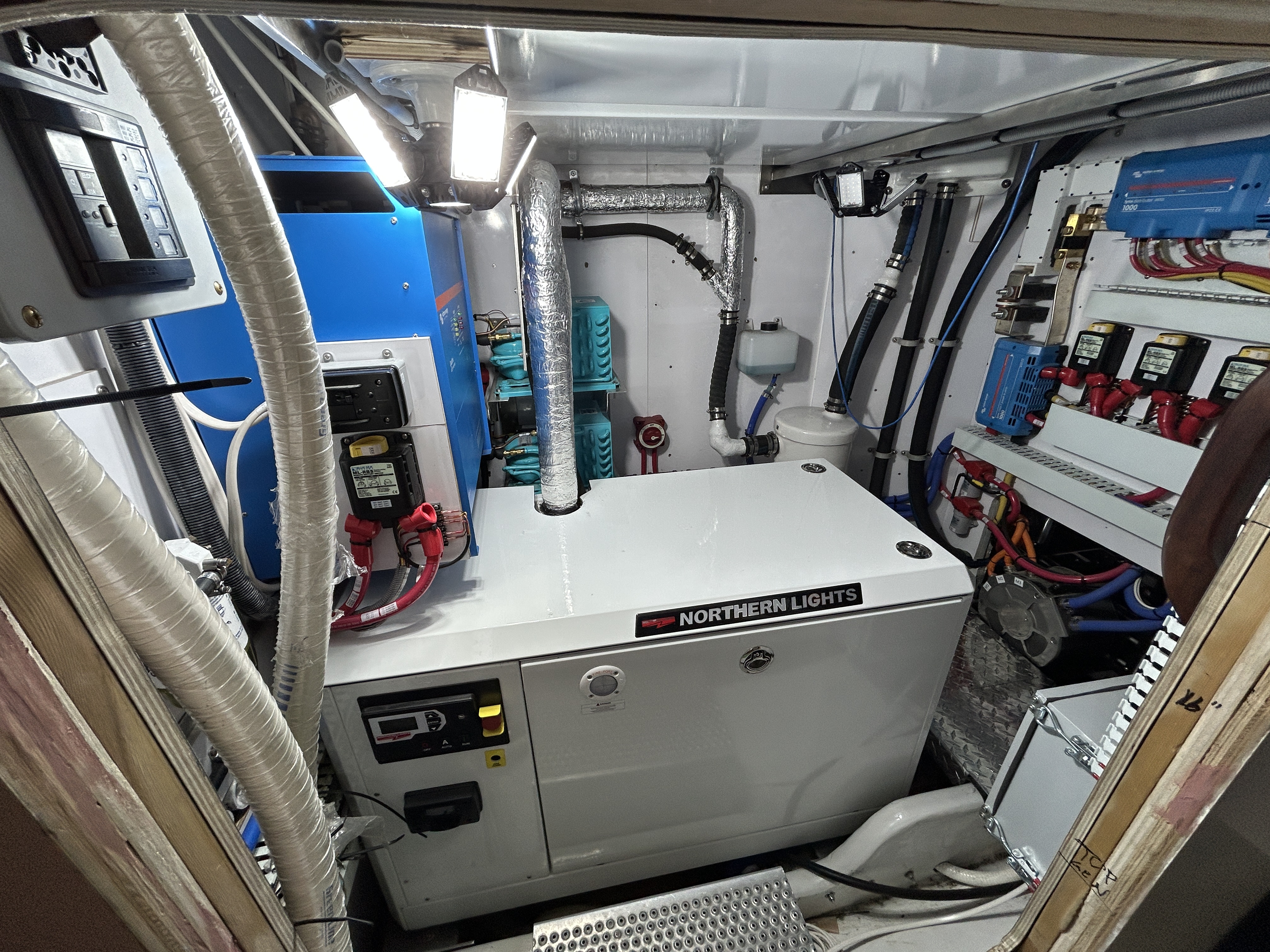
Given we needed to re-build both the generator and the engine, the cost comparison was made between a re-build or a replace, and the replace option was better than a re-build. We then compared it all to changing over to a serial hybrid electric vessel, and the cost was about the same. The decision was made, and we never looked back.
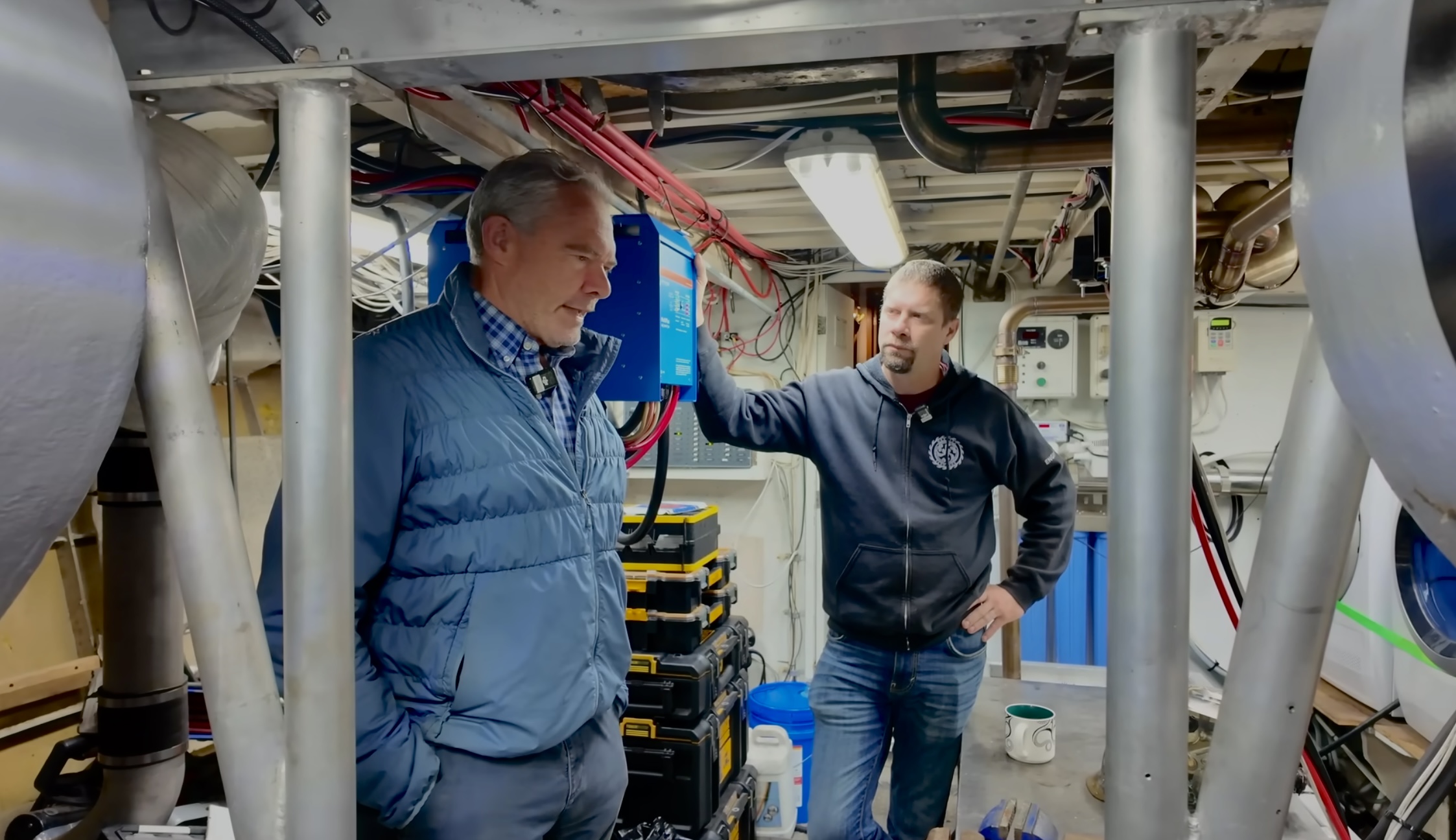
The machinery room and generator room were also significantly changed, removing the old access door (too small) and added a removable hatch below the companion way to be able to service the generator, batteries and washer dryer. We then created the machinery room access from the now washer/drier spares space that was large enough to easily access the machinery room. Inthis we lost the pilot berth that was on top of the old generator location, but it gave us a lot of flexibility service and parts storage. The old generator space is being converted to a tool/spares storage and a work bench.
Fixing the Foundations: Black & Grey Water Reimagined
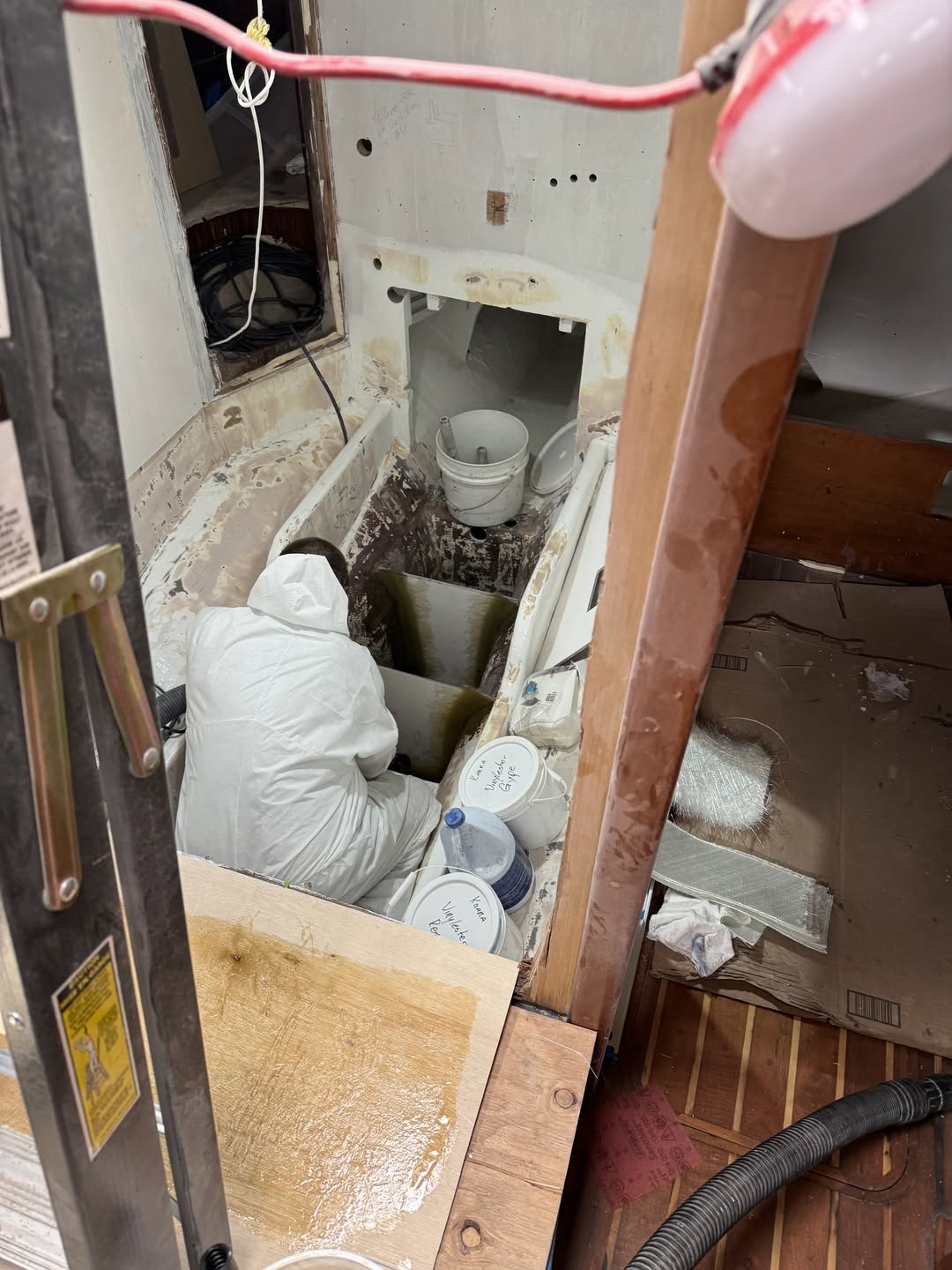
Before installing batteries, motors, or power electronics, we had to solve the basics. Karma’s original black and grey water systems were poorly laid out, difficult to service, and contributed to ongoing drainage issues.
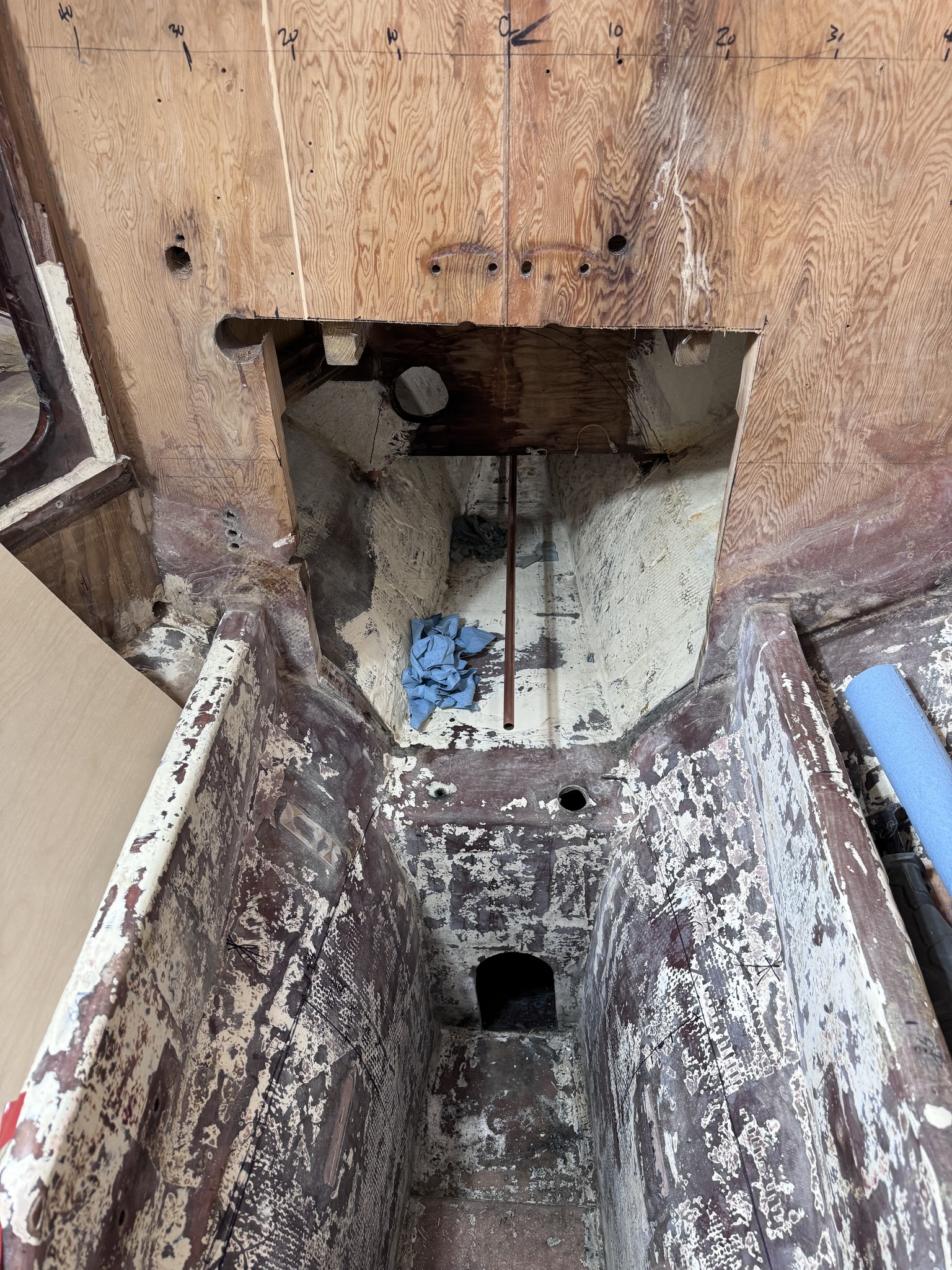
The solution was a complete rethink. We added new tankage integrated into the keel space while preserving a deep, functional bilge sump. The final configuration includes approximately 75gallons of black water capacity, 15 gallons of grey water, and a dedicated bilge cavity—providing both capacity and control. Offshore discharge options were retained for passage making.
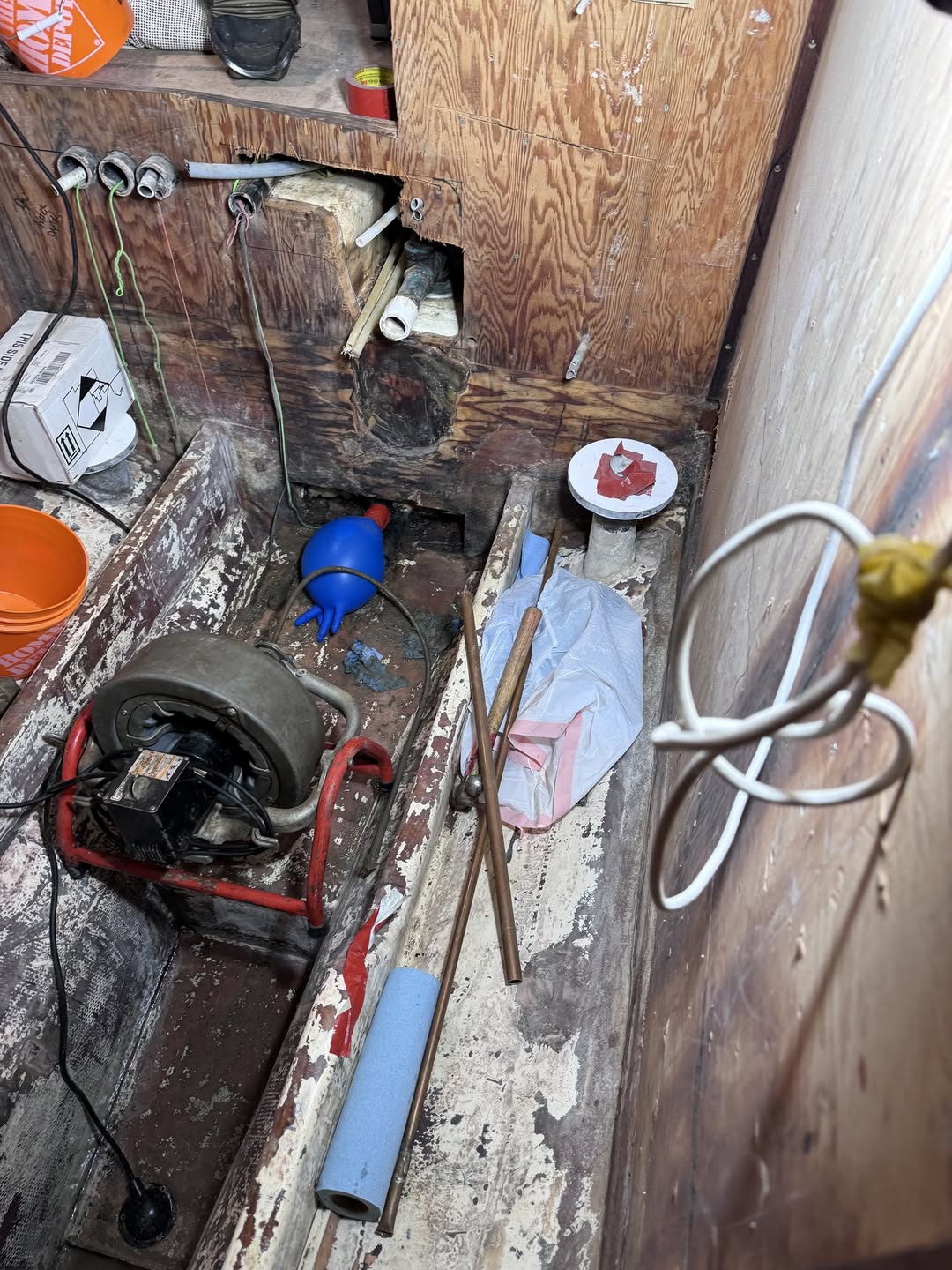
To keep the machinery space clean and serviceable, we installed a Groco 155 drop-in internal pump system.By placing the pumps inside the tanks themselves, we eliminated wall-mountedclutter and made maintenance straightforward through dedicated access plates.It’s a quiet system—literally and figuratively—but foundational to how the boat now functions.
The result:
- 75 gallons black water
- 15 gallons grey water
- 5 gallon deep bilge sump
We also chose a Groco drop-in pump system that keeps pumping hardware inside the tanks, not scattered across the machinery space walls. Fewer external systems. Cleaner installation. Easier servicing.
TheQuiet Wins
- Dry bilge.
- Accessible systems.
- Clear plumbing runs.
- Room to work.